Pomona College: History, Academics, Campus Life, Admissions, and Legacy
Introduction
Pomona College is one of the most respected liberal arts colleges in the United States. Located in Claremont, California, Pomona has built a strong reputation for academic excellence, close faculty-student relationships, intellectual curiosity, and a broad liberal arts education. Since its founding in the nineteenth century, the college has developed from a small institution serving a growing community into a nationally recognized liberal arts college with a diverse student body and an influential alumni network.
The college is known for providing students with opportunities to study across a wide range of academic disciplines while encouraging them to think critically, communicate effectively, conduct research, and engage with communities beyond the classroom. Its location in Southern California also provides access to cultural institutions, businesses, nonprofit organizations, research opportunities, and the resources of the Claremont Colleges consortium.
For students researching the best liberal arts colleges in the United States, Pomona College frequently attracts attention because of its undergraduate-focused educational model. Rather than organizing its educational experience around a large graduate-school structure, Pomona places substantial emphasis on undergraduate learning, seminars, discussion-based classes, independent research, and interaction between students and professors.
This article explores the history of Pomona College, its academic programs, campus, student life, admissions, traditions, financial aid, research opportunities, alumni community, and continuing role in American higher education.
History of Pomona College
The Founding of Pomona College
Pomona College was founded in the late nineteenth century during a period when Southern California was experiencing significant growth. The founders wanted to create a college that would provide students with a rigorous education while maintaining a strong connection to the values of a traditional liberal arts institution.
The college was established in 1887. Its founding reflected a broader movement in the United States to create educational institutions that could serve rapidly developing communities in the West.
Pomona’s founders envisioned a college that could provide an educational experience comparable to respected colleges in the eastern United States while taking advantage of the opportunities presented by Southern California.
The institution’s early development was influenced by Protestant educational traditions, but over time Pomona evolved into a broadly inclusive liberal arts college serving students from many backgrounds.
Early Development
Like many young American colleges, Pomona faced challenges during its early years. Building a college required financial resources, faculty, buildings, students, and a stable institutional structure.
The surrounding region was also still developing. Southern California did not yet have the enormous population and economic infrastructure that it would eventually acquire.
Despite these challenges, Pomona gradually established itself as an important educational institution.
Its academic program expanded, the campus developed, and the college attracted students from California and beyond.
The emphasis on undergraduate education became an important part of Pomona’s identity.
Pomona College and the Claremont Community
Pomona College is located in Claremont, California, a community approximately east of Los Angeles.
Claremont eventually became known for its collection of colleges and educational institutions. This development created an unusual academic environment in which students could benefit from the resources of multiple institutions.
Pomona became a central member of what is commonly known as the Claremont Colleges.
The consortium has played an important role in Pomona’s development because it allows students to experience the advantages of a small liberal arts college while also having access to a broader academic community.
Students can interact with people studying at neighboring institutions, participate in activities across the colleges, and take advantage of additional academic and cultural opportunities.
This combination of small-college education and consortium resources is one of the distinctive characteristics of Pomona College.
Pomona College’s Liberal Arts Philosophy
What Is a Liberal Arts Education?
A liberal arts education is designed to expose students to multiple fields of knowledge rather than limiting them to a narrow professional specialization.
At Pomona, students can explore subjects in areas such as:
- Humanities
- Social sciences
- Natural sciences
- Mathematics
- Computer science
- Arts
- Languages
- Interdisciplinary studies
The purpose is not simply to collect information. Liberal arts education emphasizes reasoning, communication, analysis, creativity, and the ability to understand different perspectives.
Broad Learning
A student interested in economics might also study philosophy.
A biology student might take courses in history or literature.
A computer science student could explore art or anthropology.
This flexibility allows students to develop intellectual interests that cross traditional academic boundaries.
Academic Programs at Pomona College
Pomona College offers a broad undergraduate curriculum.
Students select a major but generally have opportunities to complete courses outside their primary field.
The college’s academic departments cover numerous disciplines.
Humanities
Humanities programs can include fields such as:
- English
- History
- Philosophy
- Classics
- Religious studies
- Languages
- Literature
- Art history
Humanities education helps students examine human culture, ideas, historical developments, artistic expression, and philosophical questions.
Social Sciences
Pomona’s social science education provides opportunities to study how individuals and societies behave.
Students may explore:
- Economics
- Political science
- Psychology
- Sociology
- Anthropology
- International relations
- Public policy-related subjects
These disciplines can prepare students for careers in government, business, education, research, nonprofit organizations, journalism, and many other fields.
Natural Sciences
Science is also an important part of the Pomona curriculum.
Students interested in scientific disciplines may study:
- Biology
- Chemistry
- Physics
- Environmental analysis
- Astronomy
- Geology-related subjects
Laboratory courses and research opportunities can allow students to move beyond textbooks and participate in scientific investigation.
Mathematics and Computer Science
Modern liberal arts education increasingly includes quantitative and technological fields.
Pomona students can study mathematics and computer science while also receiving the broader educational experience associated with liberal arts education.
Computer science can be connected with fields such as economics, neuroscience, mathematics, data analysis, and digital humanities.
Interdisciplinary Education
One of the strengths of a liberal arts environment is the opportunity to combine academic disciplines.
Many important modern problems do not fit neatly into one department.
Climate change, for example, involves science, economics, politics, ethics, geography, and public policy.
Artificial intelligence involves computer science but also raises questions about philosophy, law, economics, communication, and society.
Pomona’s academic environment allows students to investigate these kinds of questions from multiple perspectives.
Interdisciplinary study can help students develop more sophisticated approaches to complex problems.
Faculty and Student Relationships
One of the most important features of a small liberal arts college is the potential for close interaction between students and professors.
At Pomona, faculty members teach undergraduate students and participate in the intellectual life of the campus.
Students can interact with professors through:
- Classroom discussions
- Office hours
- Research projects
- Independent studies
- Academic advising
- Campus events
- Department activities
This relationship can be particularly valuable for students who want to pursue advanced research or graduate education.
A professor who knows a student’s academic interests may be able to provide guidance about research opportunities, internships, graduate programs, and career possibilities.
Research Opportunities
Although Pomona is primarily an undergraduate institution, students can become involved in research.
Undergraduate research can take many forms.
A science student might work in a laboratory.
A history student might conduct archival research.
An economics student might analyze economic data.
A literature student might develop an original interpretation of a group of texts.
An environmental studies student might conduct fieldwork.
Research allows students to experience the process of asking questions, collecting evidence, analyzing information, and communicating conclusions.
These experiences can also help students prepare for graduate school.
Campus and Architecture
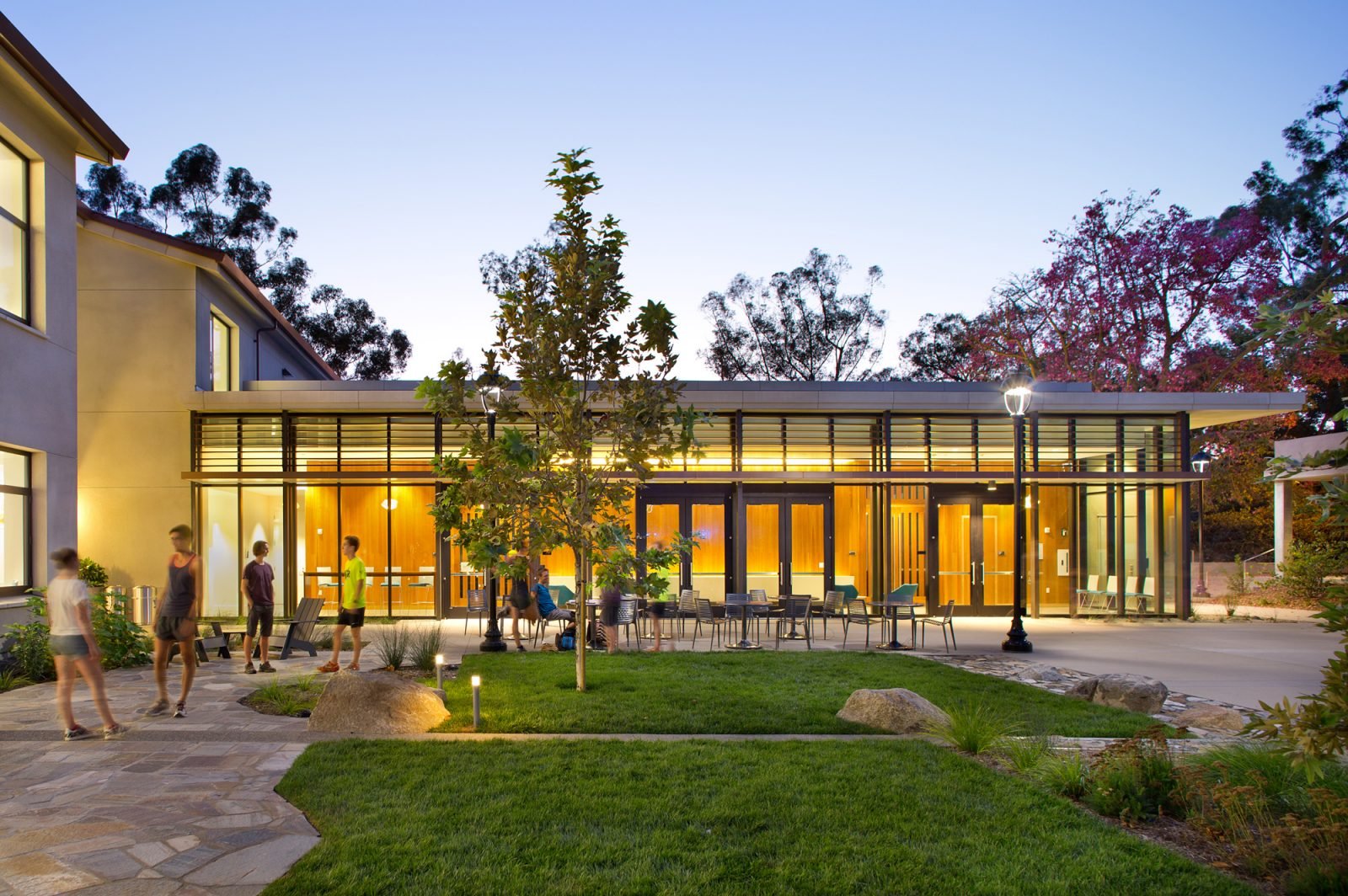
Pomona College has a distinctive campus environment.
Its setting in Claremont provides a combination of academic buildings, residential spaces, gardens, pathways, and open areas.
The campus includes historic structures as well as more modern facilities.
Architecture plays an important role in the visual identity of the college.
Many traditional college buildings reflect the history of the institution, while newer facilities demonstrate Pomona’s continuing investment in education and campus life.
The campus environment is designed to support both academic work and community interaction.
The Pomona College Campus Experience
A college campus is more than classrooms and libraries.
Students spend significant amounts of time in residential halls, dining areas, study spaces, athletic facilities, student organizations, and social spaces.
Pomona’s campus encourages students to develop relationships with classmates and participate in activities outside their academic programs.
Students may spend an afternoon studying in a library, attending a club meeting, participating in athletics, working on an artistic project, or meeting friends for dinner.
These everyday experiences become an important part of college life.
Student Life at Pomona College
Student Organizations
Student organizations give students opportunities to explore interests beyond academic courses.
Clubs can cover a wide range of subjects, including:
- Politics
- Culture
- Music
- Theater
- Technology
- Entrepreneurship
- Community service
- Environmental issues
- Journalism
- Sports
- Student advocacy
- Academic interests
Students can also create new organizations when they identify an interest that is not already represented.
Arts and Culture
Arts are an important part of liberal arts education.
Students may participate in:
- Theater
- Music
- Dance
- Visual arts
- Creative writing
- Film
- Photography
Campus performances and exhibitions can bring together students from different academic backgrounds.
Athletics at Pomona College
Pomona College participates in collegiate athletics through Pomona-Pitzer athletics.
Sports can provide students with opportunities to develop teamwork, discipline, leadership, and time-management skills.
Student-athletes balance academic responsibilities with training and competition.
Athletic activities can also contribute to campus community by bringing students together around shared teams and events.
Sports at a liberal arts college are generally integrated into the broader undergraduate experience rather than functioning as the sole focus of institutional identity.
The Claremont Colleges Consortium
One of the most distinctive aspects of attending Pomona is its relationship with the other Claremont Colleges.
The Claremont Colleges include several undergraduate and graduate institutions located close to one another.
This arrangement creates a larger academic and social environment than a traditional small college might provide.
Students can benefit from:
- Additional courses
- Libraries
- Events
- Clubs
- Academic resources
- Social activities
- Cultural programs
The consortium allows Pomona to retain a relatively intimate undergraduate environment while giving students access to a much larger educational community.
Dining and Residential Life
Residential life is an important part of undergraduate education.
Students living on campus experience a community in which they share daily routines with classmates.
Residence halls provide opportunities for students to meet people from different regions, cultures, and academic backgrounds.
Dining spaces also become important social environments.
Students often discuss classes, campus events, sports, internships, and personal interests while eating together.
For many students, these informal conversations become some of the most memorable parts of college.
Diversity and Community
Pomona College attracts students from different parts of the United States and from countries around the world.
A diverse student community can contribute to the educational experience because students encounter perspectives different from their own.
Classroom discussions may involve students with different cultural backgrounds, experiences, and viewpoints.
Learning how to listen to and engage respectfully with people who have different perspectives is an important skill in higher education.
International Students
Pomona has also developed a global dimension through its international student community.
International students can bring perspectives from different educational systems and cultures.
For students from outside the United States, studying at Pomona can provide access to American higher education while allowing them to interact with students from many other backgrounds.
The college’s international environment can be valuable for students interested in global affairs, international development, diplomacy, business, research, and cross-cultural communication.
Admissions to Pomona College
Pomona College is known for a selective admissions process.
Applicants are generally evaluated through multiple aspects of their educational and personal background.
Academic performance is important, but colleges may also consider other factors depending on their admissions policies.
Potential areas of consideration can include:
- High school coursework
- Academic achievement
- Essays
- Extracurricular activities
- Recommendations
- Personal experiences
- Intellectual interests
- Contributions to community
Applicants should carefully review Pomona’s current admissions requirements because policies and application procedures can change.
Preparing for Pomona College
Students considering applying should begin preparing well before the application deadline.
A strong preparation plan can include taking challenging courses, developing meaningful extracurricular interests, building strong writing skills, and exploring academic subjects deeply.
Students should avoid thinking of the application process only as a competition involving grades.
College applications can also communicate intellectual curiosity and personal development.
For example, a student interested in environmental science might participate in local conservation activities, read about environmental policy, conduct a school research project, or develop an independent project related to sustainability.
The key is genuine engagement rather than simply collecting activities for an application.
The Application Essay
Essays can provide applicants with an opportunity to explain aspects of their experiences that grades and test scores cannot fully communicate.
A strong college essay is generally personal, specific, and authentic.
Instead of simply listing achievements, students can use essays to explain:
- What they learned
- Why they became interested in a subject
- How an experience changed their perspective
- What questions they continue to explore
- How they interact with their community
Applicants should carefully follow the current application instructions provided by Pomona.
Financial Aid at Pomona College
The cost of attending a private American college can be significant.
Financial aid can therefore be an important part of the college decision process.
Pomona provides financial aid information for prospective students and families.
Financial aid can involve different forms of assistance, depending on an individual student’s circumstances and the college’s policies.
Students should distinguish between:
- Scholarships and grants
- Work-study opportunities
- Loans
- Family contributions
Because financial aid policies can change, prospective students should consult Pomona’s official financial aid information for current details rather than relying on older figures.
Cost of Attendance
The total cost of college is more than tuition.
Students and families should consider:
- Tuition
- Housing
- Food
- Books
- Transportation
- Personal expenses
- Health-related costs where applicable
The published cost of attendance can change from year to year.
Families should therefore use current information from Pomona when planning financially.
Career Preparation
Although Pomona emphasizes liberal arts education, its graduates pursue many different career paths.
A liberal arts degree can develop skills that are useful in numerous professional environments.
These include:
- Written communication
- Public speaking
- Research
- Critical thinking
- Problem solving
- Quantitative reasoning
- Collaboration
- Leadership
- Adaptability
Employers in many fields value employees who can understand complex information and communicate clearly.
Graduate and Professional Education
Many liberal arts graduates continue their education after completing undergraduate degrees.
Pomona alumni may pursue advanced degrees in areas such as:
- Medicine
- Law
- Business
- Education
- Engineering
- Public policy
- Social sciences
- Humanities
- Natural sciences
- Computer science
The undergraduate experience can provide a foundation for graduate-level study.
Students considering graduate school can use research projects, faculty relationships, internships, and academic advising to prepare for future applications.
Alumni Community
Pomona College has produced graduates who have gone into many areas of public and professional life.
Alumni have worked in:
- Academia
- Business
- Government
- Science
- Medicine
- Law
- Arts
- Entertainment
- Journalism
- Technology
- Nonprofit organizations
- Education
The alumni network can remain an important part of a student’s relationship with the college after graduation.
Alumni may provide professional advice, mentoring, networking opportunities, and career connections.
Pomona College and Innovation
Although the institution has a long history, Pomona continues to adapt to changing educational needs.
Modern higher education requires colleges to respond to developments in:
- Artificial intelligence
- Data science
- Climate change
- Globalization
- Digital communication
- Biotechnology
- Entrepreneurship
- Social change
A liberal arts institution can address these developments by combining traditional disciplines with emerging areas of study.
Environmental Education
Environmental issues have become increasingly important in higher education.
Southern California provides a valuable setting for studying environmental questions because the region includes diverse ecosystems and faces challenges involving water, development, transportation, energy, and climate.
Environmental education can combine scientific research with social and political analysis.
Students can therefore explore environmental problems from several perspectives.
Technology and Liberal Arts Education
Technology is now part of almost every profession.
A liberal arts education can complement technical knowledge by helping students understand the social and ethical consequences of technology.
For example, artificial intelligence raises questions involving:
- Privacy
- Employment
- Bias
- Creativity
- Education
- Security
- Regulation
- Human decision-making
Students who understand both technology and the humanities or social sciences can contribute to these discussions from multiple perspectives.
Pomona College as a Global Educational Institution
Although Pomona is located in California, its educational community has an international character.
Students can encounter global perspectives through courses, international students, study opportunities, language education, and academic research.
Global education is increasingly important because modern organizations operate across national boundaries.
Understanding different cultures and international systems can help students prepare for careers in fields such as international business, diplomacy, research, journalism, development, and education.
Study Away and Experiential Learning
College education does not have to take place entirely inside a classroom.
Students can learn through:
- Internships
- Research
- Community service
- Study abroad
- Fieldwork
- Independent projects
- Cultural programs
Experiential learning allows students to connect academic concepts with real-world situations.
For example, a political science student might study public policy in class and then gain practical experience through an internship.
A biology student could combine laboratory research with fieldwork.
An economics student could apply statistical methods to real-world data.
Community Engagement
Many students want their education to have an impact beyond campus.
Community engagement can involve partnerships with local organizations, volunteer activities, educational programs, and public-service projects.
Southern California provides numerous opportunities for students interested in community-based learning.
These experiences can help students understand how social and economic issues affect different communities.
Intellectual Culture
Pomona’s identity is strongly connected with intellectual exploration.
Students are encouraged to ask questions rather than simply memorize answers.
A seminar discussion might involve students disagreeing about the interpretation of a historical event.
A science class might require students to develop and test a hypothesis.
A philosophy course might challenge students to reconsider assumptions they previously took for granted.
This intellectual environment is one of the central purposes of a liberal arts education.
Why Students Consider Pomona College
Students researching Pomona often look at several characteristics.
Small-College Environment
Pomona provides the atmosphere of a relatively small undergraduate institution.
This can allow students to become familiar with professors and classmates.
Broad Curriculum
Students can explore many disciplines before and during their major.
Claremont Colleges Resources
The consortium expands the academic and social opportunities available to students.
Southern California Location
The college is situated near the cultural and economic resources of the Los Angeles region.
Undergraduate Focus
The educational experience is centered strongly on undergraduate students.
Challenges Students Should Consider
Choosing a college is an individual decision, and Pomona may not be the right environment for every student.
Prospective students should consider factors such as:
- Campus size
- Location
- Academic interests
- Cost
- Financial aid
- Climate
- Residential environment
- Career goals
- Availability of specific programs
- Distance from home
Students should compare Pomona with several institutions and review current information before applying or enrolling.
Pomona College in the Context of American Higher Education
Pomona represents an important model of American liberal arts education.
Large research universities can provide enormous numbers of courses, laboratories, graduate programs, and research centers.
A small liberal arts college offers a different model.
The emphasis is often on undergraduate teaching, discussion, close faculty interaction, and intellectual breadth.
Pomona’s participation in the Claremont Colleges adds another dimension by connecting a small-college environment with a larger academic consortium.
The Importance of Liberal Arts in the Modern World
Some people question whether liberal arts education remains valuable in an economy increasingly influenced by technology.
The answer depends partly on what students expect from higher education.
Technical skills are clearly important.
However, organizations also need people who can:
- Analyze information
- Communicate ideas
- Understand history
- Work across cultures
- Solve unfamiliar problems
- Evaluate evidence
- Make reasoned arguments
- Adapt to changing circumstances
These are areas in which liberal arts education can make a significant contribution.
Pomona College Traditions
College traditions help create institutional identity.
Over generations, students develop traditions surrounding:
- Graduation
- Student organizations
- Athletics
- Academic ceremonies
- Social events
- Alumni activities
- Campus gatherings
These traditions connect current students with previous generations.
They also contribute to the sense that college is more than a collection of classes.
Student Leadership
Students can develop leadership skills through many activities.
Leadership opportunities may include:
- Student government
- Club leadership
- Athletics
- Publications
- Community service
- Peer mentoring
- Residential activities
- Academic organizations
Leadership is not necessarily about holding an official title.
A student who organizes a community project or creates a new campus initiative can also demonstrate leadership.
Communication Skills
Communication is an important part of almost every academic discipline.
Students may be asked to:
- Write research papers
- Give presentations
- Participate in seminars
- Conduct interviews
- Produce creative work
- Explain scientific results
These experiences can help students communicate complex ideas clearly.
Critical Thinking
Critical thinking is another major component of liberal arts education.
Students learn to evaluate evidence and distinguish between claims, assumptions, and conclusions.
For example, a history student may examine primary documents.
A science student may evaluate experimental data.
An economics student may analyze statistical evidence.
A philosophy student may examine the logic behind an argument.
These skills can be useful long after graduation.
Building a Professional Network
College is also an opportunity to build relationships.
Students meet:
- Professors
- Classmates
- Alumni
- Employers
- Researchers
- Community leaders
- Internship supervisors
Over time, these relationships can become part of a professional network.
Networking does not have to be formal.
A conversation with a professor can lead to a research opportunity.
A classmate may later become a colleague.
An internship supervisor may provide professional advice after graduation.
Life After Pomona
Graduation marks the beginning of a new stage.
Some students immediately enter professional careers.
Others continue their education.
Some take time to pursue fellowships, service opportunities, creative projects, or international experiences.
The flexibility of a liberal arts education can allow graduates to move between different fields during their careers.
A graduate who begins in consulting, for example, might later enter education or nonprofit work.
Another graduate might move from scientific research into public policy.
The ability to learn new subjects can become an important professional advantage.
Pomona College’s Historical Legacy
Pomona’s history stretches across more than a century.
During that time, American society changed dramatically.
The college experienced periods of economic growth, wars, technological transformation, demographic changes, and cultural shifts.
Throughout these changes, Pomona maintained its focus on undergraduate education while adapting its curriculum and institutional priorities.
Its history is therefore also part of the broader history of American higher education.
Pomona College and the Future
The future of higher education will involve significant questions.
Colleges will need to consider how to respond to:
- Artificial intelligence
- Changing labor markets
- Climate change
- Rising educational costs
- Global competition
- New teaching technologies
- Student well-being
- Demographic changes
Pomona’s liberal arts model provides one possible framework for addressing these challenges.
The ability to combine different disciplines may become increasingly valuable as complex problems require cooperation between scientists, policymakers, businesses, educators, and communities.
Frequently Asked Questions About Pomona College
1. Where is Pomona College located?
Pomona College is located in Claremont, California, in the greater Los Angeles region.
2. When was Pomona College founded?
Pomona College was founded in 1887.
3. What type of college is Pomona?
Pomona is a private liberal arts college focused primarily on undergraduate education.
4. Is Pomona part of the Claremont Colleges?
Yes. Pomona is one of the institutions that make up the Claremont Colleges consortium.
5. What can students study at Pomona?
Students can study a wide range of subjects across the humanities, social sciences, natural sciences, mathematics, computer science, arts, and interdisciplinary fields.
6. Does Pomona offer research opportunities?
Yes. Undergraduate students can participate in research and independent academic projects across many disciplines.
7. What is student life like?
Student life includes academics, residential communities, athletics, clubs, arts, cultural activities, community engagement, and events involving the broader Claremont Colleges community.
8. Does Pomona have international students?
Yes. Pomona has an international dimension through students and educational opportunities involving different countries and cultures.
9. Is Pomona College selective?
Pomona has a highly selective admissions process. Applicants should consult current official admissions information for the latest requirements and policies.
10. Does Pomona provide financial aid?
Pomona provides financial aid information and assistance according to its current policies. Prospective students should review the college’s official financial aid resources for current details.
11. What makes Pomona different from a large university?
Pomona emphasizes undergraduate liberal arts education and provides a relatively small-college environment while giving students access to additional resources through the Claremont Colleges.
12. Can Pomona students take courses at other Claremont Colleges?
The Claremont Colleges consortium provides opportunities for students to access courses and resources across participating institutions, subject to current policies and availability.
Conclusion
Pomona College has developed a distinctive place in American higher education through its combination of liberal arts education, undergraduate focus, Southern California location, and relationship with the Claremont Colleges.
Since its founding in 1887, the college has evolved alongside American society while maintaining an educational philosophy centered on intellectual exploration and undergraduate learning.
Students at Pomona can explore disciplines ranging from literature and philosophy to economics, biology, computer science, mathematics, environmental studies, and the arts. Research, internships, community engagement, athletics, student organizations, and cultural activities can complement classroom learning.
The college’s location in Claremont also provides an unusual educational environment. Students can experience the close community of a liberal arts college while benefiting from the broader resources associated with the Claremont Colleges.
For students researching American colleges, Pomona offers an example of how a small undergraduate institution can combine academic breadth, interdisciplinary learning, community life, and access to a larger consortium.
Ultimately, understanding Pomona College requires looking beyond rankings or a single statistic. Its significance can be better understood through its history, academic philosophy, campus community, undergraduate opportunities, and continuing contribution to liberal arts education.
For prospective students, the most important step is to review current information directly from Pomona College, compare academic and financial factors with other institutions, and consider how the college’s educational environment fits their own goals.
Pomona’s long history demonstrates the continuing role that liberal arts colleges can play in preparing students not only for their first career after graduation but also for a lifetime of learning, adaptation, and intellectual curiosity.