Raffles Institution: A Complete History, Academic Journey, Educational Philosophy, and Legacy
Raffles Institution (RI) is one of Singapore’s most historically significant educational institutions and is widely associated with the development of Singapore’s educational tradition. Founded in 1823, the school has a history stretching across more than two centuries. Over that period, it has experienced major changes in location, organisation, curriculum, student life, and educational philosophy while maintaining a strong connection with its historical identity.
Today, Raffles Institution describes itself as an inspiring school for high-ability students aged 13 to 18. Its educational approach combines academic study with character development, co-curricular activities, leadership, service, research, creativity, and preparation for higher education. The school’s current vision focuses on developing “learners, leaders and pioneers” who are driven by purpose and dedicated to service. (Raffles Institution)
This article explores the history of Raffles Institution, its foundation, important historical developments, academic programmes, student life, traditions, houses, alumni community, educational philosophy, campus development, and continuing role in Singapore’s educational landscape.
1. Introduction to Raffles Institution
Raffles Institution is a secondary and pre-university educational institution in Singapore. It traces its origins to 1823, when it was established as the Singapore Institution under the initiative of Sir Stamford Raffles.
The school has changed considerably since its earliest days. What began as an ambitious educational project in a developing colonial settlement eventually became an institution with a major role in Singapore’s educational history.
According to RI’s official historical record, the school was founded in June 1823 by Sir Thomas Stamford Raffles. The institution later became known as Raffles Institution, and its history became closely connected with the development of Singapore itself. (Raffles Institution)
RI’s heritage is also connected with institutions that later developed independently, including the National Museum of Singapore and the National Library Board, reflecting the broad educational and cultural ambitions surrounding its early development. (Raffles Institution)
The school today looks very different from the institution of the nineteenth century, but its historical identity remains an important part of the Rafflesian experience.
2. The Foundation of Raffles Institution in 1823
The story of Raffles Institution begins with Sir Thomas Stamford Raffles and his interest in education.
Raffles recognised that the development of Singapore as a trading settlement would require more than commercial infrastructure. Education, he believed, could contribute to the development of society by creating opportunities for intellectual development and communication among different communities.
The educational concept associated with Raffles was broader than the creation of an ordinary school. His plans included an institution where different communities could receive education and where languages, knowledge and intellectual traditions could be studied.
RI’s historical materials explain that Raffles had already expressed his educational ideas several years before the institution was formally founded. His plans eventually developed into the establishment of the Singapore Institution. (Raffles Institution)
On 5 June 1823, the foundation stone of the Institution was laid by Raffles shortly before his final departure from Singapore. The event represented the beginning of an educational project that would eventually develop into modern Raffles Institution. (Raffles Institution)
The early institution faced significant difficulties. Construction problems, financial limitations and organisational challenges meant that the original plans did not immediately produce a stable educational establishment.
Nevertheless, the foundation of the institution established an educational tradition that survived many changes during the following two centuries.
3. The Early Singapore Institution
During its earliest period, the institution was known as the Singapore Institution.
The original educational concept was ambitious. The institution was intended to provide education within the growing settlement and to serve communities with different cultural and linguistic backgrounds.
The school was not immediately the large and established organisation that people associate with Raffles Institution today. Its early years were marked by financial and administrative challenges.
Historical accounts preserved by RI describe difficulties with the construction of the original building. The building was not completed according to the initial plans, and the institution experienced periods of financial difficulty. (Raffles Institution)
These challenges illustrate an important part of RI’s history: the school was not created fully formed. Its development occurred gradually through the work of administrators, teachers, students, trustees and members of the wider community.
4. The Name “Raffles Institution”
The name Raffles Institution became established during the nineteenth century.
RI’s official timeline records that its 1866 annual report reflected the school’s new name as Raffles Institution. (Raffles Institution)
The adoption of the name helped establish the institutional identity that continues today.
The name has remained closely connected with the school’s history and traditions. Students and graduates are commonly known as Rafflesians, a term that represents membership in the school’s wider community.
The Rafflesian identity extends beyond the period of formal schooling. The institution’s alumni organisation and current alumni programmes emphasise the idea that the relationship between students and their school can continue after graduation. (Raffles Institution)
5. Raffles Institution and the Development of Girls’ Education
One of the interesting aspects of RI’s history is its connection with girls’ education.
RI’s official history records that girls were welcomed into the institution in 1844. Later, in 1879, a girls’ wing was established as Raffles Girls’ School (RGS). (Raffles Institution)
This development became an important part of the educational history of Singapore.
Raffles Girls’ School eventually developed as a separate institution, but its history remained closely connected with RI. The modern Raffles educational community continues to maintain connections between the two institutions.
The history of RI and RGS demonstrates how educational institutions can evolve from shared beginnings while eventually developing distinct identities and organisational structures.
6. The Introduction of Pre-University Education
Another major milestone occurred in 1886, when Raffles Institution began offering pre-university classes. (Raffles Institution)
This was important because it expanded the institution’s role beyond basic secondary education.
Pre-university education allowed students to continue their academic studies before entering higher education. Over time, this became an important feature of the institution’s educational structure.
The school also began to develop a stronger academic reputation during this period. RI’s history records that some Rafflesians were among the early recipients of the Queen’s Scholarship in 1886. (Raffles Institution)
The development of advanced academic education became an important part of the institution’s long-term identity.
7. Academic Development in the Nineteenth Century
Throughout the nineteenth century, RI developed as an educational institution within a rapidly changing Singapore.
The curriculum and teaching methods evolved alongside changes in society.
Subjects traditionally associated with classical and colonial education were gradually joined by broader areas of study. Languages, mathematics, science, humanities and other subjects became part of the educational experience.
The development of academic opportunities contributed to the emergence of a generation of educated Singaporeans and regional students who would later enter public service, professional careers, education, business and other fields.
The institution’s historical significance therefore extends beyond its physical campuses. Its graduates became part of the intellectual and professional development of Singapore and the wider region.
8. John Barret Bayley and an Important Period of Growth
One important figure in RI’s nineteenth-century history was John Barret Bayley, who served as headmaster from 1857 to 1870.
According to RI’s official history of its Houses, Bayley’s leadership was associated with significant growth. During his period as headmaster, enrolment increased from approximately 130 to 410 students, while the school also recorded important academic achievements. (Raffles Institution)
Bayley also introduced a pupil-teacher system during his final year at the institution. Under this arrangement, senior pupils were trained with the intention of qualifying them as assistant teachers. (Raffles Institution)
His name continues to be remembered through the school’s House system.
9. The Transition to Government Management
Another important development occurred in 1903, when the colonial government assumed direct management of RI.
Before this change, the institution had experienced periods in which private and trustee-based management played important roles. Government management represented a significant institutional transformation. (Raffles Institution)
The transition helped place the school within a more formal governmental educational framework.
During the twentieth century, Singapore itself changed dramatically, and RI changed alongside it.
10. Raffles Institution During the Twentieth Century
The twentieth century was one of the most transformative periods in Singapore’s history.
Singapore experienced major political, economic and social changes, including the Second World War, post-war reconstruction, self-government, independence and rapid economic development.
Raffles Institution was affected by these changes.
The school’s educational priorities evolved as Singapore’s needs changed. Education became increasingly important for national development, and schools were expected to prepare students for a modern economy and society.
RI continued to develop its academic programmes while maintaining traditions that connected students with earlier generations.
11. The Move to Grange Road
In 1972, Raffles Institution moved to Grange Road. (Raffles Institution)
The move represented another stage in the institution’s physical development.
As Singapore’s population and education system expanded, schools required facilities capable of supporting changing educational needs.
The Grange Road period became an important chapter in modern RI history before the school later relocated to Bishan.
12. The Establishment of Raffles Junior College
A major change came in 1982, when Raffles Junior College (RJC) was established.
RJC was created to take over the growing pre-university enrolment associated with RI. Its original campus was located at Paterson Road. (Raffles Institution)
This created a separate institutional structure for the pre-university stage.
RJC subsequently developed its own identity and educational culture while maintaining strong connections with Raffles Institution.
In 1984, RI was selected by Singapore’s Ministry of Education to offer a school-based Gifted Education Programme, another significant milestone in its academic development. (Raffles Institution)
13. Relocation to Bishan
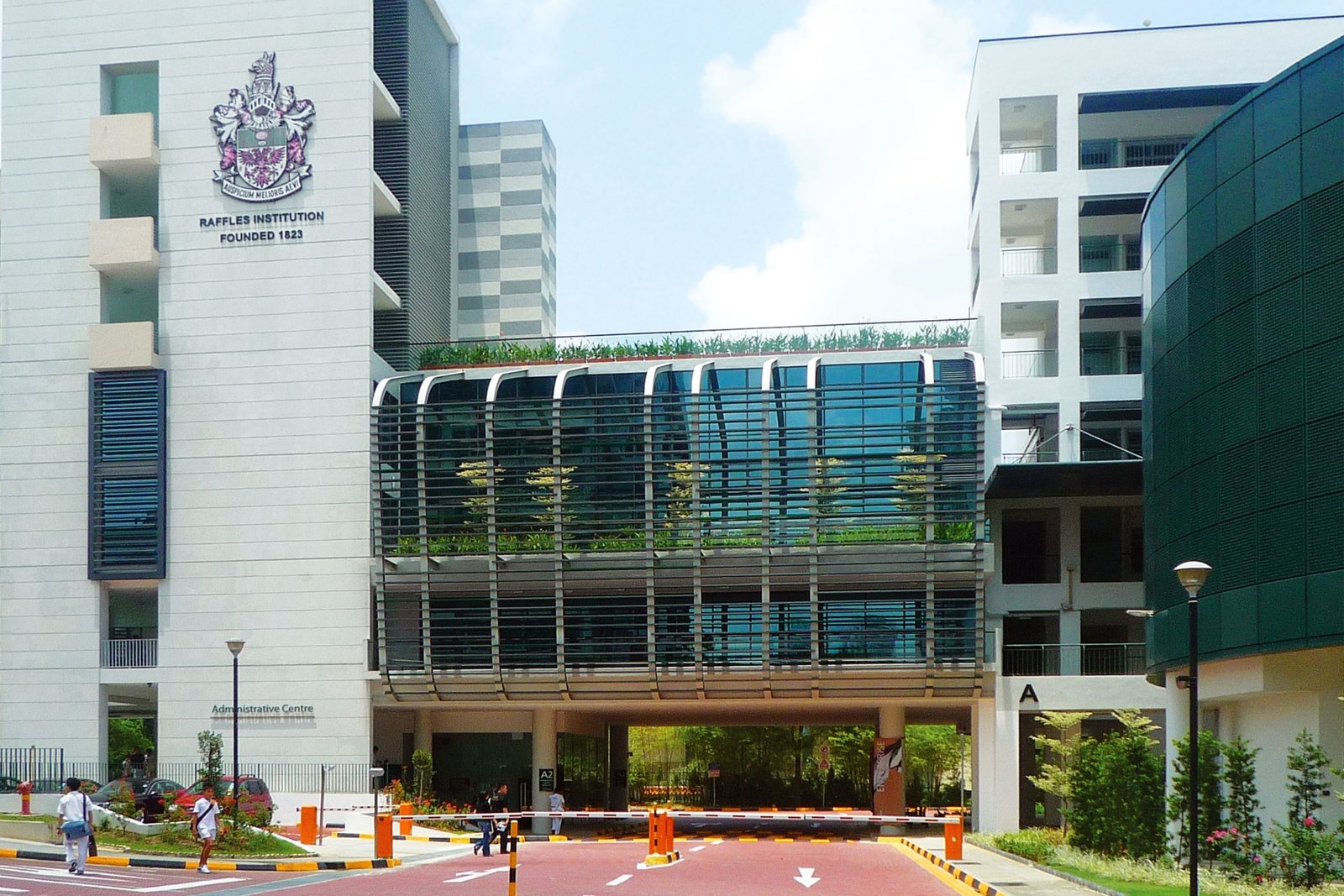
In 1990, RI relocated to its present site in Bishan and became an independent school. (Raffles Institution)
The move to Bishan marked a major transition.
The new campus provided facilities appropriate for the institution’s expanding academic and co-curricular programmes.
The Bishan campus eventually became closely associated with the modern image of Raffles Institution.
The relocation also occurred during a period when Singapore’s education system was developing new approaches to school autonomy, talent development and curriculum design.
14. The Raffles Programme
One of the most important modern developments was the introduction of the Raffles Programme.
In 2004, the Raffles Programme was introduced as a six-year integrated programme leading towards the Singapore-Cambridge GCE A-Level examinations. (Raffles Institution)
The programme represented an effort to provide students with a continuous educational pathway across the secondary and pre-university years.
Rather than treating secondary and junior college education as completely separate stages, the programme allowed students to experience a more integrated curriculum.
This model became an important part of RI’s educational identity.
15. Reintegration of RI and RJC
The relationship between RI and RJC changed again in the 2000s.
In 2009, RI and RJC were reintegrated under the name Raffles Institution. The reintegration created a six-year educational structure covering Years 1–6. (Raffles Institution)
This structure continues to influence how RI operates today.
The school now provides education across Years 1–6, allowing students to experience continuity between the earlier and later stages of the Raffles Programme.
16. Raffles Institution Today
Modern Raffles Institution describes itself as an educational institution for high-ability students aged approximately 13 to 18. Its current leadership emphasises academic rigour alongside character, service, empathy, curiosity and personal development. (Raffles Institution)
The institution’s educational philosophy is not limited to examination performance.
Its stated vision is:
Learners, leaders and pioneers, driven by purpose and dedicated to service. (Raffles Institution)
This reflects a broader understanding of education.
Students are encouraged to develop intellectual abilities while also considering how their knowledge and skills can contribute to society.
17. The Meaning of the Raffles Motto
The school’s motto is:
“Auspicium Melioris Aevi”
RI translates this Latin motto as:
“Hope of a Better Age.” (Raffles Institution)
The motto provides an important connection between the institution’s historical identity and its modern educational philosophy.
The phrase suggests an orientation toward the future.
For a school with more than two centuries of history, this creates an interesting balance: students are connected with an extensive heritage while simultaneously being encouraged to prepare for a changing world.
18. The Raffles Crest
The RI crest contains a gryphon.
According to the school, the gryphon combines qualities associated with an eagle and a lion. The eagle represents speed, flight and vision, while the lion represents strength, courage and majesty. (Raffles Institution)
The crest therefore serves as a visual representation of the institution’s identity.
School symbols are important in educational communities because they connect present students with previous generations.
At RI, the crest, motto, Houses, traditions and alumni network collectively contribute to the broader Rafflesian identity.
19. The Rafflesian Spirit
The term Rafflesian Spirit is frequently associated with RI’s culture.
The school’s official description of the Raffles Programme emphasises curriculum, co-curricular activities, House activities, friendships and service to a larger cause. (Raffles Institution)
This suggests that school life is intended to extend beyond classroom learning.
Students participate in activities where they can develop leadership, teamwork, communication, creativity and responsibility.
The concept of community is particularly important.
Students are encouraged to see themselves as members of a larger institution rather than simply individuals working toward examinations.
20. Academic Education at RI
Academic education remains central to Raffles Institution.
The school provides structured academic programmes for Years 1–4 and Years 5–6.
The curriculum includes areas such as science, mathematics, humanities, languages and other disciplines.
RI’s approach emphasises intellectual curiosity and the ability to think independently.
For example, its History programme describes learning as involving historical enquiry, analysis of evidence, evaluation of interpretations and construction of arguments. (Raffles Institution)
This approach illustrates an important principle of modern education: students are not simply expected to remember information but to understand how knowledge is constructed and evaluated.
21. Curriculum Innovation
RI’s Year 1–4 programme includes a curriculum innovation framework intended to prepare students for a future characterised by complexity, change and opportunity. (Raffles Institution)
The school highlights initiatives such as:
- Future Learning Programme
- Raffles Playground
- GapX
- Outdoor Adventure Learning
These initiatives are designed to combine intellectual development with curiosity, empathy and creativity. (Raffles Institution)
This reflects the changing expectations of modern education.
In a world influenced by technology, globalisation and rapid economic change, schools increasingly need to prepare students for situations where there may not be a simple textbook answer.
22. Co-Curricular Activities
Co-curricular activities, commonly known as CCAs, form another major part of RI student life.
The Year 1–4 programme currently offers more than 30 CCAs, covering sports, arts and other areas of interest. (Raffles Institution)
Such activities can provide students with opportunities to develop:
- Teamwork
- Leadership
- Discipline
- Creativity
- Communication
- Resilience
- Time management
- Collaboration
Participation in these activities also creates friendships and strengthens students’ connections with the school community.
23. Sports at Raffles Institution
Sport is an important part of student life at RI.
Through sporting activities, students can develop physical skills while learning about teamwork and competition.
Sports also contribute to House activities and school identity.
The competitive element of sport can create opportunities for students to practise discipline, preparation and cooperation.
At the same time, school sports provide an environment where students can develop interests outside conventional academic subjects.
24. Arts and Creativity
RI’s co-curricular opportunities also include the arts.
Arts education can include areas such as music, theatre, visual arts and other creative disciplines.
Creative activities are important because they provide students with different ways of expressing ideas.
They also contribute to the broader educational goal of developing individuals with diverse strengths.
RI’s stated mission specifically refers to embracing diverse strengths within the school community. (Raffles Institution)
25. The House System
The House system is a major tradition at Raffles Institution.
Students are grouped into Houses, creating smaller communities within the larger school.
For Years 5–6, RI currently has five Houses, named after headmasters and important figures from the institution’s early history. Each House has a student committee, identity, colour, mascot and cheers. (Raffles Institution)
House activities can include competitions and community events.
Students earn points for their Houses through participation in inter-House activities, and the House with the highest points receives the House Plaque at the end of the year. (Raffles Institution)
The House system therefore combines tradition, competition and community building.
26. Leadership Opportunities
Leadership is an important part of the Raffles educational philosophy.
RI’s vision specifically describes its desired graduates as learners, leaders and pioneers. (Raffles Institution)
Leadership opportunities can arise through:
- Student committees
- House activities
- CCAs
- Community projects
- Research
- School events
- Peer initiatives
- Student-led projects
Leadership in this context is not simply about holding a title.
Students can learn leadership through organising events, collaborating with peers, managing responsibilities and responding to challenges.
27. Service and Community Engagement
Service is another major theme in the school’s current mission.
RI describes its vision as producing students who are dedicated to service. (Raffles Institution)
The emphasis on service encourages students to think beyond individual achievement.
Community engagement can help students understand social issues and recognise their responsibilities toward other people.
This approach also connects with the school’s historical role in Singapore, where education has long been connected with the development of society.
28. Research and Intellectual Exploration
Modern education at RI also provides opportunities for students to explore ideas beyond standard classroom material.
Students can pursue projects and research in different fields.
The school states that students pursue projects ranging from scientific research to social causes. (Raffles Institution)
Research can teach students how to:
- Ask meaningful questions.
- Gather information.
- Evaluate evidence.
- Analyse problems.
- Develop arguments.
- Present conclusions.
- Reflect on limitations.
These abilities are useful for higher education and future professional work.
29. Higher Education Preparation
Because RI includes a pre-university stage, preparation for university is an important aspect of school life.
The school’s Higher Education Office provides guidance on university applications, scholarships and related matters.
RI’s current Higher Education Office information includes guidance for applications to Singapore universities as well as overseas destinations, including the United Kingdom and United States. (Raffles Institution)
This reflects the international dimension of modern education.
Students can receive guidance as they consider different higher-education pathways and academic fields.
30. The Importance of Global Education
Modern students live in a highly interconnected world.
RI’s current mission refers to preparing students to contribute to an interconnected human and natural world. (Raffles Institution)
Global education can involve understanding different societies, cultures, economies and historical experiences.
It also encourages students to recognise that many modern challenges extend beyond national borders.
Issues such as climate change, technological development, public health, economic transformation and international relations require people to understand perspectives from different parts of the world.
31. Student Support
Academic achievement is only one part of a student’s development.
RI’s current educational philosophy recognises the different needs, strengths and potential of individual students. (Raffles Institution)
Student support can help learners manage academic responsibilities, personal development and decisions about future education.
The school aims to create an environment where students can develop both competence and character.
32. Teachers and Educational Leadership
Teachers play a central role in the RI experience.
The institution’s staff includes academic leaders, student-development leaders, curriculum specialists and educators responsible for different areas of school life.
As of 2026, Aaron Loh serves as Principal of Raffles Institution. (Raffles Institution)
The leadership structure reflects the complexity of a modern school that serves students across six years and provides academic, co-curricular and student-development programmes.
33. The Role of the Campus
A school’s physical environment can influence how students learn and interact.
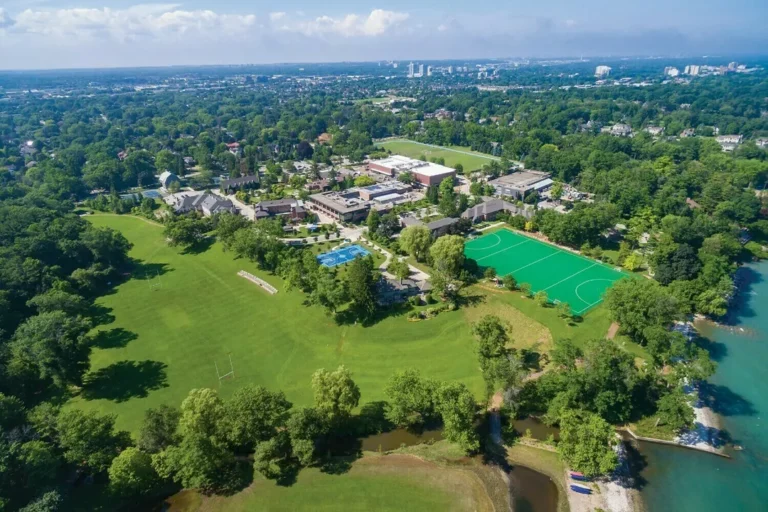
RI’s current campus in Bishan has developed considerably since the institution moved there in 1990.
Modern educational facilities need to support classrooms, laboratories, sports, arts, collaborative learning, technology and student activities.
RI is currently also undertaking campus-related transformation initiatives, reflecting the institution’s continuing adaptation to changing educational needs. (Raffles Institution)
34. Raffles Institution and Singapore’s History
Few schools can claim a historical timeline as closely connected to Singapore’s development as RI.
The school was founded during the early nineteenth-century development of Singapore.
It then experienced:
- Colonial administration
- Educational reform
- Expansion of secondary education
- Development of girls’ education
- Introduction of pre-university education
- The Second World War period
- Singapore’s transition toward self-government
- Independence
- Economic development
- Modern educational reforms
- The growth of global higher education
As a result, RI’s history provides an interesting perspective on the transformation of Singapore itself.
35. The School’s Historical Museum and Heritage
RI maintains a strong connection with its history.
The school’s official history and museum resources highlight its more than two-century heritage. (Raffles Institution)
Historical artefacts, records, publications and stories help current students understand the institution’s past.
Heritage education is valuable because it allows students to see that schools are not static organisations.
Institutions change because of changing societies, educational philosophies and generations of students.
36. The Rafflesian Alumni Community
The relationship between RI and its former students continues after graduation.
RI describes its alumni philosophy with the phrase:
“Once a Rafflesian, Always a Rafflesian.” (Raffles Institution)
The alumni community includes former students involved in many different areas.
RI’s alumni resources highlight contributions across public service, innovation, sports and the arts. (Raffles Institution)
The alumni network provides opportunities for former students to reconnect, mentor younger generations, participate in events and support the school.
37. The Old Rafflesians’ Association
The Old Rafflesians’ Association (ORA) is the official alumni body associated with Raffles Institution.
It was formally established on 23 August 1923 during the school’s centenary celebrations. (Raffles Institution)
The organisation has helped maintain connections between generations of Rafflesians.
Its activities include reunions, networking, sports, community events and opportunities to contribute to the school community. (Raffles Institution)
The existence of such an organisation illustrates how institutional identity can continue long after students leave school.
38. Notable Contributions of Rafflesians
Over its long history, Rafflesians have entered many different fields.
The school’s alumni material highlights contributions in areas including:
- Public service
- Business
- Science
- Medicine
- Technology
- Arts
- Sports
- Education
- Social causes
The diversity of these careers demonstrates that a school’s influence cannot be measured only through examination results.
Graduates can apply their education in very different ways.
39. Education Beyond Examination Results
Raffles Institution has a strong academic tradition, but its modern mission goes beyond examinations.
The school emphasises curiosity, experimentation, reflection, empathy, creativity and personal growth. (Raffles Institution)
This broader philosophy is increasingly important in education.
Examinations can measure certain types of knowledge and academic ability, but students also need communication skills, collaboration, creativity, ethical awareness and adaptability.
RI’s programme attempts to incorporate these dimensions into the student experience.
40. The Importance of Curiosity
Curiosity is an important concept in RI’s modern educational approach.
Students are encouraged to ask questions and investigate problems.
Curiosity can lead to deeper learning because students become interested in understanding why something happens rather than simply memorising the answer.
Research, humanities, science and creative projects all provide opportunities for students to explore questions in greater depth.
41. Critical Thinking
Critical thinking is another important part of the curriculum.
For example, RI’s History programme asks students to examine sources, evaluate interpretations and construct evidence-based arguments. (Raffles Institution)
These skills are transferable to many areas.
A student who learns to distinguish evidence from interpretation can apply that ability in university research, professional work and everyday decision-making.
42. Creativity and Innovation
Modern education also requires students to develop creative thinking.
RI’s curriculum innovation initiatives are designed to combine academic rigour with creativity and curiosity. (Raffles Institution)
Creativity can appear in scientific research, technology, arts, writing, entrepreneurship and social projects.
By encouraging students to develop projects of their own, schools can create opportunities for learners to move from consuming knowledge to producing new ideas.
43. Resilience and Personal Development
School life can involve demanding academic work and numerous activities.
RI’s current leadership describes students as developing resilience, empathy and optimism alongside academic capabilities. (Raffles Institution)
Resilience is particularly important for young people because education involves mistakes, challenges and periods of uncertainty.
A successful educational environment should therefore provide opportunities for students to learn from setbacks rather than treating every difficulty as failure.
44. The Importance of Friendship and Community
The Raffles Programme describes lifelong friendships as part of the Rafflesian experience. (Raffles Institution)
Friendships can be an important part of school life.
Students share academic experiences, competitions, House activities, CCAs, performances, projects and community work.
These experiences can create relationships that continue beyond graduation.
45. Tradition and Modernity
One of the defining features of RI is the combination of historical tradition and modern educational development.
The school has existed since 1823, yet it continues to introduce new programmes and educational initiatives.
This balance can be seen in several areas:
Historical traditions:
- School crest
- Motto
- House system
- Alumni traditions
- Institutional history
Modern developments:
- Curriculum innovation
- Digital education
- Research
- Future-oriented learning
- International university preparation
The combination allows the school to preserve its identity while adapting to changing circumstances.
46. Raffles Institution’s 200th Anniversary
In 2023, RI celebrated its 200th anniversary. (Raffles Institution)
The anniversary marked two centuries of educational history.
A bicentenary is particularly significant because it represents many generations of students and teachers.
The 200-year milestone also provided an opportunity to reflect on how the institution had changed.
The RI of 1823 and the RI of the twenty-first century operate in very different social and educational environments, yet both are connected through the institution’s continuing identity.
47. Raffles Institution in the Twenty-First Century
The twenty-first century has introduced new challenges for schools.
Technology has transformed communication, research and learning.
Artificial intelligence, digital information, globalisation and changing employment patterns are influencing how young people prepare for adulthood.
RI’s current curriculum innovation efforts reflect this changing environment.
The school aims to prepare students not only for existing careers but also for a future that may contain occupations, technologies and social challenges that are difficult to predict today.
48. Technology and Digital Learning
Digital technology can expand access to information and support new forms of learning.
However, technology also requires students to develop critical judgement.
Having access to large amounts of information does not automatically produce knowledge.
Students need to learn how to evaluate sources, recognise unreliable information, analyse evidence and use technology responsibly.
RI’s curriculum innovation and educational technology leadership reflect the importance of these developments in modern schooling. (Raffles Institution)
49. Preparing Students for an Uncertain Future
The school’s current leadership describes the future as one shaped by complexity, uncertainty and possibility. (Raffles Institution)
This is an important idea in modern education.
Students cannot necessarily be prepared for every future situation through memorising established information.
Instead, education can provide students with transferable abilities such as:
- Learning independently
- Communicating clearly
- Thinking critically
- Solving problems
- Working with others
- Adapting to change
- Understanding different perspectives
- Making evidence-based decisions
These abilities can remain useful even when technology and employment patterns change.
50. Raffles Institution and Leadership
Leadership remains a central theme in RI’s identity.
The school’s vision explicitly includes learners, leaders and pioneers. (Raffles Institution)
Leadership education can take many forms.
A student may demonstrate leadership by:
- Organising a House activity
- Leading a research project
- Supporting younger students
- Coordinating a community initiative
- Captaining a sports team
- Directing an artistic performance
- Creating a new student project
Such experiences can teach students that leadership involves responsibility rather than simply authority.
51. The Broader Meaning of the Rafflesian Identity
The Rafflesian identity has developed over more than 200 years.
It is connected with academic tradition, school history, friendships, Houses, CCAs, service, leadership and alumni relationships.
The identity is therefore more than the name of a school.
It represents membership in a community whose generations overlap through traditions and shared experiences.
52. Why Raffles Institution Remains Historically Important
Raffles Institution remains historically important for several reasons.
First, it is one of Singapore’s oldest educational institutions.
Second, its history is directly connected with the early development of organised education in Singapore.
Third, it played an important role in the development of pre-university education.
Fourth, its alumni have contributed to many areas of Singaporean and international life.
Finally, the school continues to evolve rather than simply preserving its nineteenth-century identity.
Its history therefore represents both continuity and change.
53. Lessons from the History of Raffles Institution
The history of RI provides several broader lessons about education.
Education evolves
Educational institutions must change when society changes.
Institutions require community support
The early history of RI demonstrates that educational projects require financial, administrative and social support.
Traditions can survive change
RI has changed locations, structures and programmes while retaining a recognisable institutional identity.
Academic education is only one part of development
Modern RI places importance on leadership, service, creativity and personal development as well as academic learning.
History can influence the future
The school’s heritage remains part of how it understands its mission today.
54. Raffles Institution and the Future
The future of Raffles Institution will likely continue to involve a combination of heritage and innovation.
The school is already developing new learning initiatives and campus transformation efforts.
At the same time, its historical identity remains central to its culture.
The challenge for a long-established institution is to ensure that tradition supports rather than limits innovation.
RI’s current mission suggests that the school intends to prepare students for an increasingly complex world while maintaining its emphasis on purpose, service and community. (Raffles Institution)
55. Frequently Asked Questions About Raffles Institution
When was Raffles Institution founded?
Raffles Institution was founded in 1823 by Sir Thomas Stamford Raffles. It originally began as the Singapore Institution. (Raffles Institution)
Where is Raffles Institution located?
The modern Raffles Institution campus is located in Bishan, Singapore. The school moved to its current site in 1990. (Raffles Institution)
What does the Raffles Institution motto mean?
The motto “Auspicium Melioris Aevi” is translated by RI as “Hope of a Better Age.” (Raffles Institution)
What is a Rafflesian?
A Rafflesian is a student or alumnus associated with Raffles Institution. The term is commonly used to describe members of the wider RI community.
What is the Raffles Programme?
The Raffles Programme is RI’s six-year educational programme covering Years 1–6. It integrates secondary and pre-university education and leads toward the GCE A-Level examinations. (Raffles Institution)
Does Raffles Institution have co-curricular activities?
Yes. RI offers numerous CCAs covering sports, arts and other interests. The Year 1–4 programme currently lists more than 30 CCAs. (Raffles Institution)
Does Raffles Institution have Houses?
Yes. Students participate in a House system involving competitions, activities and student leadership. (Raffles Institution)
What is the Old Rafflesians’ Association?
The Old Rafflesians’ Association is the official alumni body of Raffles Institution. It was established in 1923 during the school’s centenary celebrations. (Raffles Institution)
When did RI and RJC reintegrate?
Raffles Institution and Raffles Junior College were reintegrated in 2009 under the name Raffles Institution. (Raffles Institution)
When did RI celebrate its 200th anniversary?
Raffles Institution celebrated its 200th anniversary in 2023. (Raffles Institution)
Conclusion
Raffles Institution is an educational institution whose history stretches from the early nineteenth-century development of Singapore to the technological and globally connected world of the twenty-first century.
Founded in 1823, the institution began as the Singapore Institution and gradually developed into Raffles Institution. Over the decades, it experienced financial difficulties, administrative changes, new educational programmes, the development of girls’ education, the expansion of pre-university education, multiple campus relocations and major curriculum reforms. (Raffles Institution)
Its modern identity is built around academic learning, curiosity, leadership, service, creativity, community and personal growth. The Raffles Programme, House system, CCAs, research opportunities, higher-education guidance and alumni network all contribute to the contemporary Rafflesian experience.
The history of Raffles Institution is therefore not simply a story about an old school. It is also a story about the evolution of education in Singapore. From its founding in 1823 to its bicentenary in 2023 and its continuing development in 2026, RI has repeatedly adapted to new circumstances while maintaining connections with its heritage.
Its motto, “Auspicium Melioris Aevi — Hope of a Better Age,” captures this combination of history and forward-looking education. The institution’s continuing challenge is to preserve the values and traditions that have shaped its identity while preparing new generations of students for a world that is increasingly complex, interconnected and rapidly changing. (Raffles Institution)
SEO Keywords
Raffles Institution, Raffles Institution history, Raffles Institution Singapore, Raffles Institution history and heritage, Raffles Institution founded 1823, Raffles Institution curriculum, Raffles Programme, Raffles Institution Houses, Raffles Institution alumni, Rafflesians, Raffles Institution campus, Raffles Institution education, Raffles Institution Singapore history, Raffles Institution academic programme, Raffles Institution school life, Raffles Institution achievements, Raffles Institution motto, Auspicium Melioris Aevi, Raffles Institution 200th anniversary, Singapore oldest school.
SEO Meta Description:
Discover the complete history of Raffles Institution, Singapore, from its 1823 foundation and historic development to the Raffles Programme, academics, Houses, alumni, student life and modern educational mission.