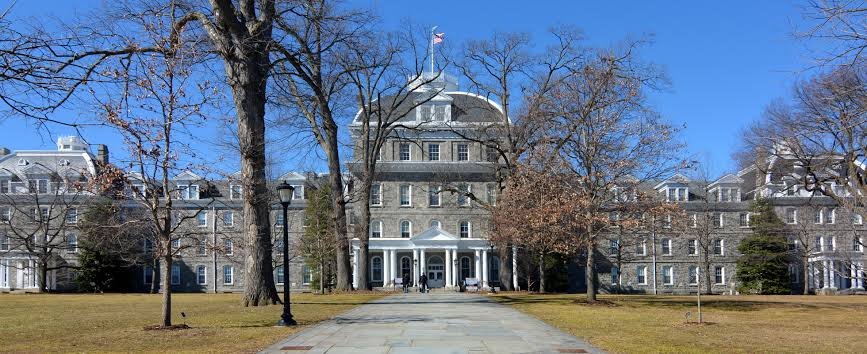
Swarthmore College: A Complete History, Academic Guide, Campus Life, Admissions, and Legacy
Introduction
Swarthmore College is one of the best-known liberal arts colleges in the United States, recognized for its rigorous academic environment, historic Quaker roots, small residential community, interdisciplinary learning, and strong tradition of independent thought. Located in Swarthmore, Pennsylvania, approximately 11 miles southwest of Philadelphia, the college combines the atmosphere of a small residential liberal arts institution with convenient access to one of America’s major cities.
Founded in 1864 by members of the Religious Society of Friends, commonly known as Quakers, Swarthmore was established as a coeducational institution. From its earliest years, the college developed an educational philosophy centered on intellectual inquiry, personal responsibility, ethical reflection, and service. Although the institution is now independent and nonsectarian, elements of its Quaker heritage continue to influence its community and institutional culture.
Today, Swarthmore offers undergraduate education across the humanities, social sciences, natural sciences, engineering, and interdisciplinary fields. The college deliberately maintains a relatively small student body, allowing students to work closely with professors and participate in research, seminars, independent projects, and campus organizations.
Its 425-acre campus is another defining feature. The grounds combine historic Pennsylvania fieldstone buildings, academic facilities, residence halls, gardens, wooded areas, and an arboretum containing thousands of plant species. The campus provides an environment in which academic life and residential life are closely connected.
This article explores the history of Swarthmore College, its founding philosophy, academic programs, Honors Program, campus, student life, admissions, financial aid, research opportunities, alumni, traditions, and continuing role in American higher education.
1. The Founding of Swarthmore College
The story of Swarthmore College begins in the nineteenth century, when American Quakers were increasingly interested in creating educational institutions that reflected their values and prepared students for intellectual and social responsibility.
The Religious Society of Friends had a long tradition of emphasizing education, personal conscience, peace, integrity, and social responsibility. Many Friends were also involved in movements for abolition, women’s rights, humanitarian reform, and improved education.
The idea for a college developed through discussions among Quaker communities during the nineteenth century. These discussions eventually led to the establishment of Swarthmore College in Pennsylvania.
Swarthmore was incorporated in 1864 as a coeducational college. This was significant because higher education opportunities for women were considerably more limited in the nineteenth century than they are today.
The founders envisioned an institution where women and men could receive a serious academic education. The college therefore became part of the broader history of expanding educational opportunities in the United States.
From the beginning, Swarthmore was associated with the Quaker commitment to education and social responsibility. At the same time, its founders intended it to be an institution of broad learning rather than simply a religious school.
2. Swarthmore and Its Quaker Heritage
Swarthmore’s Quaker heritage remains one of the most important elements of its identity.
The Religious Society of Friends is historically associated with principles such as peace, simplicity, integrity, equality, community, and individual responsibility. Swarthmore’s modern educational environment is not based on requiring students to follow a particular religious belief.
Instead, the college’s historical relationship with Quakerism has contributed to a culture that values questioning, reflection, dialogue, community participation, and ethical responsibility.
Historical college materials explain that Swarthmore was founded by members of the Religious Society of Friends and that the college later became nonsectarian in governance.
This history helps explain why Swarthmore has traditionally placed considerable importance on questions that go beyond purely technical knowledge.
Students are encouraged to think about how knowledge can be used, how individuals should participate in society, and how academic learning connects with larger human problems.
3. Early Development
During its early decades, Swarthmore developed as a small but ambitious institution.
The college’s physical campus expanded gradually. Rather than developing an enormous urban-style campus, Swarthmore grew incrementally, adding buildings and academic facilities as its needs increased.
The gradual development of the campus contributed to its distinctive physical character.
Historic Pennsylvania fieldstone architecture became an important visual feature of Swarthmore. Buildings were designed with a sense of permanence while maintaining relatively restrained architectural styles.
This approach was compatible with aspects of the college’s Quaker heritage, including simplicity and practicality.
Over time, the campus developed from a small collection of early buildings into a substantial academic and residential community.
4. Growth of Academic Programs
As American higher education changed during the late nineteenth and twentieth centuries, Swarthmore expanded its curriculum.
Although the college remained strongly committed to liberal arts education, it developed programs across an increasingly broad range of subjects.
Humanities disciplines such as literature, history, philosophy, languages, and the arts became important parts of the curriculum.
Social sciences such as economics, sociology, political science, psychology, and anthropology also developed.
At the same time, Swarthmore invested in mathematics and natural sciences.
One distinctive feature of the institution is that it did not treat liberal arts and scientific education as mutually exclusive. Students could study science, mathematics, computer science, and engineering while still participating in a broad liberal arts environment.
5. The Liberal Arts Philosophy
Liberal arts education is at the heart of the Swarthmore experience.
Rather than preparing students only for one narrowly defined profession, liberal arts education aims to develop broad intellectual abilities.
Students learn to analyze evidence, communicate ideas, write clearly, solve problems, understand different perspectives, and make connections across academic fields.
Swarthmore describes its liberal arts education as encouraging students to explore disciplines beyond their primary field and make meaningful connections among different areas of study.
This approach can be especially useful in a rapidly changing world.
A student who studies economics, for example, may also explore history, computer science, philosophy, or environmental studies. A biology student might combine scientific education with literature, political science, or ethics.
The objective is not simply to accumulate information.
The larger objective is to develop intellectual flexibility.
6. Academic Departments and Majors
Swarthmore offers more than 40 majors and programs across numerous academic areas.
The college’s academic offerings include fields in:
- Humanities
- Social sciences
- Natural sciences
- Mathematics
- Computer science
- Engineering
- Languages
- Arts
- Interdisciplinary studies
- Environmental studies
- International studies
Students can explore subjects such as history, economics, political science, psychology, biology, chemistry, physics, mathematics, computer science, English literature, philosophy, sociology, anthropology, art, music, theater, and many others.
This breadth is an important part of the Swarthmore educational model.
7. Interdisciplinary Education
One of the most interesting aspects of Swarthmore is the opportunity to connect disciplines.
Many of the world’s major problems do not fit neatly into one academic department.
Climate change, artificial intelligence, public health, international conflict, economic inequality, migration, education, and technological development all involve multiple areas of knowledge.
Interdisciplinary study allows students to examine these problems from different perspectives.
For example, environmental questions can involve biology, chemistry, economics, political science, sociology, and ethics.
Similarly, artificial intelligence can involve computer science, mathematics, philosophy, economics, psychology, and political analysis.
Swarthmore’s liberal arts environment makes such connections a central part of undergraduate education.
8. The Honors Program
Swarthmore’s Honors Program is one of its most distinctive academic traditions.
The program provides students with an intensive form of undergraduate study built around advanced seminars, independent work, and external evaluation.
According to Swarthmore’s published materials, the Honors Program includes intimate seminars and independent research, with students ultimately participating in written and oral examinations involving external examiners.
This system creates an unusual connection between undergraduate education and advanced scholarly work.
Instead of viewing an undergraduate degree merely as a sequence of standard courses, the Honors Program encourages students to engage deeply with academic questions.
Students can develop specialized knowledge while also learning how scholars debate evidence and interpret complex problems.
9. Faculty and Student-Faculty Interaction
One of Swarthmore’s defining characteristics is its small academic community.
The college has historically maintained a low student-to-faculty ratio, supporting close interaction between professors and students. Swarthmore’s published materials have reported an 8:1 student-faculty ratio.
This environment can make classroom discussions highly interactive.
Students may have opportunities to ask detailed questions, work closely with professors, participate in research, and receive individualized academic guidance.
The relationship between faculty and students is particularly important in a liberal arts environment because much of the educational experience occurs through discussion and collaboration rather than lectures alone.
10. Research Opportunities
Although Swarthmore is primarily an undergraduate college, research plays an important role in academic life.
Students can become involved in research projects across scientific, social scientific, and humanities disciplines.
Undergraduate research can help students develop:
- Research methodology
- Critical thinking
- Data analysis
- Academic writing
- Laboratory skills
- Presentation skills
- Independent problem solving
Students interested in graduate school can also use undergraduate research as preparation for advanced study.
The college’s emphasis on independent intellectual work is particularly compatible with students who enjoy exploring questions beyond normal classroom assignments.
11. Science and Engineering at Swarthmore
Swarthmore’s liberal arts identity does not mean that science and engineering receive less attention.
The college offers programs in areas such as biology, chemistry, physics, mathematics, computer science, and engineering.
Engineering is particularly interesting because it exists within a liberal arts setting.
An engineering student can gain technical training while also studying humanities and social sciences.
This combination can be valuable because modern engineers frequently work on problems involving economics, public policy, environmental issues, communication, ethics, and society.
The result is an educational model that combines technical knowledge with broad intellectual development.
12. Humanities at Swarthmore
The humanities remain a major component of the college’s educational identity.
Students can explore literature, history, philosophy, languages, religion, art history, music, theater, and related fields.
Humanities education develops skills such as interpretation, argumentation, writing, communication, historical understanding, and cultural analysis.
In an era increasingly influenced by technology, humanities education can also provide students with opportunities to think about questions involving human identity, culture, morality, history, and meaning.
13. Social Sciences
Swarthmore’s social science programs examine human behavior, institutions, economies, communities, and political systems.
Fields such as economics, sociology, political science, psychology, anthropology, and related disciplines allow students to examine how societies function.
Social science education can also be interdisciplinary.
A student researching inequality, for example, might combine economics with sociology.
A student studying international relations might draw from political science, history, economics, and language studies.
This flexibility reflects Swarthmore’s broader liberal arts philosophy.
14. The 425-Acre Campus
Swarthmore’s physical campus is one of its most recognizable features.
The college occupies approximately 425 acres in and around the borough of Swarthmore.
The campus combines academic buildings, residence halls, libraries, athletic facilities, gardens, wooded areas, and open spaces.
Swarthmore’s campus has also been described as an arboretum containing more than 4,000 species of plants.
This creates an environment quite different from many large urban universities.
Students can walk between buildings, study outdoors, meet friends, participate in organizations, and enjoy the natural surroundings.
15. Location Near Philadelphia
Swarthmore is located approximately 11 miles southwest of Philadelphia.
This gives students access to both a residential college environment and the resources of a major American city.
Philadelphia provides opportunities related to:
- Museums
- Hospitals
- Research institutions
- Cultural organizations
- Businesses
- Government
- Nonprofit organizations
- Historical sites
- Arts and entertainment
The location can therefore expand the educational experience beyond campus.
Students can experience a relatively quiet residential campus while remaining close to a large metropolitan area.
16. Student Community
Swarthmore intentionally maintains a small undergraduate population.
Historical college catalogs describe an enrollment of approximately 1,600 students, reflecting the institution’s deliberate preference for a small academic community.
A small student body can encourage familiarity among students and faculty.
Students often participate in multiple aspects of campus life because organizations, academic departments, athletics, arts groups, and residential communities overlap.
This can create a strong sense of community.
17. Diversity and Inclusion
Swarthmore has students from a broad range of backgrounds.
The college states that it welcomes students from different racial, religious, socioeconomic, geographic, citizenship, sexual and gender identity, and other backgrounds.
Its published materials show that the undergraduate population includes students from across the United States and from many countries.
A diverse student body can contribute to classroom discussions by bringing different experiences and perspectives into academic conversations.
For a liberal arts college, this diversity can be particularly significant because many courses rely heavily on discussion.
18. Student Organizations
Life at Swarthmore extends well beyond the classroom.
Students participate in organizations involving:
- Arts
- Music
- Theater
- Debate
- Student journalism
- Cultural organizations
- Community service
- Environmental activities
- Politics and civic engagement
- Academic clubs
- Entrepreneurship
- Athletics
- Recreation
Because the college has a relatively small population, student organizations can provide meaningful opportunities for leadership.
Students may organize events, manage publications, lead clubs, conduct projects, and collaborate with other members of the community.
19. Athletics
Swarthmore also maintains a competitive intercollegiate athletics program.
Student-athletes balance academic responsibilities with training and competition.
The college has historically emphasized the idea that students can pursue serious academic work while participating in athletics.
Swarthmore’s published materials have highlighted the accomplishments of its student-athletes, including hundreds of All-American honors over time.
Athletics can also contribute to community life by creating opportunities for teamwork, leadership, discipline, and school spirit.
20. Arts and Culture
The arts are an important component of campus life.
Students can participate in visual arts, theater, music, dance, film, and other creative activities.
Arts education complements Swarthmore’s academic philosophy by encouraging students to think creatively and communicate ideas through different forms.
A student majoring in a scientific discipline can also participate in theater or music.
Likewise, humanities students can explore scientific or technical subjects.
This flexibility is one of the advantages of a liberal arts environment.
21. Libraries and Academic Resources
Libraries are essential to Swarthmore’s academic culture.
Students use library resources for coursework, independent research, senior projects, and long-term academic work.
A research-oriented liberal arts college depends heavily on access to books, journals, archives, databases, digital resources, and specialized collections.
Students also have access to academic support services.
Swarthmore’s current materials describe resources including a Writing Center and an Office of Academic Success.
These services help students improve academic skills and plan their educational paths.
22. Writing and Communication
Strong writing is important across almost every discipline at Swarthmore.
Students write research papers, essays, laboratory reports, analytical assignments, and senior projects.
The Writing Center provides peer support for students who want to improve their writing.
Communication skills are also valuable beyond college.
Graduates may enter careers in research, law, medicine, technology, business, education, public service, nonprofit organizations, and many other areas.
The ability to communicate complex ideas clearly is therefore a major part of the liberal arts experience.
23. Preparation for Graduate and Professional School
Swarthmore graduates continue into a wide range of graduate and professional programs.
The college provides advising for students interested in medicine, law, and other forms of advanced education.
Swarthmore’s current materials identify dedicated pre-health and pre-law advising resources for students planning advanced study.
Students considering graduate school can also work with faculty mentors and academic advisers.
The research-oriented culture of the college can help students understand the expectations of advanced academic study.
24. Alumni Achievement
Swarthmore has produced graduates who have gone on to careers in science, literature, education, government, law, medicine, business, journalism, technology, and public service.
The college’s published materials note that five alumni have received Nobel Prizes and highlight substantial numbers of major fellowship and scholarship awards earned by students and graduates.
These achievements illustrate the long-term influence of a small liberal arts institution.
A college does not need tens of thousands of students to have a significant impact.
A relatively small community can produce graduates who contribute to many different fields.
25. Swarthmore and Intellectual Independence
Intellectual independence is a major part of the Swarthmore tradition.
Students are encouraged to ask questions rather than simply accept established conclusions.
This can involve challenging assumptions, comparing evidence, considering opposing arguments, and developing original ideas.
Such habits are especially useful in academic research.
They are also useful in professional life because many careers require people to analyze unfamiliar problems and make evidence-based decisions.
26. Social Responsibility and Community Engagement
Swarthmore’s historical Quaker background has contributed to a longstanding interest in social responsibility.
The college’s educational mission emphasizes developing students who can contribute to society.
Community engagement can take many forms, including volunteer work, civic projects, research, public-interest activities, and nonprofit involvement.
The goal is not simply to acquire knowledge but to consider how knowledge can be applied.
This idea has been part of Swarthmore’s educational identity for generations.
27. Admissions Philosophy
Admission to Swarthmore is selective.
The college evaluates applicants using a broad review process rather than relying on a single numerical measurement.
Swarthmore’s institutional data identifies factors such as the rigor of the secondary-school record, academic performance, class rank, and other elements in its admissions evaluation.
The college’s published materials also describe holistic review, including consideration of essays, recommendations, academic context, and the student’s experiences.
For prospective students, this means that preparation should extend beyond test scores.
Strong applicants generally need to demonstrate academic engagement, intellectual curiosity, meaningful activities, and a thoughtful approach to their education.
28. Applying to Swarthmore
Swarthmore’s published admissions materials have described several application pathways, including the Common Application, Coalition on Scoir Application, and QuestBridge Application for eligible applicants.
Applicants should always consult the current admissions website for the latest requirements because application policies and deadlines can change.
The application process may include:
- Choosing an application platform
- Completing personal information
- Providing academic records
- Writing required essays
- Providing recommendations
- Submitting additional materials when applicable
- Reviewing financial aid requirements
- Meeting application deadlines
Students should carefully check current requirements rather than relying on information from older admissions cycles.
29. Standardized Testing
Swarthmore has used test-optional admissions policies in recent application cycles.
Its 2024–25 published materials stated that applicants did not have to submit SAT, ACT, AP, or IB scores for that cycle.
Because testing policies can change from year to year, prospective applicants should verify the policy for the specific admission cycle in which they are applying.
Students who choose to submit scores should consider whether those scores accurately represent their academic preparation.
30. Financial Aid
Financial aid is an important part of Swarthmore’s approach to access.
The college states that it meets 100% of determined financial need for admitted students under its financial aid policies.
Its current materials also state that admitted international students with demonstrated financial need can receive loan-free financial aid covering 100% of determined need.
Financial aid policies are particularly important because private U.S. colleges can have high published costs.
Students should distinguish between the published cost of attendance and the actual amount a family may pay after financial aid.
31. International Students
Swarthmore attracts students from outside the United States.
International students can contribute substantially to the diversity of the academic community.
For international applicants, financial planning is especially important because U.S. college costs can include tuition, housing, food, insurance, books, travel, and personal expenses.
Swarthmore’s published materials explain that international applicants are considered with financial need in the admissions process, while admitted international students’ determined need is met through the college’s financial aid commitment.
International applicants should always review the latest financial aid forms and deadlines directly with the college.
32. Academic Advising
Academic advising plays an important role at Swarthmore.
Students may work with advisers when selecting courses, planning majors, considering research opportunities, preparing for graduate school, or exploring fellowships.
The Office of Academic Success provides academic guidance and support.
The college also has specialized advising for students interested in health professions and law.
Good advising can help students create academic plans that balance requirements with personal interests.
33. Senior Projects and Independent Work
Independent academic work is an important part of the Swarthmore experience.
Students can undertake substantial projects involving research, writing, experiments, creative work, or other forms of scholarship.
Such projects allow students to move beyond standard classroom assignments.
Instead of simply answering questions created by a professor, students may develop their own research questions.
This process can teach students how to define a problem, locate evidence, evaluate sources, analyze information, and communicate conclusions.
34. The Swarthmore Community
The term “community” has special importance at a small residential college.
Students live, study, eat, participate in activities, and socialize within a relatively concentrated environment.
This can create strong relationships.
Professors are not distant figures in a massive university system.
Students can often encounter the same people in classrooms, dining spaces, residence halls, clubs, athletic events, and campus activities.
This creates a sense of continuity between academic and social life.
35. Campus Traditions
Like many historic colleges, Swarthmore has developed traditions over generations.
Some traditions relate to student organizations, athletics, residence life, arts, community events, and academic celebrations.
Traditions provide continuity between current students and alumni.
They also help create a shared institutional identity.
However, traditions naturally evolve as generations of students introduce new ideas and practices.
36. The College During Times of National Crisis
Swarthmore’s history has intersected with major events in American history.
Like other colleges, it has experienced periods of war, economic crisis, political conflict, social movements, and major cultural changes.
During the twentieth century, the college’s Quaker heritage sometimes created complicated relationships with national military policies.
Historical Swarthmore records describe the campus’s involvement in wartime programs, including the Navy’s V-12 officer training program during World War II.
Such episodes demonstrate that institutions often face difficult decisions when their historical principles meet changing national circumstances.
37. Civil Rights and Social Change
Swarthmore’s history also includes the broader American struggle over race, equality, and civil rights.
The college’s relationship with African American students and the history of Black life at Swarthmore have been subjects of scholarly examination.
A Swarthmore senior thesis published through the college’s repository specifically documents aspects of the African American experience at Swarthmore and describes the complexity of that history.
Understanding such history is important because institutions are shaped not only by their stated ideals but also by how those ideals have been implemented over time.
38. Environmental Character of the Campus
Swarthmore’s natural environment is a significant part of campus life.
The college’s extensive grounds and arboretum provide students with opportunities to experience nature alongside academic life.
The campus landscape includes thousands of plant species and carefully maintained gardens.
This environment can support outdoor study, walking, recreation, photography, ecological learning, and informal social activities.
The landscape is therefore not simply decorative.
It contributes to the character of the educational environment.
39. The Arboretum
Swarthmore’s arboretum is one of its distinctive features.
The grounds contain thousands of species and provide an unusual botanical environment for a college campus.
Students interested in biology, environmental studies, horticulture, sustainability, or landscape design can find educational value in the campus environment.
At the same time, the arboretum contributes to everyday student life by creating open and attractive spaces.
40. Why Swarthmore Is Known as a Liberal Arts College
Swarthmore represents a particular model of American higher education.
Large research universities may offer thousands of courses and enormous graduate programs.
Swarthmore instead focuses primarily on undergraduate education.
The result is an institution where undergraduate students can receive substantial academic attention.
Students can explore different fields while developing depth in a major.
The college’s small size also makes it possible to create an academic community where discussion and personal interaction are central.
41. Swarthmore and the Future of Liberal Arts Education
Liberal arts colleges face important questions in the modern world.
Technology is changing employment.
Artificial intelligence is transforming industries.
Climate change is creating new scientific and social challenges.
Globalization is increasing connections among societies.
These developments raise questions about what students need to learn.
Swarthmore’s educational model offers one possible response: combine specialized knowledge with broad intellectual abilities.
A student may graduate with technical knowledge while also understanding history, communication, ethics, culture, and society.
42. Technology and Innovation
Although Swarthmore has a traditional liberal arts identity, its academic programs increasingly engage with modern technology.
Computer science, engineering, statistics, mathematics, scientific research, and digital methods all play roles in contemporary education.
Technology can also support humanities and social science research.
For example, digital archives, computational analysis, geographic information systems, and data science can transform how researchers study historical and social questions.
The liberal arts environment can therefore provide a setting where technology is combined with humanistic thinking.
43. Career Preparation
A liberal arts degree does not necessarily prepare students for only one occupation.
Instead, it can provide transferable skills.
These include:
- Writing
- Research
- Critical thinking
- Communication
- Collaboration
- Quantitative reasoning
- Problem solving
- Independent learning
- Cultural awareness
These skills can be applied across many professional environments.
Swarthmore graduates pursue different paths rather than following one predetermined career route.
44. Medicine and Health Professions
Students interested in medicine and other health professions can receive specialized advising.
Swarthmore’s Health Sciences Office helps students plan coursework and prepare for professional-school applications.
Pre-health preparation usually involves completing appropriate science courses while also developing communication and analytical skills.
A liberal arts education can provide students with opportunities to study ethics, psychology, sociology, public health, and other subjects relevant to healthcare.
45. Law and Public Service
Students interested in law can also access dedicated advising.
The Pre-Law Office supports students in course planning and preparation for law-school applications.
A Swarthmore education can be relevant to law because legal careers require strong reading, writing, reasoning, research, and communication skills.
Students can also explore political science, history, philosophy, economics, sociology, and other fields before entering professional school.
46. Global Perspective
Swarthmore’s student community includes people from many countries and regions.
International perspectives can influence classroom discussions and campus activities.
Students can study languages, international relations, global studies, regional studies, and other internationally oriented subjects.
The global nature of modern education means that understanding cultures beyond one’s own country can be valuable in almost every profession.
47. What Makes Swarthmore Distinctive?
Several characteristics help define Swarthmore College:
1. Historic Quaker Roots
The college was founded in 1864 by members of the Religious Society of Friends.
2. Liberal Arts Focus
The institution emphasizes broad undergraduate education.
3. Small Academic Community
Swarthmore intentionally maintains a relatively small student population.
4. Strong Faculty Interaction
A low student-faculty ratio supports close academic relationships.
5. Honors Program
The Honors Program provides an intensive academic experience involving advanced seminars and external examination.
6. Beautiful Campus
The 425-acre campus includes historic buildings and an extensive arboretum.
7. Philadelphia Location
Students have convenient access to a major American city.
8. Research Opportunities
Undergraduates can participate in substantial academic research.
9. Financial Aid
The college states that it meets 100% of determined financial need for admitted students under its financial aid policies.
10. Broad Academic Choice
Students can study humanities, sciences, engineering, social sciences, languages, arts, and interdisciplinary fields.
48. Challenges of Studying at Swarthmore
A serious article about any college should also acknowledge potential challenges.
Swarthmore’s academic environment is demanding.
Students are expected to read, write, analyze, participate, and think independently.
The small community can also mean that academic and social life are closely connected.
For some students, this is attractive.
For others, a larger university may provide a different type of environment.
Students should therefore consider their own learning preferences before choosing a college.
49. Who Might Appreciate Swarthmore?
Swarthmore may appeal particularly to students who enjoy:
- Intensive academic discussion
- Small classes
- Independent research
- Liberal arts education
- Interdisciplinary learning
- Close faculty relationships
- Residential campus life
- Intellectual curiosity
- Writing and analysis
- Science and humanities together
- Community involvement
However, every student’s college preferences are different.
The best way to evaluate Swarthmore is to compare its academic programs, financial aid, campus environment, student life, and admissions requirements with one’s own goals.
50. Swarthmore’s Continuing Legacy
More than a century and a half after its founding, Swarthmore continues to reflect the educational ambitions of its founders while adapting to modern higher education.
Its history began with Quaker educational ideals.
Over time, those ideals developed within a broader nonsectarian liberal arts institution.
The college now serves students from diverse backgrounds and offers programs spanning traditional humanities and sciences as well as modern fields such as computer science and engineering.
Its continued identity rests on the combination of small scale, academic rigor, liberal arts education, independent thought, and community.
51. Frequently Asked Questions About Swarthmore College
When was Swarthmore College founded?
Swarthmore College was founded in 1864 by members of the Religious Society of Friends. It was established as a coeducational institution.
Where is Swarthmore College located?
Swarthmore College is located in Swarthmore, Pennsylvania, approximately 11 miles southwest of Philadelphia.
Is Swarthmore a university?
Swarthmore is a private liberal arts college rather than a large comprehensive university. Its primary focus is undergraduate education.
Is Swarthmore affiliated with the Quakers?
Swarthmore was founded by Quakers and continues to value aspects of its Quaker heritage, but it is an independent, nonsectarian college.
How large is the Swarthmore campus?
The college occupies approximately 425 acres.
Does Swarthmore offer engineering?
Yes. Engineering is part of Swarthmore’s academic offerings, alongside humanities, sciences, social sciences, and other fields.
Does Swarthmore have an Honors Program?
Yes. The Honors Program is an important part of Swarthmore’s academic tradition and includes advanced seminars, independent work, and external examinations.
Does Swarthmore offer financial aid?
Yes. Swarthmore states that it meets 100% of determined financial need for admitted students under its financial aid policies.
Does Swarthmore accept international students?
Yes. Swarthmore enrolls students from outside the United States and provides financial aid to admitted international students according to its stated policies.
Is Swarthmore close to Philadelphia?
Yes. The campus is approximately 11 miles southwest of Philadelphia.
What is Swarthmore known for?
Swarthmore is particularly known for liberal arts education, rigorous academics, its Quaker heritage, small student community, Honors Program, undergraduate research, and strong faculty-student interaction.
Conclusion
Swarthmore College has developed from a nineteenth-century Quaker educational project into a nationally recognized liberal arts institution with a distinctive academic and residential culture.
Its history is closely connected with ideas about education, equality, intellectual independence, ethical responsibility, and service. Founded in 1864 as a coeducational college, Swarthmore was unusual for its time and gradually developed into an institution offering broad academic opportunities across the humanities, sciences, social sciences, engineering, and interdisciplinary studies.
Its 425-acre campus provides an unusual combination of historic architecture and natural beauty, while its location near Philadelphia gives students access to the resources of a major American city.
Academically, Swarthmore emphasizes depth and breadth. Students can specialize in a major while exploring subjects beyond their primary discipline. The Honors Program provides another route for students seeking intensive academic work, while research opportunities allow undergraduates to participate in scholarly projects.
The college’s relatively small size also remains central to its identity. Students can develop close relationships with faculty, participate in discussion-based classes, conduct independent research, and become deeply involved in campus organizations.
Swarthmore’s financial aid policies are another important part of its educational model, with the college stating that it meets 100% of determined financial need for admitted students under its policies.
Ultimately, Swarthmore College represents a particular vision of higher education: a small residential community where academic rigor, liberal arts learning, independent thought, and community responsibility exist together.
For students researching leading American colleges, Swarthmore provides an important example of how a relatively small institution can maintain a broad academic mission and a significant national and international presence.
Its history demonstrates that higher education is not defined only by size. An institution can have a relatively small undergraduate population while creating influential scholarship, educating accomplished graduates, supporting research, and developing a distinctive intellectual culture.
That combination of history, academic ambition, community, and liberal arts education continues to define Swarthmore College in the twenty-first century.