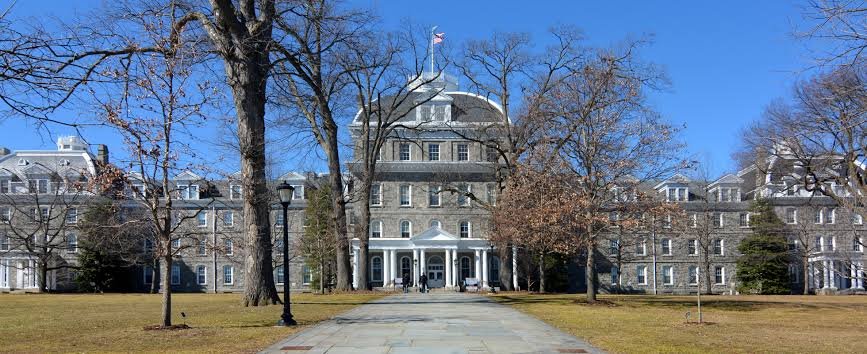
Amherst College: History, Academics, Campus Life, Admissions and Legacy
Introduction
Amherst College is one of the most respected liberal arts colleges in the United States. Located in Amherst, Massachusetts, the college has built a long-standing reputation for academic excellence, intellectual curiosity, close faculty-student relationships, and a broad liberal arts education. Founded in the nineteenth century, Amherst has developed from a small New England college into a nationally and internationally recognized institution.
What makes Amherst College particularly distinctive is its emphasis on undergraduate education. Rather than being organized around a large graduate-school system, Amherst has historically concentrated much of its educational mission on undergraduate students. This allows students to explore different academic disciplines while developing strong relationships with professors, classmates, and the wider campus community.
The college is also known for its flexible academic culture. Students can study subjects ranging from the humanities and social sciences to natural sciences, mathematics, computer science, languages, and interdisciplinary fields. Amherst’s curriculum encourages students to think critically, communicate clearly, conduct research, and examine complex questions from multiple perspectives.
Beyond academics, Amherst College has a rich history connected with American higher education. Its alumni include writers, scholars, scientists, political leaders, business figures, educators, journalists, and other professionals who have contributed to society in many different ways.
This article explores the history of Amherst College, its academic philosophy, campus, student life, admissions, traditions, notable alumni, athletics, libraries, financial aid, and continuing role in higher education.
What Is Amherst College?
Amherst College is a private liberal arts college in Amherst, Massachusetts. It is primarily an undergraduate institution and is widely associated with small classes, intensive academic study, and close interaction between students and faculty.
The college’s liberal arts model encourages students to develop breadth as well as depth. Instead of limiting an undergraduate education to one professional specialization, students are encouraged to study across multiple fields and to develop the ability to connect ideas.
An Amherst student might study history alongside economics, biology alongside philosophy, computer science alongside literature, or political science alongside a foreign language. This interdisciplinary approach reflects the broader purpose of a liberal arts education: preparing students not only for their first careers but also for lifelong learning.
Amherst is part of the Five College Consortium, a collaboration involving Amherst College, Hampshire College, Mount Holyoke College, Smith College, and the University of Massachusetts Amherst. Through this regional academic community, students can access additional courses, resources, events, and academic opportunities.
The History of Amherst College
The Founding of Amherst College
Amherst College was founded in 1821 in Massachusetts. Its establishment was connected with the educational and religious environment of early nineteenth-century New England.
During this period, communities throughout the United States were establishing schools and colleges to expand educational opportunities. Amherst emerged from this broader movement and gradually developed its own institutional identity.
The college was originally established with an educational mission that reflected the values of its founders and the religious culture of the time. Like many American colleges founded during the nineteenth century, Amherst initially had a curriculum strongly influenced by classical education.
Students studied subjects such as Latin, Greek, mathematics, philosophy, rhetoric, and moral philosophy. Over time, however, the curriculum expanded significantly as new fields of knowledge became important.
The development of Amherst mirrored the transformation of American higher education. Colleges increasingly moved from traditional classical programs toward broader scientific, literary, social scientific, and professional preparation.
Early Development
Amherst’s early decades were characterized by institutional growth and the challenge of establishing a sustainable academic community.
The college had to recruit students, develop a faculty, create academic resources, and build a physical campus. Like other nineteenth-century colleges, it depended on the support of donors, alumni, local communities, and educational supporters.
During its early history, Amherst became increasingly known for its commitment to rigorous undergraduate education.
As the United States expanded economically and socially during the nineteenth century, higher education also changed. Amherst responded by adding new academic fields and expanding its library, laboratories, classrooms, and extracurricular activities.
Amherst in the Nineteenth Century
The nineteenth century was an important period in the development of Amherst College.
The college experienced changes in curriculum, administration, campus architecture, and student life. Scientific education became increasingly important, and students were given more opportunities to study subjects beyond the classical curriculum.
The growth of scientific knowledge influenced American colleges across the country. Amherst developed academic resources that supported the study of natural science and other emerging disciplines.
During this period, Amherst also developed a growing alumni network. Graduates entered many professions, including education, law, ministry, medicine, journalism, government, and business.
The alumni community eventually became one of the college’s important institutional strengths.
Amherst College and the Liberal Arts Tradition
One of the defining characteristics of Amherst College is its liberal arts tradition.
A liberal arts education is designed to expose students to a wide range of intellectual disciplines. Instead of focusing exclusively on vocational training, it emphasizes analytical thinking, communication, creativity, research, and the ability to approach unfamiliar problems.
At Amherst, this philosophy has influenced both the curriculum and the student experience.
Students are encouraged to ask questions rather than simply memorize information. They read extensively, participate in discussions, conduct research, write papers, complete projects, and work with professors.
The goal is to develop independent thinkers.
Academic Flexibility
Amherst has historically offered students substantial flexibility in choosing courses and shaping their academic programs.
This flexibility allows students to explore interests before committing themselves to a particular field.
For example, a student interested in environmental issues could combine courses in biology, economics, political science, geology, and environmental studies.
A student interested in international affairs might study political science, history, economics, languages, and regional studies.
This kind of interdisciplinary learning is an important part of liberal arts education.
Academic Programs at Amherst College
Amherst offers undergraduate programs across numerous areas.
Humanities
Humanities subjects are an important part of the Amherst academic environment.
Students may study areas such as:
- English
- History
- Philosophy
- Religion
- Classics
- Art and art history
- Music
- Theater and dance
- Languages and literatures
These disciplines encourage students to examine culture, ideas, artistic expression, historical change, and human experience.
Social Sciences
Amherst also offers programs in the social sciences.
Fields include subjects such as:
- Economics
- Political science
- Psychology
- Sociology
- Anthropology
- Law, jurisprudence, and social thought
- Education-related studies
- Interdisciplinary social research
Social science students investigate how people, institutions, economies, governments, and societies function.
Natural Sciences
Science has long been an important component of Amherst’s academic identity.
Students can study disciplines such as:
- Biology
- Chemistry
- Physics
- Astronomy
- Neuroscience
- Mathematics
- Computer science
Laboratory courses and research opportunities allow students to gain practical experience alongside theoretical knowledge.
Interdisciplinary Study
Modern academic problems rarely fit neatly into one discipline.
Climate change, artificial intelligence, public health, economic inequality, international relations, and technological development all involve multiple areas of knowledge.
Amherst’s liberal arts environment provides opportunities for students to approach such questions from different academic perspectives.
Interdisciplinary study can therefore help students develop broader analytical frameworks.
Faculty and Student Relationships
One of the central features of a small liberal arts college is close interaction between students and professors.
At Amherst, professors are generally heavily involved in undergraduate teaching. Students can participate in classroom discussions, office hours, research projects, seminars, and independent study.
This environment can provide students with opportunities to develop mentoring relationships with faculty members.
Professors can help students:
- Understand difficult academic concepts
- Develop research questions
- Improve writing
- Prepare for graduate school
- Explore career options
- Find internships and research opportunities
- Develop independent projects
These relationships can become one of the most valuable aspects of an undergraduate education.
Amherst College Campus
The Amherst campus is located in the town of Amherst in western Massachusetts.
The region is known for its historic New England character, educational institutions, natural surroundings, and strong college-town atmosphere.
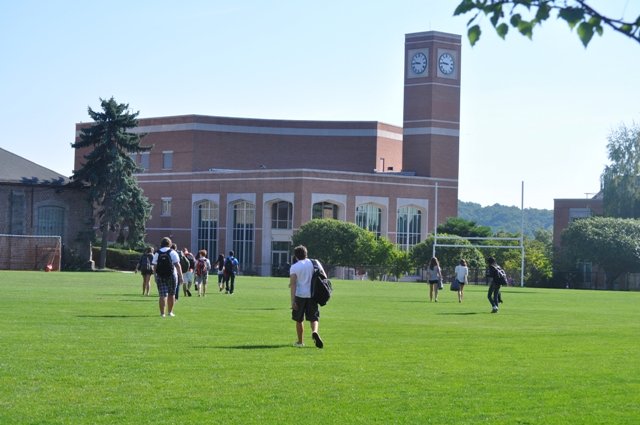
The Amherst campus contains academic buildings, residence halls, libraries, laboratories, dining facilities, athletic spaces, administrative offices, student organizations, and outdoor areas.
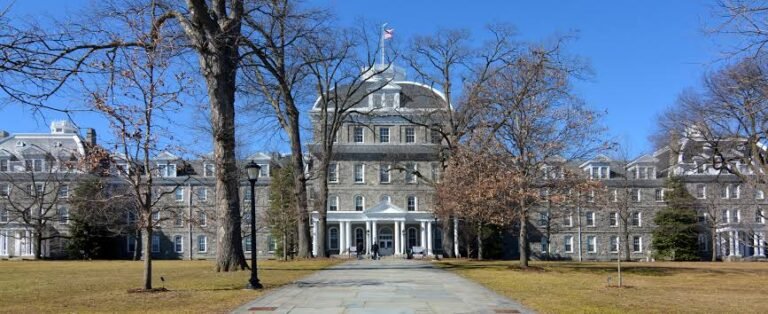
Campus architecture reflects different periods in the institution’s history.
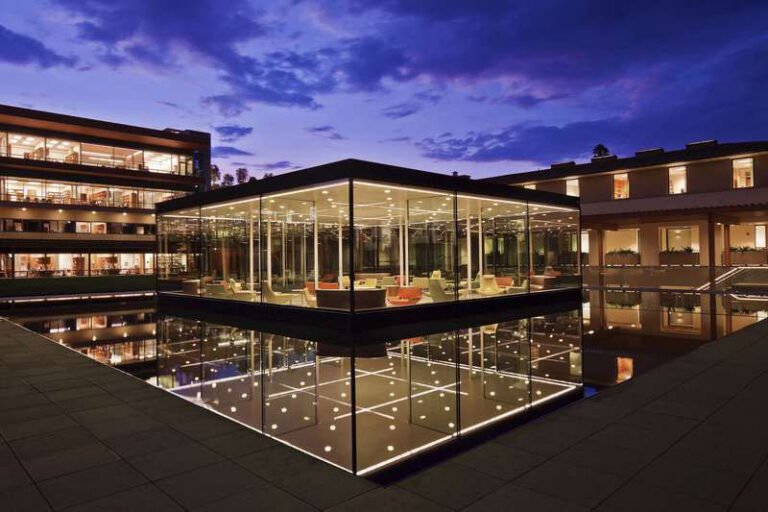
Some buildings have traditional New England architectural characteristics, while others represent more modern approaches to academic and residential design.
The Amherst Community
The town of Amherst provides students with access to restaurants, cafes, bookstores, cultural activities, local businesses, and outdoor recreation.
The wider region is also home to several higher education institutions.
Because Amherst College participates in the Five College Consortium, students are part of a larger academic ecosystem.
The surrounding colleges include:
- Amherst College
- Hampshire College
- Mount Holyoke College
- Smith College
- University of Massachusetts Amherst
This creates opportunities for students to interact with people from different institutions and academic backgrounds.
The Five College Consortium
The Five College Consortium is one of the distinctive features of studying in the Amherst area.
Students at participating colleges can access a broader range of courses and academic resources than would normally be available at a single small institution.
The consortium encourages:
- Cross-registration
- Academic collaboration
- Shared cultural events
- Research opportunities
- Broader student networks
- Access to additional libraries and facilities
For Amherst students, this can significantly expand the academic choices available during their undergraduate education.
Student Life at Amherst College
College life involves much more than classroom study.
Amherst students participate in organizations, athletics, performing arts, publications, cultural activities, volunteer projects, and social events.
Student organizations can allow students to explore interests outside their academic majors.
Examples of activities may include:
- Student journalism
- Debate
- Theater
- Music
- Dance
- Community service
- Cultural organizations
- Political discussion
- Academic societies
- Entrepreneurship
- Outdoor activities
These activities can help students develop leadership, communication, teamwork, and organizational skills.
Residential Life
Residential life is an important part of the undergraduate experience.
Students live in campus housing and interact with classmates from different backgrounds.
Residence halls can become important social and academic communities. Students often study together, participate in campus events, share meals, and develop friendships.
Residential education also provides opportunities for students to learn how to live and work with people who may have different perspectives and experiences.
Dining and Campus Community
Dining facilities play an important role in student life.
Meals provide students with opportunities to meet classmates, discuss coursework, participate in informal conversations, and build relationships.
A college dining environment can also reflect the diversity of its student population by offering different types of food and accommodating a range of dietary needs.
Athletics at Amherst College
Amherst College participates in intercollegiate athletics and has a long tradition of student participation in sports.
Athletics can include sports such as:
- Basketball
- Soccer
- Football
- Lacrosse
- Tennis
- Swimming and diving
- Track and field
- Cross country
- Baseball
- Softball
- Field hockey
- Volleyball
- Wrestling
- Golf
Athletic participation can teach students teamwork, discipline, time management, resilience, and leadership.
For many students, sports are an important part of their college identity.
Arts and Culture
The arts have an important place at Amherst.
Students can participate in music, theater, dance, visual arts, creative writing, and other cultural activities.
Performances and exhibitions can bring together students, faculty, alumni, and members of the surrounding community.
Creative activities also give students opportunities to express ideas in ways that differ from traditional academic writing and research.
Museums and Cultural Resources
The Amherst area offers students access to museums, galleries, libraries, historical sites, theaters, and cultural organizations.
One notable institution associated with Amherst College is the Mead Art Museum, which supports teaching and cultural programming.
Art museums connected with universities can provide students with opportunities to study original works and understand visual culture beyond textbooks.
Libraries and Research
Libraries remain an essential part of the academic experience at Amherst.
Students use library resources for:
- Research papers
- Historical studies
- Scientific projects
- Literature reviews
- Primary-source research
- Independent study
- Senior projects
Digital databases have expanded access to scholarly information, while physical collections remain valuable for historical and specialized research.
Research Opportunities for Students
Undergraduate research can be a major part of a liberal arts education.
At Amherst, students may work with faculty members on research projects or develop independent investigations.
Research opportunities can exist across disciplines.
A science student may work in a laboratory.
A history student may investigate archival documents.
A literature student may conduct textual research.
A political science student may analyze political institutions or public policy.
These experiences can prepare students for graduate study and professional careers.
Admissions to Amherst College
Admission to Amherst is selective, and applicants generally need to demonstrate strong academic preparation as well as engagement beyond the classroom.
An application may include:
- Academic records
- Essays
- Teacher recommendations
- School information
- Extracurricular activities
- Personal achievements
- Additional application materials where applicable
The admissions process considers the overall application rather than one single factor.
Students should carefully review the college’s current official admissions requirements because application policies, deadlines, testing requirements, and procedures can change.
What Amherst Looks for in Students
A successful Amherst applicant typically demonstrates intellectual curiosity and a serious commitment to learning.
Strong applicants may have pursued challenging academic programs while also developing interests outside the classroom.
These interests can include:
- Research
- Arts
- Athletics
- Community service
- Entrepreneurship
- Leadership
- Writing
- Technology
- Cultural activities
There is no single profile that defines every Amherst student.
Financial Aid at Amherst College
The cost of attending a private college can be significant, making financial aid an important consideration for many families.
Amherst has a substantial financial aid program intended to help students afford attendance.
Financial aid may involve grants, scholarships, student employment, loans, or combinations of these depending on institutional policy and individual circumstances.
Because financial aid policies can change, prospective students should consult Amherst’s official financial aid office for the latest information about eligibility, application procedures, deadlines, and international student policies.
International Students
Amherst attracts students from different parts of the world.
International students contribute to the cultural and intellectual diversity of the campus.
Students from outside the United States may need to consider:
- Admission requirements
- English-language preparation
- Financial aid
- Immigration documentation
- Student visa requirements
- Health insurance
- Housing
- Travel arrangements
The international student experience can also provide opportunities for students to learn about American society while sharing perspectives from their own countries.
Diversity and Inclusion
Modern American colleges increasingly emphasize creating learning environments where students from different backgrounds can participate fully in academic and campus life.
At Amherst, diversity and inclusion have become important parts of institutional life.
Students may encounter classmates with different:
- Cultural backgrounds
- Geographic origins
- Academic interests
- Economic experiences
- Languages
- Family histories
- Personal perspectives
A diverse academic community can encourage discussion and expose students to ideas that they may not encounter in their home communities.
Amherst College Traditions
Colleges develop traditions over many generations.
At Amherst, traditions are reflected in academic ceremonies, alumni activities, athletics, student organizations, campus events, and community gatherings.
Traditions help connect current students with previous generations.
They also contribute to institutional identity.
Notable Alumni of Amherst College
Amherst has produced graduates who have become prominent in many areas.
Its alumni community includes:
- Writers
- Authors
- Scientists
- Educators
- Politicians
- Journalists
- Business leaders
- Lawyers
- Scholars
- Artists
- Public servants
One of the best-known literary figures associated with Amherst is poet Emily Dickinson, although her relationship with the institution is distinct from that of a conventional alumnus because she did not graduate from Amherst College.
Other notable alumni have made contributions to literature, public life, education, science, and business.
Amherst and Literature
Amherst has a strong connection with American literary culture.
The surrounding region of western Massachusetts has long been associated with important American writers and intellectual figures.
The college’s academic programs in English, languages, literature, and creative writing provide students with opportunities to study and produce literary work.
Literary study teaches students how to analyze language, narrative, history, culture, and human experience.
Amherst and American Education
Amherst’s history is closely connected with the development of American higher education.
Over more than two centuries, American colleges have changed dramatically.
Traditional colleges once focused heavily on classical education.
Modern universities and colleges now teach thousands of specialized subjects.
Amherst’s development demonstrates how a liberal arts institution can preserve its undergraduate focus while adapting to new academic fields and changing social needs.
Career Preparation
Although Amherst emphasizes liberal arts education rather than narrow vocational training, its graduates enter a wide range of careers.
Students may pursue careers in:
- Business
- Law
- Medicine
- Education
- Technology
- Journalism
- Government
- Nonprofit organizations
- Finance
- Science
- Arts and culture
- Research
A liberal arts education can provide transferable skills that are useful across professions.
These include:
- Writing
- Research
- Critical thinking
- Communication
- Problem solving
- Collaboration
- Presentation skills
- Analytical reasoning
Graduate and Professional Education
Many Amherst graduates continue their education after completing their bachelor’s degrees.
Depending on their interests, graduates may attend:
- Medical school
- Law school
- Graduate school
- Business school
- Engineering programs
- Public policy programs
- Education programs
- Doctoral programs
A strong undergraduate foundation can help students prepare for advanced study.
The Importance of Writing at Amherst
Writing is central to many liberal arts disciplines.
Students may write:
- Research papers
- Essays
- Laboratory reports
- Literary analysis
- Policy papers
- Historical arguments
- Senior projects
Writing helps students clarify their thinking.
The ability to construct a logical argument and communicate evidence effectively is useful in both academic and professional environments.
Critical Thinking and Discussion
Classroom discussion is another important feature of liberal arts education.
Rather than simply listening to lectures, students may be expected to read, question, debate, analyze, and defend their interpretations.
This approach encourages students to consider different viewpoints.
It also teaches an important intellectual skill: the ability to change or refine an argument when new evidence becomes available.
Technology and Modern Education
Although Amherst has a traditional liberal arts identity, modern higher education increasingly depends on technology.
Students use digital research databases, online academic resources, specialized software, communication platforms, and other technologies.
Computer science and data-related fields have also become increasingly important across the liberal arts.
Technology can complement traditional education by giving students new ways to conduct research, analyze information, collaborate, and present their work.
Sustainability and the Environment
Environmental issues are increasingly important to colleges and universities.
A campus can address sustainability through:
- Energy efficiency
- Waste reduction
- Recycling
- Sustainable transportation
- Environmental education
- Conservation
- Sustainable food systems
Students interested in environmental questions can explore these subjects through academic courses, research, student organizations, and community activities.
Amherst’s Relationship With the Local Community
A college does not exist separately from its surrounding town.
Amherst College contributes to the local community through employment, cultural activities, educational events, athletics, public programs, and economic activity.
Students may also participate in community service and local organizations.
This connection can create opportunities for students to apply classroom knowledge to real-world situations.
The Value of a Small College
Large universities can offer thousands of courses and extensive research infrastructure.
Small liberal arts colleges provide a different educational model.
Students at a smaller institution may benefit from:
- Smaller classes
- More direct faculty interaction
- Stronger undergraduate focus
- Close academic communities
- Easier participation in some campus activities
- Greater opportunities for interdisciplinary learning
At the same time, students should consider their own educational preferences when comparing institutions.
Challenges and Considerations
Like any institution, Amherst College operates within a changing higher education environment.
Colleges today face questions involving:
- Tuition costs
- Financial aid
- Accessibility
- Technology
- Campus diversity
- Mental health resources
- Career preparation
- Sustainability
- Changing demographics
- The future of higher education
Prospective students should examine current information rather than relying only on historical reputation.
Why Students Consider Amherst College
Students interested in Amherst may be attracted by its undergraduate focus, liberal arts curriculum, campus environment, faculty relationships, and access to the Five College Consortium.
The institution can be particularly interesting for students who enjoy academic exploration and want opportunities to study more than one field.
Students should consider factors such as:
- Academic interests
- Campus culture
- Location
- Class environment
- Financial aid
- Career goals
- Athletics
- Arts
- Research opportunities
- Student organizations
The right college depends on the individual student’s goals and circumstances.
Amherst College Rankings and Reputation
Amherst is frequently discussed among prominent liberal arts colleges in the United States.
However, rankings can change from year to year and often use different methodologies.
A ranking may consider factors such as:
- Graduation rates
- Financial resources
- Academic reputation
- Faculty resources
- Student outcomes
- Selectivity
- Alumni giving
Prospective students should therefore look beyond rankings and examine the actual academic programs, costs, financial aid, campus environment, and opportunities available to them.
How to Prepare for Amherst College
Students interested in applying can begin preparing several years before application season.
Useful steps include:
- Build a strong academic foundation.
- Take challenging courses when available.
- Read widely.
- Develop meaningful extracurricular interests.
- Participate in activities that genuinely interest you.
- Build relationships with teachers.
- Practice academic writing.
- Research Amherst’s programs carefully.
- Understand application deadlines.
- Review financial aid requirements.
- Prepare thoughtful application essays.
- Check the latest admissions requirements.
Preparation should focus on genuine academic and personal development rather than simply trying to create an artificial application profile.
Amherst College for Future Scholars
Students who enjoy learning for its own sake may find a liberal arts environment particularly valuable.
The college experience can help students develop habits of lifelong learning.
A student may graduate with expertise in one or more academic fields, but the broader goal is to develop the ability to continue learning throughout life.
This is increasingly important in a rapidly changing economy.
Technology, scientific knowledge, and professional requirements continue to evolve. Graduates may change careers or enter fields that did not exist when they began college.
A broad educational foundation can help students adapt to these changes.
The Long-Term Legacy of Amherst College
Amherst College’s history stretches back to 1821, making it part of the early development of American higher education.
Over the generations, the college has evolved while maintaining a strong commitment to undergraduate education.
Its alumni have entered many professions, its academic programs have expanded, and its campus has developed alongside changes in American society.
The institution’s continuing identity is closely connected with liberal arts education, intellectual inquiry, and close academic relationships.
Amherst College in the Modern Era
Today, Amherst operates in an environment very different from the one in which it was founded.
Students have access to enormous amounts of information through the internet.
Artificial intelligence is changing education and professional life.
Globalization has connected institutions and students across national borders.
Climate change has created new scientific and social challenges.
At the same time, traditional academic skills such as reading, writing, research, reasoning, and communication remain important.
Amherst’s liberal arts model provides one framework for combining these traditional skills with modern academic and technological opportunities.
Frequently Asked Questions About Amherst College
What is Amherst College known for?
Amherst College is known for liberal arts education, undergraduate teaching, academic flexibility, close faculty-student interaction, and its location within the Five College Consortium.
Where is Amherst College located?
Amherst College is located in Amherst, Massachusetts, in the United States.
When was Amherst College founded?
Amherst College was founded in 1821.
Is Amherst College a university?
No. Amherst College is a liberal arts college primarily focused on undergraduate education.
What can students study at Amherst?
Students can study a wide variety of subjects in the humanities, social sciences, natural sciences, mathematics, computer science, languages, arts, and interdisciplinary fields.
Is Amherst College part of the Five College Consortium?
Yes. Amherst College participates in the Five College Consortium with Hampshire College, Mount Holyoke College, Smith College, and the University of Massachusetts Amherst.
Does Amherst offer financial aid?
Amherst provides financial aid to eligible students. Applicants should consult the college’s current financial aid information for up-to-date policies and requirements.
Does Amherst have international students?
Yes. Amherst has students from the United States and many other countries.
What is student life like at Amherst?
Student life includes academics, residential activities, athletics, arts, student organizations, cultural programs, community service, and social events.
Does Amherst have athletics?
Yes. Amherst College has a broad intercollegiate athletics program and numerous sports opportunities.
What makes a liberal arts college different from a large university?
A liberal arts college generally emphasizes undergraduate education, broad academic exploration, smaller learning environments, and close faculty interaction. A large university may offer a much larger range of undergraduate, graduate, and professional programs.
Is Amherst College historically significant?
Yes. Founded in 1821, Amherst has played a long-standing role in the development of American liberal arts education.
Conclusion
Amherst College represents a distinctive tradition in American higher education. Founded in 1821, the institution has developed over generations while maintaining a strong focus on undergraduate liberal arts education.
Its academic environment combines humanities, social sciences, natural sciences, mathematics, computer science, languages, arts, and interdisciplinary study. Students can explore different fields while developing important skills in writing, research, communication, critical thinking, and problem solving.
The college’s location in Massachusetts also provides access to the broader Five College academic community. Through the consortium, students can benefit from opportunities beyond a single campus.
Amherst’s history is another important part of its identity. Generations of students, professors, alumni, and community members have contributed to the development of the institution. Its graduates have gone into many professions and fields, contributing to education, science, literature, government, business, journalism, law, medicine, and the arts.
For students researching American liberal arts colleges, Amherst offers an example of an undergraduate-centered educational model. Its combination of academic breadth, close faculty interaction, residential community, research opportunities, athletics, arts, and access to a larger regional academic network makes it an important institution to understand.
Ultimately, the value of Amherst College is best understood not simply through historical reputation or rankings, but through its educational philosophy, academic programs, campus community, resources, and opportunities available to individual students.
SEO Keywords
Amherst College, Amherst College history, Amherst College Massachusetts, Amherst College admissions, Amherst College academics, Amherst College campus, Amherst College student life, Amherst College scholarships, Amherst College financial aid, Amherst College liberal arts, Amherst College undergraduate programs, Amherst College notable alumni, Five College Consortium, Amherst Massachusetts colleges, best liberal arts colleges in the USA, Amherst College education, Amherst College history and facts.
Suggested SEO Title
Amherst College: History, Academics, Admissions, Campus Life and Legacy
Suggested Meta Description
Explore Amherst College history, academics, admissions, campus life, financial aid, student opportunities, notable alumni, athletics, and its role in American liberal arts education.