Aiglon College: A Complete History, Educational Philosophy, Campus Life and International School Experience
Introduction
Aiglon College is a distinctive international boarding school located in the Alpine village of Chesières, above Villars-sur-Ollon in the canton of Vaud, Switzerland. Founded in 1949 by British educator John Corlette, the school was created around an educational philosophy that emphasized the balanced development of the mind, body, and spirit. More than seven decades later, this principle remains central to Aiglon’s identity.
Unlike a conventional school where education may be primarily associated with classrooms, examinations, and academic achievement, Aiglon has historically presented education as a much broader experience. Mountain expeditions, physical activity, meditation, community service, residential life, international friendships, creative pursuits, and academic study are all incorporated into the school’s educational environment. Aiglon describes itself as a place where students learn not only through formal lessons but also through experiences and challenges.
The school currently has around 500 students, with a substantial boarding population and students representing more than 65 nationalities. Aiglon’s official information also reports an average class size of approximately 12 students and ten boarding houses.
Its location is one of the school’s defining characteristics. Situated at approximately 1,200 metres above sea level, the campus combines traditional Alpine buildings and modern educational facilities. Students live and study surrounded by forests, mountains, hiking routes, winter sports opportunities, and spectacular views of the Swiss Alps. The school therefore uses its geographical setting as an educational resource rather than treating it simply as scenery.
Aiglon’s history is also unusual because the school began on a very small scale. When John Corlette opened the school in January 1949, it consisted of only a few students and a rented chalet. From these modest beginnings, it developed into an international boarding community with students from many parts of the world.
This article explores the complete story of Aiglon College, including its origins, development, founder, educational philosophy, academic programmes, boarding houses, campus, outdoor education, international community, admissions, scholarships, student experience, and continuing influence.
The Foundation of Aiglon College
The Beginning in 1949
Aiglon College officially began on 8 January 1949, when John Corlette opened the school in rented accommodation at Chalet Chantecler. Aiglon’s archival material identifies this date as an important milestone in the school’s history and describes the early institution as a very small educational community.
The school emerged during a period of enormous change in Europe. The Second World War had ended only a few years earlier, and societies were rebuilding institutions, communities, and educational systems. John Corlette believed that young people needed an education that prepared them for more than academic examinations.
His vision emphasized personal responsibility, independence, physical development, intellectual curiosity, and spiritual reflection.
The original Aiglon was therefore not designed simply to reproduce a traditional classroom model. Instead, Corlette wanted to create an environment in which students could develop as complete individuals.
The school’s modern description of its founding philosophy continues to emphasize the balanced development of mind, body, and spirit. According to Aiglon, this principle continues to influence both classroom education and activities outside the classroom.
John Corlette, the Founder
John Corlette was born in London in 1911. During his teenage years, he came to Switzerland because of ill health and continued his education at Alpine College in nearby Arveyes. His experience of the Swiss mountains became important to his understanding of education and eventually influenced the location and character of Aiglon College.
Corlette understood that the mountain environment could provide opportunities for education that were difficult to reproduce in an ordinary urban setting.
The physical challenge of walking uphill, skiing, hiking, climbing, and travelling through mountainous terrain could teach persistence and self-reliance. At the same time, the beauty and scale of the Alps could encourage reflection and curiosity.
These ideas became fundamental to Aiglon.
Corlette served as the school’s Head Master for 23 years. During this period, he established many of the values and traditions that later generations of Aiglonians continued to experience.
The Early Development of Aiglon College
Aiglon did not become a large international school immediately. Its growth occurred gradually as the school established itself in the Villars region.
The school’s archives record several important developments during its first decades.
In 1954, Aiglon moved to the Hotel Bristol, at which point the school had grown to 26 students. The following year, Clairmont became the school’s first permanent home after being acquired with financial support from friends and families of Aiglon.
By 1957, the school roll had reached 51 students, and the Aiglon Association was created. The association’s publication helped establish a continuing connection between students, families, and alumni.
The development of permanent buildings and boarding houses became an important part of Aiglon’s growth.
In 1960, the school acquired Belvedere and La Dépendance. Alpina followed in 1961. In 1965, Chalet Près Vallon was acquired for the creation of a primary day school for younger boys and girls.
These developments demonstrate how the school gradually expanded its physical environment while retaining its residential and community-focused character.
The Admission of Girls
One of the significant milestones in Aiglon’s history occurred in 1968, when girls were admitted to the school.
This change helped transform Aiglon into a more diverse educational community. The school had initially developed within a particular boarding-school tradition, but the admission of girls expanded its educational environment and helped shape the mixed international community that exists today.
The same year, Aiglon leased Old Delaware, another important development in its boarding infrastructure.
The growth of the school continued during subsequent decades, with additional buildings and boarding facilities contributing to the development of the campus.
Aiglon and the Round Square Movement
Aiglon’s educational philosophy has long emphasized internationalism, character, service, and learning through experience.
In 1966, Aiglon met with six other schools that would eventually form the Round Square Association. The following year, Aiglon hosted a Round Square conference.
This connection reflected an educational approach that valued international understanding and personal development alongside academic education.
The idea of learning through practical experiences fits closely with Aiglon’s mountain-based identity. Students are encouraged to encounter challenges, cooperate with others, and reflect on their experiences.
The Aiglon Educational Philosophy
Mind, Body and Spirit
The phrase “mind, body and spirit” is central to understanding Aiglon College.
The school’s philosophy suggests that education should not concentrate exclusively on intellectual performance. Academic knowledge is important, but students also need physical health, emotional development, personal responsibility, social awareness, and opportunities for reflection.
Aiglon’s official guiding principles describe the founding ethos as the balanced development of mind, body, and spirit. The school also explains that maintaining the founding values does not mean resisting change; instead, the objective is to keep the philosophy relevant to contemporary students and a rapidly changing world.
This approach gives Aiglon a distinctive identity among international boarding schools.
Education Beyond the Classroom
At Aiglon, education extends beyond lessons.
Students can participate in:
- Outdoor expeditions
- Skiing
- Hiking
- Sports
- Arts
- Community service
- Leadership activities
- Student clubs
- Inter-house competitions
- Cultural programmes
- Innovation and technology activities
- Meditation and reflection
The intention is to create opportunities for students to discover their strengths in different environments.
A student who may not be the strongest academic performer, for example, may discover leadership through a mountain expedition, creativity through the arts, teamwork through sport, or responsibility through community service.
The Alpine Environment
A School on the Mountain
Aiglon’s geographical location is fundamental to its identity.
The campus is located in the Swiss Alps near Villars-sur-Ollon. Aiglon describes the mountain as part of the school’s environment, classroom, and way of life.
Students do not simply look at mountains from a classroom window. They interact with the landscape through outdoor activities and educational programmes.
The terrain naturally encourages physical movement. Walking between buildings may involve hills and slopes, while the surrounding region provides opportunities for hiking, skiing, and expeditions.
Learning from Nature
The Alpine environment also supports environmental education.
For younger students, the school describes the forests and streams around the campus as an extension of the classroom. In the Wonder Years programme, students spend at least one day each week outside in nature, integrating academic study with practical outdoor experiences.
This kind of learning can make abstract subjects more tangible.
A lesson about ecosystems can be connected to an actual forest. Geography can be explored through mountain landscapes. Physical education can become an expedition. Environmental responsibility can be experienced rather than discussed only in a textbook.
Academic Education at Aiglon College
Aiglon combines its holistic philosophy with academically demanding programmes.
The school’s current educational structure includes different stages designed to support students as they move from junior education toward senior school and university preparation.
Junior School
Aiglon’s Junior School includes the Wonder Years and Discovery Years.
The Wonder Years cover younger students, while the Discovery Years provide a bridge toward the senior school. The current Junior School information describes the programme as combining academic learning, character development, multilingualism, outdoor education, creativity, and community.
The junior programme also introduces students to modern areas such as artificial intelligence and robotics alongside traditional subjects.
This demonstrates that Aiglon’s concept of holistic education is not limited to traditional outdoor activities. It also includes modern technology and emerging fields.
Exploration Years
The Exploration Years provide an important stage in the senior school.
Aiglon currently offers two academic pathways during this stage: IGCSE and IB Foundation.
The purpose is to provide students with a strong academic foundation while continuing the school’s wider emphasis on personal development.
International Baccalaureate
During the final two years, Aiglon offers the International Baccalaureate Diploma Programme.
The IB Diploma is widely recognized internationally and requires students to study across multiple subject areas while developing research, communication, critical-thinking, and independent-learning skills.
Aiglon describes the programme as challenging while also fitting its holistic educational philosophy.
For students hoping to attend universities in different countries, an internationally recognized curriculum can provide a useful foundation.
Teaching and Class Sizes
Aiglon places considerable emphasis on relatively small classes.
The school currently reports an average class size of around 12 students and a student-teacher ratio of approximately 5:1.
Small classes can allow teachers to understand students more individually and provide opportunities for discussion and participation.
At a boarding school, academic support also extends beyond classroom teachers.
Tutors, houseparents, and other staff members can contribute to students’ academic and personal development.
This means that education at Aiglon is closely connected to residential life.
Boarding Life at Aiglon
The Boarding House as a Home
Boarding is one of the defining characteristics of Aiglon College.
The school’s boarding houses are described as the heart of student life. Aiglon currently has ten boarding houses, each with its own history, traditions, community, and identity.
For many students, the boarding house becomes a second home.
Students live with peers from different countries and cultures. They eat together, study together, participate in activities together, and support each other through the challenges of school life.
This creates an environment where friendships can become an important part of the educational experience.
International Friendships
Aiglon’s international population is one of its major characteristics.
The school currently reports students representing more than 65 nationalities. Its multilingual environment includes more than 20 languages, while English serves as the common language of the school.
A student might therefore share a room or boarding house with classmates from countries and cultures they had never previously encountered.
Such an environment can encourage cultural awareness.
Students learn that there are many different ways to communicate, celebrate traditions, approach problems, and understand the world.
Aiglon’s Boarding Houses
Aiglon has developed a network of boarding houses over many decades.
Among the houses are Alpina, Belvedere, Delaware, St Louis, Le Trient, La Baita, and La Casa, along with other residential communities.
Each house has its own identity and traditions.
Belvedere House
Belvedere is one of Aiglon’s senior boys’ houses.
The current Belvedere building opened in January 2023 and is located at the upper campus. It accommodates more than 48 boys from Years 9 to 13. The house has a long historical identity dating back to its earlier establishment in Aiglon’s history.
Its location provides views toward the Dents du Midi.
The house environment is designed to provide students with spaces for study, relaxation, social activities, and community building.
Delaware House
Delaware is another important boarding house.
Aiglon’s information describes Delaware as a purpose-built boarding house founded in 1968. It is situated near forest, gardens, sports facilities, and other parts of the lower campus.
The house emphasizes friendship, community, and shared responsibility.
Junior Houses
Younger students have dedicated residential environments.
The Junior School identifies La Baita for boys and La Casa for girls. Boarding is available to younger students from Year 5, with residential teams providing support.
This allows younger children to experience boarding in an environment designed around their age and developmental needs.
Student Life
Student life at Aiglon is intentionally varied.
A typical student’s experience may include academic lessons, meals with housemates, sports, clubs, study periods, outdoor activities, community projects, and house events.
This variety is part of the school’s definition of holistic education.
Sports
Physical activity has always been important at Aiglon.
The mountain environment naturally supports winter and summer sports.
Students can participate in skiing, hiking, football, tennis, and other athletic activities. Inter-house competitions provide an additional layer of participation and community.
Sport at Aiglon is therefore not simply about competition. It can also develop teamwork, discipline, resilience, communication, and leadership.
Outdoor Adventure
Outdoor adventure is among the most distinctive features of the school.
Mountain expeditions can place students in unfamiliar situations where they have to cooperate and make decisions.
The school describes challenge as an integral part of its educational programme. Expeditions, service projects, awards, and even failures can become opportunities for learning and personal growth.
This approach reflects Corlette’s original belief that education should prepare students for real life.
Meditation and Reflection
Aiglon’s approach to holistic education also includes reflection.
Meditation has been part of Aiglon life since the school’s foundation, according to the school’s description of its educational heritage.
The purpose is not simply relaxation.
Reflection can encourage students to consider their experiences, choices, responsibilities, relationships, and personal goals.
In a busy boarding-school environment, opportunities for quiet reflection can provide a balance to academic pressure and physical activity.
Community Service
Service is another important part of Aiglon’s educational approach.
The school emphasizes the responsibility of students to contribute to communities locally and internationally. Aiglon describes service as part of the wider development of students and their understanding of the world around them.
Community service can help students recognize that education is connected to responsibility.
Rather than viewing success solely through personal achievement, students are encouraged to consider how their skills can contribute to other people.
Innovation, Technology and Modern Education
Although Aiglon has strong traditions, the school is not exclusively focused on the past.
Modern education at Aiglon includes innovation, robotics, emerging technologies, and contemporary approaches to learning.
The school’s campus includes an Applied Innovation and Robotics Lab and an Emerging Technologies Lab.
Younger students are also introduced to areas such as artificial intelligence and robotics through project-based learning.
This combination of tradition and innovation is an important aspect of modern Aiglon.
Students can experience centuries-old Alpine traditions while simultaneously exploring technologies that may shape the future.
Arts and Creativity
Aiglon’s holistic philosophy extends to creative subjects.
Students have opportunities to engage with artistic activities alongside academic study, sports, and outdoor education.
Creative work can help students develop imagination, communication, confidence, and self-expression.
The school’s diverse community also provides a rich cultural environment for creative activities.
Students from different countries may bring different musical traditions, artistic influences, languages, and cultural experiences into the school community.
International Community
More Than a School
Aiglon describes itself as more than simply a school.
Its international boarding environment means that students become part of a community extending across countries and generations.
The school reports a community of more than 6,000 alumni and parents.
This network creates connections that can continue after graduation.
Students who meet at Aiglon may later study at universities in different parts of the world and enter different professions, while still maintaining a shared connection to the school.
Cultural Diversity
International diversity is not merely a statistic at Aiglon.
It affects daily life.
Students have opportunities to learn from people with different languages, cultures, traditions, and experiences.
For an international boarding school, this diversity can be particularly valuable because students are not learning about global citizenship only from textbooks. They are living alongside an international group of peers.
Aiglon’s Campus
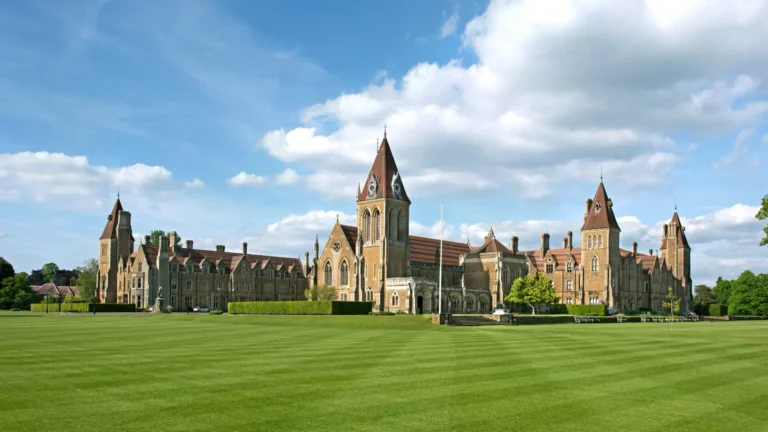
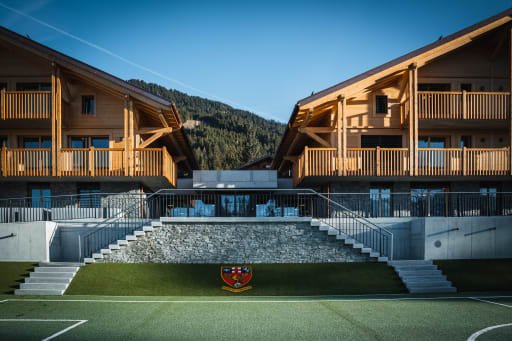
The Aiglon campus combines traditional Alpine architecture with modern educational facilities.
The school describes the campus as including purpose-built spaces, renovated traditional buildings, chalets, boarding houses, teaching facilities, creative arts spaces, and technology laboratories.
This mixture reflects the school’s historical development.
Some buildings have been part of Aiglon’s story for generations, while others have been added or renovated to meet contemporary educational needs.
Mountain Views
The location provides students and teachers with extensive views across the Alpine landscape.
Aiglon’s philosophy treats these views as more than aesthetic decoration.
The mountains represent challenge, ambition, perspective, and exploration.
For students, simply living in such an environment can create a strong connection between place and education.
Sustainability at Aiglon
Environmental responsibility has become increasingly important in modern education.
Aiglon reports sustainability initiatives involving student-led projects and infrastructure improvements. The school has also received the Eco-School label and states that building refurbishments and new construction follow the Swiss Minergie low-energy-consumption standard.
The school has also set an objective of reducing energy consumption by 10 percent by 2029.
These efforts connect the school’s Alpine setting with environmental responsibility.
Living in a mountain environment makes issues such as climate, energy, biodiversity, and resource use especially visible.
Admissions to Aiglon College
Aiglon has a selective admissions process.
The school states that it evaluates applicants holistically, considering their academic potential as well as their character, interests, ability to engage with the school’s challenging environment, and fit within its international boarding community.
The school does not describe admissions as being based solely on examination results.
Instead, it considers a broader range of qualities.
Applications for Years 5–11
For applicants to Years 5 through 11, the process can involve an interview and online assessments.
According to Aiglon, the assessments focus on areas including:
- Problem solving
- Mathematical reasoning
- Logical thinking
- Literacy
The interview explores areas such as character, academic interests, friendships, interests, and participation in the boarding community.
Applications for Year 12
Year 12 applicants have a different process.
Aiglon states that applicants must attend an in-person Full Admissions Visit involving an introduction to the school, a campus tour, an interview, and online assessments.
The purpose is to understand whether a student is likely to thrive within Aiglon’s academic and residential environment.
Scholarships at Aiglon College
Aiglon provides scholarship opportunities for selected students.
The school explains that scholarship support can extend beyond tuition and academic essentials.
Its scholarship information states that scholars may receive support covering boarding accommodation, meals, wellbeing programmes, tutoring, university support, healthcare, sports, ski passes and equipment, expeditions, and cultural programmes, depending on the scholarship arrangements.
This reflects the school’s broader understanding of education.
A scholarship is not presented merely as financial assistance for classroom education but as support for participation in the full Aiglon experience.
The school also describes support systems including buddy arrangements, welcome meetings, mentorship, houseparent support, tutor and wellbeing assistance, university advising, and travel support.
University Preparation
For senior students, university preparation is an important part of Aiglon’s academic programme.
The International Baccalaureate Diploma provides an internationally recognized qualification and encourages students to develop independent research, critical thinking, writing, communication, and time-management skills.
Aiglon also provides university advising as part of its wider student support system.
For an international student body, university preparation can be particularly complex because students may apply to institutions in different countries with different admission systems.
The international environment of the school can therefore help students understand different educational cultures and opportunities.
Character Development
Academic success is only one element of Aiglon’s philosophy.
The school emphasizes character development as a central component of education.
Students are encouraged to develop qualities such as:
- Independence
- Responsibility
- Respect
- Resilience
- Curiosity
- Service
- Leadership
- Cooperation
- Self-awareness
- Open-mindedness
These qualities are developed through everyday experiences.
A student learns responsibility by managing time between lessons and boarding life.
They learn cooperation through group projects and expeditions.
They may develop resilience by facing physical challenges.
Leadership can emerge through house activities, service projects, student organizations, or outdoor adventures.
The Importance of Challenge
Challenge is a recurring idea in Aiglon’s educational philosophy.
The school believes that students should encounter experiences that stretch their abilities.
This can happen academically, physically, socially, or personally.
Mountain expeditions are an obvious example.
A difficult hike requires planning, endurance, cooperation, and determination. Students may discover that they can accomplish more than they initially expected.
Academic challenges work similarly.
A demanding IB programme requires organization, independent study, and persistence.
The philosophy behind both experiences is related: students grow when they are given meaningful challenges and appropriate support.
Failure as Part of Learning
One notable aspect of Aiglon’s approach is its recognition that failure can have educational value.
The school’s description of its challenge programme states that each expedition, service project, award, and failure can offer something new.
This idea is important because real life rarely develops according to a perfect plan.
Students will encounter disappointing results, difficult relationships, unsuccessful projects, physical limitations, and unexpected obstacles.
A school that treats every failure as a disaster may encourage students to avoid risk.
A school that treats failure as information can encourage students to reflect, adapt, and try again.
Aiglon’s challenge-based philosophy is built around this broader concept of personal growth.
Aiglon’s Non-Profit Structure
Aiglon College is organized as a non-profit institution.
The school states that it is wholly owned and overseen by a non-profit association responsible for ensuring that the school operates according to the aims and principles established by its founder.
This structure is part of Aiglon’s institutional identity.
The school describes its independence as allowing it to maintain a strong focus on students and educational development.
Aiglon After More Than Seven Decades
Aiglon celebrated its 75th anniversary during 2024 and 2025.
The school’s history from 1949 to the present demonstrates considerable change.
It began with a few students in rented accommodation and gradually developed into a school of around 500 students with an international community, multiple boarding houses, modern laboratories, extensive academic programmes, and a large alumni network.
Yet some central ideas have remained remarkably consistent.
The school continues to emphasize:
- Mind, body and spirit
- Mountain education
- International community
- Character development
- Challenge
- Service
- Independence
- Reflection
- Academic ambition
This combination of continuity and adaptation is one of the most interesting features of Aiglon’s history.
Aiglon College in the Modern Era
Today’s Aiglon is operating in a very different world from the one John Corlette encountered in 1949.
Students now grow up in an era of artificial intelligence, digital communication, rapid technological change, global mobility, climate concerns, and increasingly interconnected societies.
The school has responded by adding modern academic and technological opportunities while maintaining its traditional outdoor and character-based education.
The combination is visible across the campus.
A student might spend part of the week working with modern technology in an innovation laboratory and another part hiking through Alpine terrain.
They may study for the IB Diploma while also participating in community service.
They may learn about global issues while living with students from dozens of nationalities.
This mixture reflects Aiglon’s attempt to prepare students for a world in constant change.
Aiglon’s Educational Identity
It is difficult to describe Aiglon simply as an academic school, sports school, boarding school, or international school.
It incorporates elements of all four.
Its academic programmes provide structured preparation for higher education.
Its boarding houses create a residential community.
Its mountain location makes outdoor education a central feature.
Its international student body creates daily cultural exchange.
Its emphasis on character and service adds another dimension to the educational experience.
Together, these elements form what Aiglon calls a holistic education.
Why the Mountain Matters
The mountains are perhaps the most recognizable feature of Aiglon.
For many schools, geography is simply the setting in which education takes place.
At Aiglon, geography is part of the educational model.
The mountain environment creates physical challenges, opportunities for outdoor learning, exposure to nature, and a distinctive sense of place.
Students have to move through the landscape.
They encounter changing weather, slopes, forests, snow, and long-distance views.
These experiences can create lessons that cannot be completely reproduced inside a classroom.
The mountain also serves as a metaphor within Aiglon’s culture.
Climbing upward requires effort.
Reaching a summit requires preparation.
Weather may change unexpectedly.
Sometimes the route needs to be modified.
The same concepts can apply to academic and personal development.
The Meaning of Being an Aiglonian
Students and alumni of Aiglon are commonly referred to as Aiglonians.
The term represents more than attendance at a school.
Because boarding life is so central to the institution, students share experiences that can create a strong sense of belonging.
They live together, study together, participate in house competitions, travel on expeditions, celebrate traditions, and eventually become part of the alumni community.
Aiglon reports more than 6,000 alumni and parents in its wider community.
This long-term network is an important part of the school’s identity.
Aiglon and Global Citizenship
International education is increasingly focused on the idea of global citizenship.
Aiglon’s model provides a practical environment for this concept.
Students do not simply study different countries.
They live alongside people from different countries.
This creates opportunities to learn about cultural differences through everyday experiences.
A student may discover that classmates have different approaches to communication, family life, religion, food, celebrations, education, and social expectations.
Learning to communicate across those differences can become a valuable life skill.
Language and Multilingualism
English is the common language at Aiglon, but the school’s community is multilingual.
Aiglon reports a student population representing more than 65 nationalities and more than 20 languages.
The school describes language as a foundation of culture and encourages students to maintain their home language or develop additional language skills.
This is particularly relevant for an international boarding school because language is closely connected to identity.
Maintaining multilingualism can allow students to remain connected to their families and cultures while also becoming comfortable in an international environment.
Aiglon and Personal Independence
Boarding education requires students to become increasingly independent.
They need to organize schoolwork, manage belongings, follow schedules, participate in community activities, and learn to live respectfully with other people.
Aiglon’s emphasis on independence connects directly with these realities.
Students are not simply told to become independent.
They are placed in situations where independence develops through practice.
A younger student may gradually learn how to manage daily routines.
An older student may take on greater leadership responsibilities.
By graduation, students are expected to have developed the organizational and personal skills necessary for university and adult life.
The Role of Teachers and Houseparents
Aiglon’s educational model relies on more than classroom teachers.
Because students live at school, teachers, tutors, houseparents, advisors, and other staff can become important figures in student development.
The school states that subject teachers, tutors, and houseparents are available to students and that the small classes help staff respond to students’ developing needs.
This creates a support structure that can extend throughout the day.
Academic questions can be addressed in classrooms.
Residential concerns can be handled within houses.
Personal or wellbeing issues can be supported through the school’s wider pastoral structure.
Aiglon’s Role in Swiss International Education
Switzerland has a long history of international boarding education.
Aiglon forms part of that tradition while maintaining its own distinctive identity.
Its location in the French-speaking region of Switzerland gives students access to Swiss culture and the Alpine environment while its international population gives the school a global character.
This combination can be attractive to families seeking an international education in a European setting.
Historical Buildings and Modern Facilities
Aiglon’s physical campus reflects the school’s history.
Older buildings and chalets preserve connections to earlier generations of students.
At the same time, newer buildings provide modern spaces for contemporary education.
The Belvedere boarding house, opened in 2023, is one example of how the school continues to invest in its campus.
The Applied Innovation and Robotics Lab and Emerging Technologies Lab provide further evidence of this modernization.
The result is a campus where historical character and modern educational facilities exist side by side.
Aiglon and the Future
The central challenge for Aiglon is similar to that faced by many long-established schools: how to preserve institutional identity while adapting to a changing world.
Aiglon’s history suggests that the school has repeatedly changed its facilities, curriculum, student population, and programmes while retaining its founding principles.
Its modern educational approach includes artificial intelligence, robotics, innovation, environmental sustainability, international education, and contemporary university preparation.
At the same time, activities such as mountain expeditions, meditation, boarding-house traditions, and community service continue to connect current students with the school’s historical identity.
This balance between tradition and innovation may remain an important part of Aiglon’s future.
Conclusion
Aiglon College is a distinctive international boarding school with a history stretching back to 1949.
Founded by John Corlette, the school began as a small educational experiment in the Swiss Alps and gradually developed into an international community of around 500 students. Its educational philosophy was based on the balanced development of mind, body, and spirit, and this principle remains central to the institution today.
The history of Aiglon includes important milestones such as the move to the Hotel Bristol, the acquisition of Clairmont, the development of boarding houses, the admission of girls in 1968, and the school’s participation in the development of the Round Square movement.
Today, Aiglon combines internationally recognized academic programmes with outdoor education, residential life, community service, sports, creative activities, innovation, and personal development.
Its Alpine campus is not merely a backdrop. Mountains, forests, snow, trails, and the surrounding natural environment are integrated into the educational experience.
The boarding houses create a second home for students, while the international student body gives young people opportunities to build friendships across cultural and national boundaries.
Academically, students can progress through junior education, IGCSE or IB Foundation pathways, and eventually the International Baccalaureate Diploma Programme. The school also offers university advising and a range of support services.
Aiglon’s admissions process considers more than examination performance. Academic ability, character, interests, problem-solving skills, and the ability to participate in an international boarding environment are all part of the school’s stated admissions approach.
The school’s scholarship programme also reflects its broader educational model by providing selected students with support that can extend beyond tuition to boarding, meals, wellbeing, tutoring, university support, healthcare, sports, expeditions, and cultural activities.
Perhaps the most important feature of Aiglon is the connection between its past and present.
The school has changed dramatically since the opening of its first rented chalet in 1949. Yet the central belief that education should develop the whole person continues to shape the institution.
Aiglon’s approach suggests that education can happen in a classroom, on a sports field, inside a boarding house, during a community-service project, in a robotics laboratory, or on a mountain trail.
For more than seven decades, this combination of academic learning, international community, challenge, outdoor experience, reflection, and personal responsibility has formed the foundation of the Aiglon experience.
As the school moves further into the twenty-first century, its challenge will be to continue adapting to technological, social, environmental, and educational change while maintaining the principles established by John Corlette.
That continuing relationship between tradition and innovation is one of the defining characteristics of Aiglon College and an important reason why its history remains significant within the world of international boarding education.
Frequently Asked Questions About Aiglon College
1. Where is Aiglon College located?
Aiglon College is located in Chesières, near Villars-sur-Ollon in the canton of Vaud, Switzerland. The school is situated in an Alpine environment at approximately 1,200 metres above sea level.
2. When was Aiglon College founded?
Aiglon College was founded in 1949 by John Corlette. The school opened on 8 January 1949 in rented accommodation at Chalet Chantecler.
3. Who founded Aiglon College?
Aiglon College was founded by John Corlette, a British educator whose experiences in Switzerland influenced his educational philosophy and vision for the school.
4. What is Aiglon College known for?
Aiglon is particularly known for its holistic educational approach, international boarding community, Alpine location, outdoor education, character development, and emphasis on the balanced development of mind, body, and spirit.
5. Is Aiglon College a boarding school?
Yes. Boarding is a central part of the Aiglon experience, with multiple boarding houses serving students of different age groups.
6. How international is Aiglon College?
Aiglon reports students representing more than 65 nationalities. The school also describes a multilingual community with more than 20 languages.
7. Does Aiglon offer the IB Diploma?
Yes. Students in the final two years can follow the International Baccalaureate Diploma Programme.
8. Does Aiglon offer outdoor activities?
Yes. Outdoor education is an important part of the school’s identity. Students can participate in mountain expeditions, hiking, skiing, sports, and other outdoor experiences.
9. Does Aiglon have scholarships?
Yes. Aiglon offers scholarships and provides various forms of support for scholarship students. The school’s scholarship information describes assistance that can include boarding, meals, tutoring, wellbeing support, healthcare, sports, expeditions, and cultural activities.
10. What is the main educational philosophy of Aiglon?
The school’s founding philosophy is based on the balanced development of mind, body, and spirit. This philosophy continues to influence academic education, residential life, outdoor activities, service, and personal development.
11. Does Aiglon have modern technology facilities?
Yes. The campus includes facilities dedicated to innovation, robotics, and emerging technologies.
12. What curriculum does Aiglon offer?
Depending on the student’s year group, Aiglon offers junior programmes, IGCSE, IB Foundation, and the International Baccalaureate Diploma Programme.
13. What makes Aiglon’s location special?
The school is located in the Swiss Alps, allowing students to use the surrounding mountain environment as an important part of their education. Outdoor activities and nature-based learning are integrated into student life.
14. How does Aiglon approach student development?
Aiglon approaches student development holistically. Academic achievement is combined with physical activity, outdoor challenges, community service, leadership, reflection, creativity, and residential life.
15. How old is Aiglon College?
Aiglon was founded in 1949, meaning that it has been operating for more than seven decades and celebrated its 75th anniversary during 2024–2025.
SEO Information
SEO Title: Aiglon College Switzerland: History, Education, Campus and Student Life
Meta Description: Discover the complete history of Aiglon College in Switzerland, including its 1949 foundation, John Corlette, academic programmes, boarding houses, Alpine campus, student life, scholarships and holistic educational philosophy.
Focus Keyword: Aiglon College
Secondary Keywords: Aiglon College Switzerland, Aiglon College history, Aiglon boarding school, Aiglon College admissions, Aiglon College IB, Aiglon College campus, Aiglon College student life, Swiss boarding schools, international boarding school Switzerland, John Corlette, Aiglon College scholarships
Suggested URL Slug: /aiglon-college-switzerland/
Suggested Image Alt Text: Aiglon College international boarding school in Switzerland
Article Category: International Schools / Boarding Schools / Education History