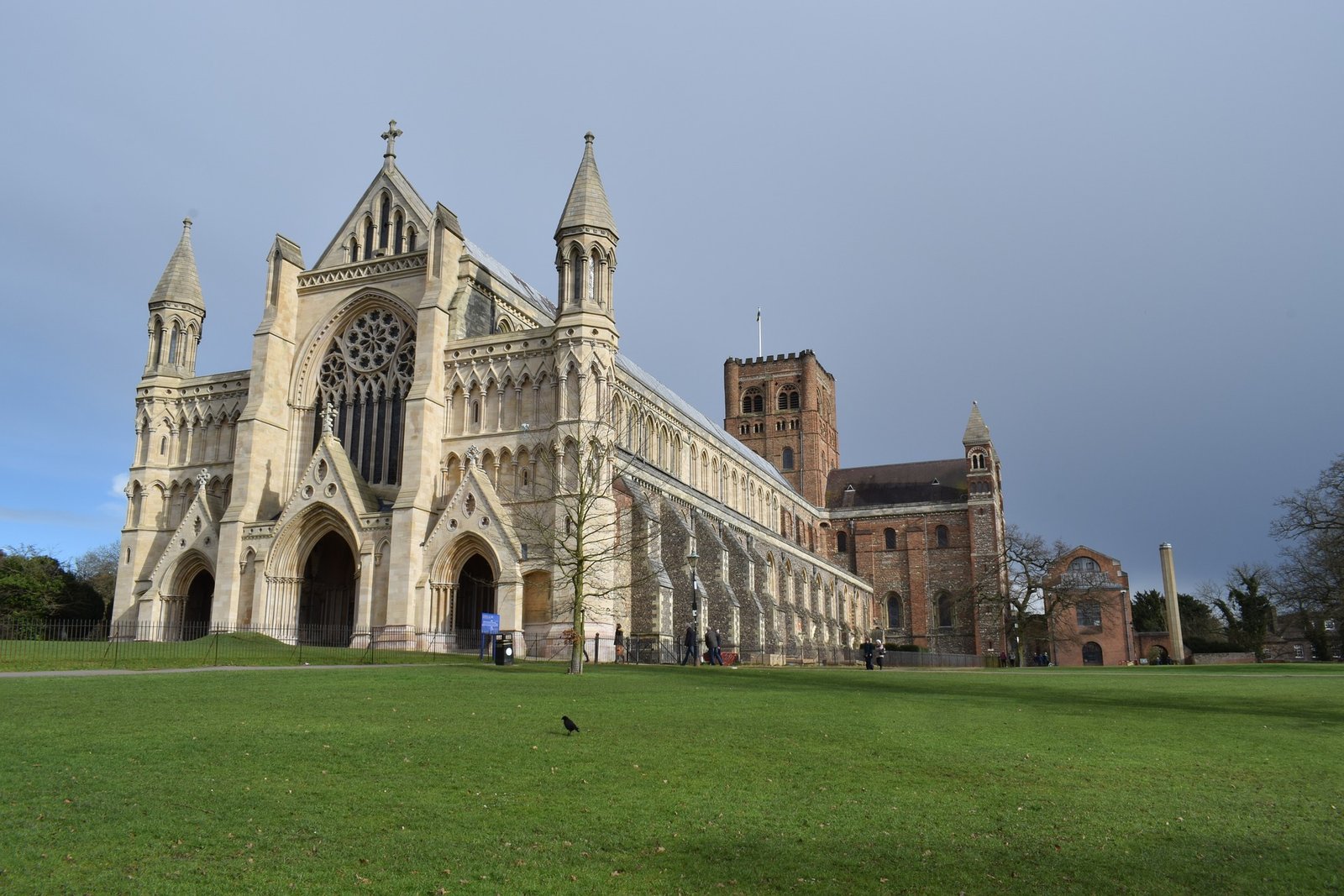
St. Albans School: A Complete History, Educational Philosophy, Campus Life, Traditions and Legacy
Introduction
St. Albans School is a historic independent school for boys located on Mount St. Alban in Washington, D.C. Founded in 1909 on the grounds of Washington National Cathedral, the school has developed over more than a century into an institution known for rigorous academics, athletics, arts, spiritual life, community traditions, and an emphasis on character development.
The school serves boys in grades 4 through 12 and describes itself as an Episcopal school. Its educational philosophy combines intellectual development with moral formation, community participation, service, and personal responsibility. The school’s current mission emphasizes character, critical thinking, discipline, empathy, kindness, and service to others.
St. Albans is also part of a distinctive educational environment associated with Washington National Cathedral. Through its coordinate relationship with National Cathedral School, students have opportunities to participate in coeducational classes, arts programs, performances, and athletics while maintaining the school’s traditional all-boys structure.
This article explores the history of St. Albans School, its foundation, educational development, leadership, traditions, academic philosophy, athletics, arts, religious life, student experience, admissions, financial aid, and continuing role in Washington, D.C.
1. The Foundation of St. Albans School
The history of St. Albans School begins in the early twentieth century, when plans for Washington National Cathedral created an opportunity for the establishment of a boys’ school connected with the Episcopal tradition.
St. Albans officially opened its doors in the fall of 1909 with 34 students. Its establishment was made possible largely through the generosity of Harriet Lane Johnston, the niece of President James Buchanan. Johnston left a major bequest to the Protestant Episcopal Cathedral Foundation of the District of Columbia for the creation of a school for boys and a scholarship fund connected with choristers.
Her will directed that part of the money should be used for a school building and another portion should support the ongoing operation of the school. She specifically expressed the wish that the institution provide free education and training for choirboys, particularly those serving the Cathedral.
This early connection between education, music, worship, and service became an important part of the institution’s identity.
The original school was known as the National Cathedral School for Boys. Its first building, the Lane-Johnston Building, served many purposes. It included classrooms, a dormitory, dining facilities, and space for the headmaster. The building therefore functioned as the central home of the young school.
In October 1909, the Little Sanctuary was designated as the school’s chapel. The connection between the school and the Cathedral environment consequently became part of everyday student life from the earliest days of the institution.
2. Harriet Lane Johnston and the School’s Origins
Understanding St. Albans requires understanding Harriet Lane Johnston and the charitable vision behind the school’s creation.
Harriet Lane was born in 1830 in Pennsylvania. She was orphaned at a young age and was raised by her uncle, James Buchanan. Buchanan eventually became the 15th president of the United States, and during his presidency Harriet Lane served as the nation’s first lady.
Her life included connections to education, public service, Washington society, and international travel. She also developed a strong interest in charitable causes.
When she died in 1903, her estate provided substantial financial support for the establishment of a boys’ school through the Protestant Episcopal Cathedral Foundation.
The bequest was significant not simply because it supplied money but because it established a philosophy. The school was intended to educate boys while also supporting the musical and religious life associated with the Cathedral.
The school’s original mission was therefore broader than conventional classroom education. Students were expected to develop academically while participating in a community shaped by worship, music, discipline, and service.
That combination of academic and character education remains visible in St. Albans’ modern educational philosophy.
3. Early Years and the First Headmaster
St. Albans’ first headmaster was Earl Lamont Gregg, who served from 1909 to 1915. He helped establish the organizational and educational foundations of the new school.
Because the school was new, its early leadership had to create traditions and systems that would later become institutional habits.
The first generation of students experienced a relatively small school community. The school’s close connection with the Cathedral meant that religious observance, music, and communal life were closely integrated with education.
The small size of the school also encouraged relationships between teachers and students.
This emphasis on close student-teacher relationships remains one of the central features of St. Albans’ philosophy today.
4. William Howell Church and Institutional Development
William Howell Church became headmaster in 1915 and served until 1929.
During his leadership, St. Albans developed a more structured academic program. According to the school’s historical account, Church introduced college board examinations and made significant changes to school policies, including abandoning athletic scholarships.
His tenure represented an important stage in the development of St. Albans from a newly established school into a more established preparatory institution.
Academic expectations became increasingly important, while the school continued to maintain traditions associated with its Episcopal identity.
This combination of academic preparation and character development eventually became one of the defining characteristics of the school.
5. The Leadership of Albert Hawley Lucas
In 1929, the Rev. Albert Hawley Lucas became headmaster.
Known within the school as “Chief,” Lucas had experience in education and military service. He had served in the Marines during World War I before becoming vice principal of Episcopal Academy in Philadelphia.
His appointment reflected the continuing importance of the Episcopal educational tradition.
During his administration, St. Albans continued developing its academic and extracurricular programs. The school also strengthened its institutional identity as a boys’ school connected to the Cathedral community.
The decades following its foundation were important for creating the traditions that later generations would inherit.
6. Charles S. Martin and a Period of Growth
One of the most significant leadership periods in St. Albans’ history came under the Rev. Charles S. Martin, who served as headmaster from 1949 to 1977.
The 1950s and 1960s were especially important decades for the school.
Martin believed that education should prepare students for life rather than simply for admission to prestigious universities. His philosophy emphasized character and spiritual development alongside academic achievement.
At the same time, many St. Albans graduates went on to highly selective colleges and universities.
This period helped establish the school’s reputation for strong academic preparation.
The growth of the school during these decades also reflected broader changes in American independent education.
St. Albans increasingly developed a diverse range of academic, athletic, artistic, and extracurricular activities.
7. Mark Hill Mullin and International Education
Mark Hill Mullin served as headmaster from 1977 to 1997. His leadership continued St. Albans’ academic traditions while responding to a rapidly changing world.
One notable development during this period was the expansion of foreign-language education. The school introduced Russian and Japanese classes, while student exchange programs and travel fellowships gave students opportunities to experience other countries and cultures.
This expansion reflected an increasing recognition that education should prepare students for an interconnected world.
International study and language education can broaden students’ understanding of history, culture, politics, literature, and human relationships.
For St. Albans, these opportunities became another way of connecting traditional education with contemporary needs.
8. Jack McCune and the Teacher-Coach Tradition
John Foster “Jack” McCune became an important figure in St. Albans history.
McCune had attended Princeton University and later served in the U.S. Army’s Counter Intelligence Corps. After considering a legal career, he chose education instead.
He taught at Choate before joining St. Albans as a history teacher in 1966. He eventually became headmaster and served in that position from 1997 to 1999.
His career illustrates an important aspect of St. Albans culture: teachers are often involved in many aspects of school life.
The school emphasizes relationships between teachers and students not only in classrooms but also through athletics, arts, advising, chapel, clubs, and other activities.
This teacher-coach model remains an important part of the school’s identity.
9. Vance Wilson’s Leadership
Vance Wilson served as St. Albans’ seventh headmaster from 1999 to 2018.
His tenure covered a period of significant technological, cultural, and educational change.
During this period, schools increasingly had to consider new approaches to technology, diversity, student support, global awareness, and curriculum development.
St. Albans continued to maintain traditional elements such as chapel, family-style meals, uniforms, athletics, and close teacher-student relationships while adapting to contemporary educational expectations.
This balance between tradition and innovation remains central to the school’s identity.
10. St. Albans Today
Modern St. Albans describes itself as an Episcopal school for boys with a strong focus on character.
The school currently serves students in grades 4 through 12. Its official materials emphasize rigorous academics, athletics, arts, spiritual development, community, and service.
The school reports an enrollment of approximately 597 students and a student-to-faculty ratio of 7:1. It also reports that 80 percent of faculty members have advanced degrees.
St. Albans continues to operate on the grounds of Washington National Cathedral in Washington, D.C.
Its location gives students access to a distinctive historic and cultural environment.
11. Educational Philosophy
The educational philosophy of St. Albans is based on the idea that education should develop the whole student.
Academic achievement is important, but it is not presented as the only measure of success.
The school describes character as a central priority. Students are encouraged to think critically, work with discipline, participate actively in community life, and develop empathy and kindness.
The school’s philosophy can be understood through several major themes:
Intellectual curiosity
Students are encouraged to ask questions, investigate ideas, and develop independent thinking.
Character
Students are expected to understand the relationship between personal choices and responsibilities toward others.
Community
The school places strong emphasis on relationships among students, faculty, families, and alumni.
Service
The Episcopal tradition encourages students to consider their responsibilities to the wider community.
Creativity
Arts, music, theater, and other creative activities provide opportunities for students to express themselves.
Physical development
Athletics are treated as an important part of education, teaching discipline, teamwork, resilience, and cooperation.
12. Academic Life at St. Albans
Academic life is one of the central components of a St. Albans education.
The school serves students from fourth grade through twelfth grade, creating a long educational pathway that allows students to develop progressively over many years.
The curriculum is designed to challenge students intellectually.
Students study subjects across the humanities, sciences, mathematics, languages, arts, and other academic fields.
Small classes support discussion and teacher interaction.
The school reports an average class size of 13 students, which allows teachers to provide individualized attention and engage students directly in classroom discussions.
The goal is not simply to memorize information. Students are encouraged to analyze ideas, communicate effectively, conduct research, solve problems, and understand different perspectives.
13. The Importance of the Student-Teacher Relationship
The relationship between students and teachers is central to the St. Albans educational model.
The school describes its community as being built around the student-teacher relationship.
This approach means that teachers may become mentors, coaches, advisers, and community leaders in addition to classroom instructors.
A student may interact with the same faculty member in multiple environments.
For example, a teacher may teach mathematics during the morning and coach an athletic team later in the day.
This can create a stronger connection between academic and extracurricular education.
14. St. Albans as an Episcopal School
St. Albans is affiliated with the Episcopal tradition.
Religious identity is visible in school life through chapel, reflection, service, and community traditions.
However, the school’s current description emphasizes welcoming students and families from different faith backgrounds.
The purpose of chapel is not simply religious instruction.
It also provides opportunities for reflection, discussion, music, student speaking, and consideration of ethical questions.
Students may encounter questions about responsibility, compassion, leadership, community, justice, and service.
The school’s spiritual life therefore forms part of its broader character-education program.
15. Chapel and Spiritual Life
Chapel is one of the most recognizable traditions at St. Albans.
The school has maintained a connection with worship from its earliest years, when the Little Sanctuary served as the school’s chapel.
Today, chapel services continue to provide a regular opportunity for students and faculty to gather together.
According to the school, chapel services address major questions of life and meet students at different stages of spiritual development.
Students may participate as speakers, musicians, readers, or leaders.
This encourages students to develop confidence and communication skills while also engaging with ethical and spiritual ideas.
16. The Coordinate Relationship with National Cathedral School
One of the distinctive features of St. Albans is its coordinate relationship with National Cathedral School, a girls’ school located nearby.
St. Albans remains an all-boys school, but students have access to a variety of coeducational opportunities.
According to the school, the coordinate program includes coeducational classes, arts activities, performances, and sports.
The school currently reports more than 20 coeducational classes, 15 coed performances, and four coeducational sports opportunities.
This arrangement allows students to experience both single-sex and coeducational educational settings.
17. Student Life
Student life at St. Albans extends beyond the classroom.
Students participate in athletics, arts, clubs, service activities, chapel, academic organizations, and community events.
The school places considerable importance on informal interactions.
Family-style meals, for example, are part of the community culture.
Students from different grades can interact during meals, creating opportunities for friendships and mentorship.
These traditions are designed to create a sense of belonging.
18. Family-Style Meals and Community
Meals have a special place in St. Albans life.
The school describes family-style lunches as being at the heart of its community. Students sit together and share meals and conversation.
A shared meal may appear simple, but it creates a regular opportunity for students and teachers to interact outside the classroom.
Older students can speak with younger students, teachers can get to know students informally, and school traditions can be passed from one generation to another.
This reflects a broader philosophy in which community is created through everyday experiences rather than only through formal events.
19. Athletics at St. Albans
Athletics are an important part of the St. Albans experience.
The school describes its athletic program as part of a broader educational model.
Sports provide students with opportunities to learn teamwork, discipline, leadership, resilience, communication, and responsibility.
Athletic participation also creates strong connections among students.
Teams represent the school in interscholastic competition, while individual sports allow students with different interests and abilities to participate.
The athletic program is therefore not simply about competition.
It is also about personal development.
20. The Role of Competition
Competitive sports can teach lessons that extend beyond the playing field.
Students learn how to prepare for an opponent, work with teammates, respond to mistakes, and manage both success and disappointment.
These experiences can develop resilience.
At St. Albans, athletics are integrated into the broader educational culture.
Teachers and coaches can help students understand that competition should coexist with sportsmanship and respect.
21. Arts and Creative Education
The arts are another major component of St. Albans life.
Students have opportunities to participate in music, theater, visual arts, performances, and other creative activities.
The relationship with National Cathedral School provides additional opportunities for coeducational artistic collaboration.
Creative education can help students develop skills that differ from traditional academic subjects.
Music can develop listening and performance abilities.
Theater can improve public speaking and confidence.
Visual arts can encourage observation, experimentation, and creativity.
Together, these experiences contribute to a broad educational program.
22. Music and the School’s Early History
Music has a particularly important place in St. Albans history because the original charitable vision behind the school specifically included support for choirboys.
The school was established partly to provide education and training for choristers serving the Cathedral.
Over time, music developed beyond its original institutional purpose.
Today it remains part of the school’s artistic and community life.
Chapel music, performances, concerts, and student participation in musical activities connect modern students with the institution’s historical roots.
23. Diversity and Community
Modern St. Albans emphasizes diversity as an important component of community life.
The school reports that 43 percent of its students are students of color.
The school describes diversity as something that enriches the shared educational experience.
A diverse student body can expose students to different family histories, cultures, perspectives, experiences, and ideas.
This can be especially valuable in a school located in Washington, D.C., a city with international institutions, museums, government agencies, cultural organizations, and communities from around the world.
24. Washington, D.C. as an Educational Environment
Location is an important part of the St. Albans experience.
Washington, D.C. is home to national museums, historical sites, government institutions, universities, cultural organizations, embassies, and nonprofit organizations.
Students can therefore study history and government in a city where many of those subjects have a direct physical presence.
The school’s location on the grounds of Washington National Cathedral also gives it a distinctive architectural and historical setting.
Students learn in an environment where education, religion, history, public service, and civic life intersect.
25. Campus and Historic Buildings
The St. Albans campus includes historic buildings associated with the school’s more than century-long development.
The Lane-Johnston Building was part of the original school campus and served multiple purposes during the early years.
The school’s location near the Cathedral contributes to its architectural character.
Visitors today encounter a campus that combines historic traditions with modern educational spaces.
The school describes its campus as an environment where students move between classrooms, playing fields, chapel, performance spaces, and other community areas.
26. Traditions at St. Albans
Traditions are important to St. Albans.
Uniforms, chapel, family-style meals, athletics, student leadership, ceremonies, and alumni relationships all contribute to the school’s identity.
Traditions help connect current students with previous generations.
At the same time, the school continues to change.
Its challenge is to preserve traditions while ensuring that they remain meaningful to contemporary students.
This balance between history and innovation is a recurring theme throughout St. Albans’ development.
27. Student Leadership
Leadership opportunities are available throughout the school.
Older students may serve as prefects, student leaders, club officers, athletic captains, and community representatives.
Leadership at St. Albans is connected with responsibility.
Students are expected not simply to hold positions but to contribute to the school community.
Recent school activities have included Form VI student leaders participating in assemblies and reflecting on foundational school documents such as the mission statement and school philosophy.
Such activities give students experience in public speaking, organization, collaboration, and responsibility.
28. Character Education
Character education is central to the St. Albans mission.
The school states that it values character above all else.
Students are encouraged to develop integrity, empathy, kindness, discipline, and a sense of responsibility.
Character education is not limited to a particular class.
Instead, it is incorporated into daily school life.
A student may learn about responsibility through an academic project, teamwork through athletics, empathy through community service, and reflection through chapel.
This approach treats education as a process of personal development.
29. Service and Citizenship
The school’s Episcopal identity also encourages students to consider the needs of others.
Service can take many forms, including community projects, charitable activities, mentoring, and participation in organizations that support people outside the school.
The school’s philosophy connects education with citizenship.
The goal is to prepare students not simply for college but for lives in which they contribute to communities.
This idea has remained important throughout the school’s history.
30. College Preparation
College preparation is an important part of the upper-school experience.
Students receive guidance as they consider universities, academic programs, extracurricular interests, and future goals.
The school reports more than 250 average annual college acceptances and publishes information about the colleges attended by graduates.
The school’s historical records also show graduates attending highly selective American universities.
However, the school’s philosophy emphasizes that education should be about more than college admission.
Academic preparation is combined with character development, intellectual curiosity, relationships, and service.
31. Alumni and Legacy
A school that has operated for more than a century naturally develops a large alumni community.
St. Albans graduates have gone into many fields, including education, business, law, medicine, public service, journalism, arts, science, technology, and other professions.
The alumni community helps preserve institutional memory.
Former students can return as mentors, speakers, coaches, teachers, donors, and community members.
Some alumni eventually become teachers or administrators, creating a direct connection between different generations.
32. Financial Aid
St. Albans provides financial aid as part of its admissions program.
The school currently reports a financial aid budget of approximately $6.4 million and says that 26 percent of students receive financial aid. It also describes its admissions process as need-blind and states that it meets 100 percent of demonstrated need.
Financial aid can be an important factor for families considering independent-school education.
The availability of assistance can help broaden access to students who might otherwise find private-school tuition difficult to afford.
Applicants should consult the school’s current admissions and financial-aid information because policies, deadlines, and requirements can change.
33. Admissions to St. Albans
Admission to St. Albans is structured around specific entry years.
The school lists fourth grade, sixth and seventh grades, and ninth grade as major entry years, while applications can also be considered for certain non-entry grades.
The admissions process can include applications, assessments, interviews, recommendations, and other materials depending on grade level.
Families interested in applying should always consult the official admissions office for the latest requirements.
For the 2027–28 school year, the school announced that applications opened in September 2026, with an application deadline of January 5, 2027.
34. International Applicants
St. Albans also provides information for international applicants.
International families considering the school should carefully review admissions requirements, educational records, English-language expectations, financial-aid rules, and immigration considerations where applicable.
Because admissions requirements can change from year to year, the school’s official admissions office should be treated as the primary source for current requirements.
35. A Typical Student Experience
A student’s day at St. Albans can involve many different activities.
The day may begin with academic classes.
Students then move between subjects such as mathematics, science, literature, history, languages, and arts.
Meals provide time for informal community interaction.
After classes, students may participate in athletics, music, theater, clubs, or other activities.
Chapel provides another opportunity for reflection and community gathering.
The result is an educational experience that combines formal instruction with many different types of learning.
36. Technology and Modern Education
Like other historic schools, St. Albans operates in an educational environment shaped by technology.
Modern students need skills in research, communication, digital literacy, data analysis, and responsible use of information.
At the same time, the school continues to emphasize direct relationships.
Technology is therefore most useful when it supports learning rather than replacing teachers or personal interaction.
The continuing challenge for a historic institution is to adopt useful innovations while preserving educational traditions that remain meaningful.
37. The Importance of Tradition
St. Albans is a school where tradition remains highly visible.
The institution has existed since 1909.
Students therefore become part of a community that includes more than a century of graduates, teachers, families, and institutional memories.
Traditions can provide students with a sense of continuity.
At the same time, tradition can only remain meaningful if each generation understands why it exists.
St. Albans’ continuing development demonstrates how a school can preserve historic practices while adapting to new educational needs.
38. St. Albans and the Meaning of an All-Boys Education
St. Albans remains an all-boys school.
The school argues that its single-sex environment allows boys to develop their own voices and identities within a particular educational community.
At the same time, its coordinate program with National Cathedral School provides opportunities for interaction with girls in academic, artistic, and athletic contexts.
This combination creates an educational model that includes both single-sex and coeducational experiences.
Families considering St. Albans can therefore examine both aspects of the school’s approach.
39. The Role of Teachers
Teachers at St. Albans have responsibilities that extend beyond delivering academic content.
They may serve as advisers, coaches, mentors, club leaders, and community members.
This creates multiple opportunities for students to interact with faculty.
The school’s reported 7:1 student-to-faculty ratio supports its emphasis on close relationships.
Teachers can identify students’ academic strengths, challenges, interests, and goals over time.
This type of relationship can be particularly valuable during adolescence, when students are developing greater independence and making important decisions about their futures.
40. The Library and Intellectual Culture
A strong school community depends on students having opportunities to read, research, discuss, and explore ideas.
Libraries and academic spaces provide environments for independent work as well as collaborative learning.
At St. Albans, intellectual life is connected with the school’s broader goal of developing thoughtful and independent young men.
Students are encouraged to ask difficult questions and examine different perspectives.
This approach is especially relevant in a city such as Washington, D.C., where questions of history, government, culture, and public life are constantly visible.
41. Preparing Students for a Changing World
The world students enter after graduation can be very different from the world their parents experienced.
Technology, global communication, artificial intelligence, climate issues, economic change, and changing social expectations all influence modern education.
St. Albans’ long history demonstrates that educational institutions must adapt.
The introduction of Russian and Japanese programs under Mark Hill Mullin, for example, showed an earlier effort to broaden students’ international understanding.
Modern students similarly need educational experiences that prepare them for global citizenship.
42. The Importance of Critical Thinking
Critical thinking is emphasized in the school’s mission.
Students are encouraged to think deeply and critically rather than simply accept information.
This can involve comparing evidence, asking questions, identifying assumptions, evaluating arguments, and communicating conclusions clearly.
These skills are useful across academic disciplines.
A student studying history may evaluate primary sources.
A science student may interpret experimental evidence.
A literature student may compare competing interpretations.
A mathematics student may develop logical solutions to complex problems.
Critical thinking therefore becomes a foundation for learning across the curriculum.
43. Community and Friendship
Friendships are an important part of independent-school life.
Because St. Albans students spend many years together, they may develop strong relationships with classmates.
Shared meals, sports, performances, classes, trips, clubs, and traditions create opportunities for students to interact.
The school describes its educational experience as fostering lifelong friendships.
These relationships can continue after graduation through alumni networks.
44. The School’s Identity
Several themes define St. Albans’ institutional identity:
- History
- Academic rigor
- Character development
- Episcopal tradition
- All-boys education
- Community
- Athletics
- Arts
- Service
- Student-teacher relationships
- Connection with Washington National Cathedral
- Relationship with National Cathedral School
Together these elements create an educational model that is distinctive within Washington, D.C.
45. St. Albans and Washington National Cathedral
The relationship between St. Albans and Washington National Cathedral is central to the school’s story.
The school was founded on Cathedral grounds, and the religious environment influenced its early development.
Even today, the physical location remains a defining feature.
Students learn in a setting where historic architecture and modern education exist side by side.
The Cathedral connection also reinforces the school’s Episcopal identity and its emphasis on reflection and service.
46. Historical Continuity
Few educational institutions maintain exactly the same structure for more than a century.
St. Albans has changed significantly since 1909.
Its student population, curriculum, buildings, technology, leadership, and extracurricular programs have evolved.
Nevertheless, several principles have remained consistent:
Education matters.
Character matters.
Community matters.
Service matters.
Relationships matter.
These themes provide continuity between the school’s early years and its modern identity.
47. Why St. Albans Is Historically Significant
St. Albans is historically significant because it represents an important part of Washington’s educational and religious history.
Its foundation was connected to the development of Washington National Cathedral.
Its founding benefactor was Harriet Lane Johnston, a historically significant American figure.
Its educational program developed during a period when independent schools were becoming important centers of college preparation and character education.
Across more than a century, St. Albans has adapted to changing educational expectations while maintaining strong institutional traditions.
48. St. Albans in the Twenty-First Century
The twenty-first century has brought new challenges and opportunities.
Schools must address rapidly changing technology, evolving educational methods, increased cultural diversity, student well-being, and global connections.
St. Albans continues to emphasize academic achievement while also focusing on character and community.
Its current mission emphasizes openness, empathy, kindness, discipline, and service.
This represents an approach in which education is viewed as preparation for both professional life and responsible citizenship.
49. Modern Leadership
The current headmaster is Jason Robinson.
The school’s current leadership continues to emphasize small classes, community meals, chapel, intellectual curiosity, and student development.
The school remains committed to maintaining its historic identity while responding to contemporary educational needs.
Leadership at a historic school requires balancing different priorities.
Tradition must be respected, but students must also be prepared for a changing future.
50. St. Albans and the Future
The future of St. Albans will likely continue to involve balancing tradition and innovation.
The school has already demonstrated an ability to evolve.
From its beginnings as a small school serving 34 students in 1909, it has developed into a large independent-school community serving students from grades 4 through 12.
Its current priorities include rigorous academics, character, community, diversity, athletics, arts, financial aid, and service.
The institution’s historic foundation provides a strong sense of continuity, while modern educational programs allow it to address contemporary needs.
51. Frequently Asked Questions About St. Albans School
When was St. Albans School founded?
St. Albans School was founded in 1909 and opened its doors to 34 students in the fall of that year.
Where is St. Albans School located?
St. Albans School is located at Mount St. Alban in Washington, D.C., on the grounds of Washington National Cathedral.
Is St. Albans an all-boys school?
Yes. St. Albans is an Episcopal school for boys serving grades 4 through 12.
Is St. Albans a boarding school?
The school describes itself as a private all-boys day and boarding school in its institutional information, while its current student program centers on boys in grades 4–12. Families should contact admissions for current boarding-related details.
What religion is St. Albans School affiliated with?
St. Albans is an Episcopal school.
What is the connection between St. Albans and Washington National Cathedral?
St. Albans was founded on the grounds of Washington National Cathedral, and the Cathedral environment has remained an important part of its history and identity.
Does St. Albans offer coeducational opportunities?
Yes. Through its coordinate program with National Cathedral School, students participate in coeducational classes, arts programs, performances, and some sports.
What grades does St. Albans serve?
St. Albans serves students in grades 4 through 12.
Does St. Albans provide financial aid?
Yes. The school offers financial aid and currently reports a $6.4 million financial-aid budget.
What is the student-to-faculty ratio?
The school reports a student-to-faculty ratio of approximately 7:1.
Does St. Albans have athletics?
Yes. Athletics are an important part of student life and are integrated into the school’s broader educational program.
Does St. Albans have an arts program?
Yes. Students can participate in arts and performance activities, with additional opportunities through the coordinate relationship with National Cathedral School.
What is St. Albans known for?
St. Albans is known for its long history, Episcopal identity, all-boys education, academic program, athletics, arts, community traditions, and location on the grounds of Washington National Cathedral.
52. Conclusion
St. Albans School represents more than a century of educational history in Washington, D.C.
Founded in 1909 through the generosity of Harriet Lane Johnston, the school began with a mission that combined education, music, religious life, and service. Its early connection with Washington National Cathedral helped shape its identity, while successive generations of headmasters developed its academic and extracurricular programs.
Over the decades, St. Albans evolved from a small school into a substantial independent-school community. Its educational philosophy continued to emphasize the development of the whole student rather than academic achievement alone.
Today, St. Albans describes its mission through concepts such as character, intellectual curiosity, discipline, empathy, community, and service. Its students participate in rigorous academic programs while also taking part in athletics, arts, chapel, leadership, and community activities.
The school’s coordinate relationship with National Cathedral School adds another distinctive feature, giving students opportunities for coeducational experiences while maintaining the all-boys structure of St. Albans.
Its historic campus, Cathedral connection, long alumni tradition, academic culture, and emphasis on character make St. Albans an important part of Washington, D.C.’s independent-school landscape.
More than one hundred years after its founding, the central idea behind St. Albans remains recognizable: education should prepare students not only to succeed academically but also to participate responsibly in their communities and lead lives shaped by purpose, integrity, curiosity, empathy, and service.
For families researching historic American schools, St. Albans provides an interesting example of how an institution can preserve its traditions while continuing to adapt to the needs of new generations.