Claremont McKenna College: History, Academics, Campus Life, Admissions and Student Experience
Introduction
Claremont McKenna College, commonly known as CMC, is a private liberal arts college located in Claremont, California, United States. It is recognized for its strong emphasis on leadership, economics, government, public affairs, and interdisciplinary education. As a member of the Claremont Colleges consortium, CMC provides students with the advantages of a small liberal arts college while also giving them access to academic resources, courses, organizations, libraries, and facilities across several neighboring institutions.
The college has developed a distinctive educational identity built around the idea that a liberal arts education can prepare students not only for intellectual inquiry but also for active participation in public life, business, government, law, and other professional fields. Its academic environment combines close faculty-student interaction with opportunities for research, internships, international study, entrepreneurship, and community engagement.
CMC is particularly associated with programs in economics and government, although its curriculum extends across the humanities, social sciences, natural sciences, and interdisciplinary areas. Students can explore subjects such as philosophy, history, literature, psychology, international relations, computer science, mathematics, science, and environmental studies while also developing quantitative, analytical, and communication skills.
This article explores the history of Claremont McKenna College, its academic philosophy, campus, student life, admissions, financial considerations, extracurricular opportunities, research environment, career preparation, and the qualities that distinguish the institution within American higher education.
History of Claremont McKenna College
Claremont McKenna College was founded in 1946. Its establishment came during a period when American higher education was experiencing significant changes following World War II. The founders envisioned an institution that would combine the broad educational traditions of the liberal arts with an emphasis on preparing students for leadership and civic responsibility.
The college was originally established as Claremont Men’s College. Its early academic identity focused strongly on economics, government, and related fields. The institution was designed to provide students with a rigorous liberal arts education while encouraging an interest in public affairs and leadership.
Over the decades, the college expanded its academic programs and gradually developed into a broader liberal arts institution. The institution became coeducational in the 1970s, opening its educational opportunities to women as well as men.
In 1981, the college adopted the name Claremont McKenna College. The name reflected its developing identity and distinguished it within the Claremont Colleges system.
Today, CMC remains one of the seven institutions that make up the Claremont Colleges consortium. This arrangement allows the college to preserve its own academic culture and community while benefiting from the larger educational ecosystem surrounding it.
The Claremont Colleges Consortium
One of the most distinctive features of Claremont McKenna College is its membership in the Claremont Colleges consortium.
The consortium consists of seven independent institutions:
- Claremont McKenna College
- Pomona College
- Scripps College
- Harvey Mudd College
- Pitzer College
- Claremont Graduate University
- Keck Graduate Institute
Each institution has its own identity, leadership, academic programs, and admissions process. At the same time, the colleges cooperate in many areas.
For CMC students, the consortium can significantly expand the academic and extracurricular experience. Students may have opportunities to take courses at other undergraduate Claremont Colleges, participate in organizations involving students from multiple campuses, and use shared resources.
This structure creates an interesting combination of small-college education and broader university-style opportunities.
A student can have the close community associated with a liberal arts college while being surrounded by students studying subjects ranging from engineering and science to arts, social sciences, public policy, and interdisciplinary fields.
Location in Claremont, California
Claremont McKenna College is located in Claremont, California, a community in Los Angeles County approximately 35 miles east of downtown Los Angeles.
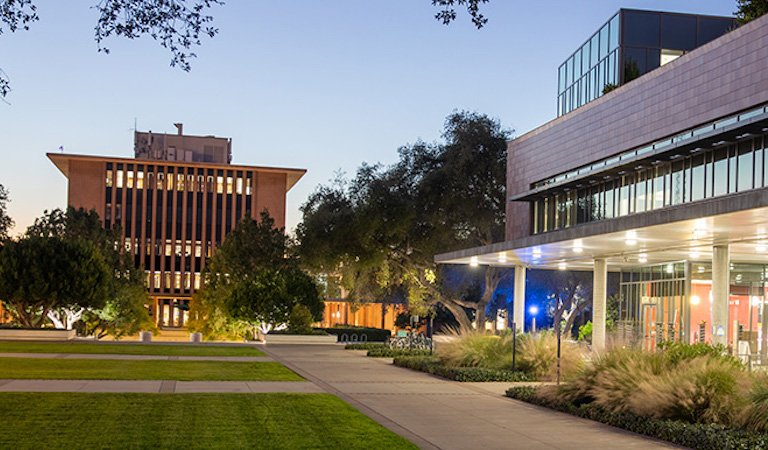
Claremont is often associated with its tree-lined streets, historic atmosphere, educational institutions, and college-centered community. The city is sometimes called the “City of Trees” because of its extensive greenery and mature landscaping.
The Southern California location provides students with access to a wide range of cultural, professional, recreational, and educational opportunities.
Students can potentially explore:
- Los Angeles
- Orange County
- Inland Empire communities
- Southern California cultural institutions
- Business organizations
- Government and nonprofit organizations
- Technology companies
- Entertainment industries
- Museums and galleries
- Beaches and outdoor recreation areas
The location therefore provides a combination of a traditional college-town environment and access to one of the largest metropolitan regions in the United States.
Academic Philosophy
Claremont McKenna College describes itself as a liberal arts college with a distinctive focus on leadership and civic engagement.
A liberal arts education is designed to expose students to different methods of thinking rather than restricting them to a narrow professional specialization. Students learn how to evaluate evidence, communicate ideas, solve problems, understand different perspectives, and approach complex questions from multiple angles.
CMC places particular emphasis on the relationship between education and public life.
The college’s academic culture has historically given considerable attention to government, economics, international relations, leadership, and public affairs. Students can study how institutions function, how economies operate, how political systems develop, and how individuals and organizations make decisions.
At the same time, students can pursue interests outside these areas.
The liberal arts structure encourages connections among different disciplines. For example, a student interested in environmental policy might combine economics, government, science, and philosophy. A student interested in entrepreneurship might study economics, computer science, psychology, and organizational behavior.
This interdisciplinary approach can help students develop flexible intellectual skills.
Major Academic Areas
CMC offers students opportunities to study a wide range of disciplines.
Some particularly prominent areas include economics, government, international relations, philosophy, history, psychology, literature, mathematics, computer science, science, and interdisciplinary studies.
Economics
Economics has traditionally been one of the most prominent academic areas at Claremont McKenna College.
Students studying economics may explore subjects such as:
- Microeconomics
- Macroeconomics
- Econometrics
- Financial economics
- International economics
- Public economics
- Economic policy
- Development economics
- Behavioral economics
An economics education can help students understand markets, incentives, institutions, economic policy, and decision-making.
Students interested in finance, consulting, business, public policy, government, graduate study, or entrepreneurship may find economics particularly relevant.
Government and Political Science
Government is another central field at CMC.
Students can study political institutions, public policy, international relations, political theory, comparative politics, and American government.
Courses in government may encourage students to examine questions such as:
- How do governments make decisions?
- Why do political institutions differ?
- How do elections shape public policy?
- How do international organizations operate?
- What influences political behavior?
- How do governments respond to crises?
- How should citizens evaluate public policy?
These questions can be approached through historical, theoretical, empirical, and quantitative methods.
Students interested in law, public policy, government, diplomacy, international organizations, journalism, nonprofit work, or political research may benefit from this academic environment.
International Relations
CMC’s location in Southern California and its liberal arts structure provide opportunities for students interested in international affairs.
International relations involves the study of relationships among countries, international organizations, businesses, and other global actors.
Students may explore topics including:
- International security
- Diplomacy
- Global political economy
- International organizations
- Conflict and peace
- Foreign policy
- Globalization
- Human rights
- International development
International study programs can further complement classroom education by allowing students to experience different political and cultural environments.
Philosophy
Philosophy provides another important dimension of a liberal arts education.
Philosophy students examine questions involving ethics, knowledge, logic, political thought, metaphysics, and human values.
The subject can strengthen analytical reasoning and argumentation skills.
Students may learn to distinguish assumptions from evidence, identify logical weaknesses, construct arguments, and examine difficult questions from multiple perspectives.
These skills can be valuable beyond philosophy itself.
History
History provides students with an opportunity to understand societies and institutions through time.
Studying history can help students recognize how political systems, economies, cultures, and social institutions developed.
Historical research also teaches students how to evaluate primary and secondary sources, interpret evidence, and construct well-supported arguments.
Psychology
Psychology examines human behavior and mental processes.
Students can explore topics related to cognition, social behavior, development, personality, organizations, and other areas of psychological research.
Psychology can connect naturally with economics, government, neuroscience, business, education, and other disciplines.
Science and Mathematics
Although CMC is particularly known for the social sciences, students also have opportunities to study mathematics and natural sciences.
The Claremont Colleges consortium is especially valuable in this respect because neighboring institutions offer additional strengths in science, technology, mathematics, and engineering.
This allows students interested in quantitative or scientific subjects to explore courses beyond the traditional boundaries of a small liberal arts college.
Computer Science and Technology
Technology has become increasingly important across higher education.
Students at CMC can explore computer science and related interdisciplinary subjects. Computer science can also be combined with economics, government, mathematics, entrepreneurship, and other disciplines.
For example, a student might investigate the economic impact of artificial intelligence, the political implications of digital platforms, cybersecurity policy, or technology entrepreneurship.
This type of interdisciplinary study illustrates the broader liberal arts philosophy.
Interdisciplinary Education
Many important modern problems do not fit neatly into one academic department.
Climate change involves science, economics, politics, ethics, and international cooperation.
Artificial intelligence involves computer science, economics, philosophy, law, psychology, and public policy.
Public health involves science, government, economics, sociology, and ethics.
A liberal arts environment can provide students with opportunities to approach these problems from multiple perspectives.
CMC’s consortium model further strengthens this possibility because students can interact with peers from different academic environments.
Faculty and Student-Faculty Interaction
Small liberal arts colleges are often distinguished by close interaction between students and professors.
At CMC, classroom learning can involve discussion, debate, presentations, research projects, writing assignments, and collaborative activities.
Instead of simply listening to lectures, students may be expected to participate actively.
This approach can help students develop:
- Communication skills
- Critical thinking
- Research skills
- Public speaking
- Analytical reasoning
- Writing ability
- Teamwork
- Intellectual independence
Faculty members can also serve as mentors as students select courses, develop research projects, pursue internships, and consider graduate or professional opportunities.
Research Opportunities
Research is an important component of undergraduate education at CMC.
Students may work with professors on research projects or conduct independent research.
Research experiences can teach students how to:
- Define a research question.
- Find relevant sources.
- Evaluate evidence.
- Collect and analyze information.
- Interpret results.
- Present conclusions.
- Respond to criticism.
- Communicate findings clearly.
Undergraduate research can be particularly useful for students planning to attend graduate school.
It can also benefit students entering professional careers because research develops analytical and problem-solving skills.
Internships and Experiential Learning
Classroom learning is only one component of a college education.
CMC places considerable emphasis on opportunities that connect academic learning with real-world experiences.
Students may pursue internships with organizations in areas such as:
- Government
- Law
- Business
- Finance
- Consulting
- Nonprofits
- Journalism
- Technology
- Public policy
- International affairs
Southern California provides access to a diverse professional environment, while Washington, D.C., New York, San Francisco, and other locations may also be relevant for students pursuing internships and professional experiences.
Internships can help students understand how organizations operate and can give them opportunities to apply academic knowledge outside the classroom.
Leadership Education
Leadership is a major part of CMC’s institutional identity.
The college emphasizes the development of students who can contribute to organizations and public life.
Leadership education is not limited to holding formal positions.
A student can develop leadership skills by:
- Organizing an event
- Leading a student organization
- Conducting research
- Managing a project
- Working with a community organization
- Starting a business
- Participating in public service
- Collaborating with peers
Effective leadership also requires listening, communication, ethical reasoning, responsibility, and the ability to work with people who hold different perspectives.
Campus Life
Life at CMC extends beyond academics.
Students participate in clubs, athletics, cultural organizations, publications, student government, community service, and social activities.
Because CMC is part of the Claremont Colleges consortium, student life can extend across campus boundaries.
This creates a larger social environment than the individual college’s enrollment might suggest.
Students may meet peers from different institutions and academic backgrounds.
For example, a CMC economics student might become friends with a student studying engineering at Harvey Mudd College, a student studying arts or humanities at Scripps College, or a student studying another liberal arts discipline at Pomona or Pitzer.
Student Organizations
Student organizations provide opportunities to explore interests outside formal coursework.
Clubs may focus on areas such as:
- Politics
- Economics
- Entrepreneurship
- Finance
- Consulting
- Arts
- Culture
- Journalism
- Community service
- Sports
- Technology
- Debate
- International affairs
- Student advocacy
Organizations can also help students develop teamwork and organizational skills.
Athletics and Recreation
Athletics can be an important part of the college experience.
Students can participate in intercollegiate athletics, recreational activities, fitness programs, and informal sports.
Participation in athletics can contribute to teamwork, discipline, time management, and community building.
Students who do not compete at the varsity level can still find recreational activities and fitness opportunities.
Arts and Culture
Although CMC is strongly associated with government and economics, students can also participate in artistic and cultural activities.
The broader Claremont Colleges community supports theater, music, visual arts, writing, cultural organizations, exhibitions, lectures, and performances.
This provides students with opportunities to explore creative interests alongside academic study.
Dining and Residential Experience
Residential life forms an important part of undergraduate education.
Living on campus allows students to interact with classmates outside the classroom.
Residence halls can become places where students study together, discuss ideas, build friendships, organize activities, and participate in community events.
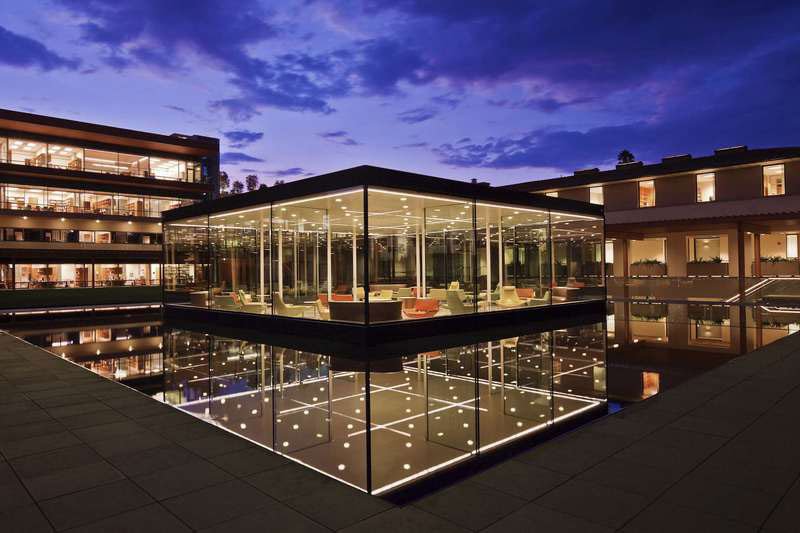
Dining facilities and shared spaces also contribute to campus culture.
The residential experience can be particularly valuable for students who want a close-knit college community.
The Role of the Claremont Community
The city of Claremont contributes to the overall student experience.
Students can explore local restaurants, cafés, shops, parks, cultural activities, and community events.
The presence of several colleges gives the area a strong educational atmosphere.
At the same time, Los Angeles and other Southern California destinations are within reach for students looking for larger-city experiences.
Admissions to Claremont McKenna College
Admission to CMC involves a holistic review process.
Applicants generally need to provide academic records and application materials demonstrating their preparation for college-level study.
Depending on the admissions cycle and applicable policies, applicants may encounter requirements or options involving:
- Academic transcripts
- Application forms
- Essays
- Teacher recommendations
- Counselor recommendations
- Extracurricular activities
- Personal achievements
- Standardized testing information where applicable
Admissions policies can change, so prospective applicants should always consult CMC’s official admissions information for the current requirements and deadlines.
Academic Preparation for Applicants
Students considering CMC should build a strong academic foundation during high school.
Useful preparation can include challenging courses in:
- Mathematics
- English
- History
- Social sciences
- Science
- Foreign languages
- Computer science
Academic preparation is not simply about collecting advanced courses.
Students should also demonstrate intellectual curiosity and genuine engagement with their subjects.
For example, a student interested in economics might read about economic issues, participate in research, join an academic club, or explore data analysis.
A student interested in government might participate in debate, civic activities, historical research, or political science projects.
Application Essays
Essays can give applicants an opportunity to explain who they are beyond grades and test results.
Strong college essays generally communicate authentic experiences and thoughtful reflection.
An applicant might discuss:
- An intellectual question that interests them
- A meaningful academic experience
- A challenge they learned from
- A community contribution
- An extracurricular passion
- A research interest
- A future goal
The most useful essays typically provide specific examples rather than relying on generic statements.
Financial Aid
The cost of attending a private U.S. college can be significant, which makes financial aid an important consideration for many families.
CMC provides financial aid information for prospective students, including policies concerning need-based aid and other forms of assistance.
Financial aid policies can vary depending on citizenship, residency, family circumstances, and the applicant’s situation.
International students should pay particular attention to the college’s current policies for international financial aid.
Because financial aid rules can change, applicants should consult official CMC financial aid information before making financial decisions.
Scholarships and Financial Planning
Students and families should consider the total cost of attendance rather than tuition alone.
Expenses can include:
- Tuition
- Housing
- Food
- Books
- Transportation
- Personal expenses
- Health-related costs
- Travel
A realistic financial plan should consider all of these categories.
Students should also examine the difference between grants, scholarships, loans, work opportunities, and other forms of financial assistance.
International Students
CMC welcomes students from different countries and backgrounds.
International students can contribute diverse perspectives to classroom discussions and campus organizations.
Studying in the United States can also provide international students with opportunities to understand American society, institutions, business, politics, and culture.
However, international applicants should carefully research:
- Admission requirements
- English-language requirements
- Visa procedures
- Financial documentation
- Financial aid eligibility
- Housing
- Health insurance
- Travel requirements
Requirements can change, so official college and government sources should be consulted for current information.
Career Development
Career preparation is another important aspect of the CMC experience.
Students may pursue careers in:
- Finance
- Consulting
- Business
- Government
- Law
- Public policy
- Technology
- Nonprofit organizations
- International affairs
- Journalism
- Education
- Research
- Entrepreneurship
A liberal arts education can provide transferable skills that are useful across many industries.
Employers often seek graduates who can communicate effectively, analyze information, work in teams, solve problems, and learn new concepts.
Alumni Network
CMC graduates form an alumni community across many professional sectors.
Alumni may work in business, government, law, finance, technology, nonprofit organizations, academia, journalism, and other fields.
An alumni network can provide students with opportunities to learn about different career paths.
Students may connect with alumni for:
- Career advice
- Internship information
- Professional networking
- Industry discussions
- Mentoring
- Graduate school guidance
Networking is most effective when students approach it as a process of learning and relationship-building rather than simply asking for employment.
Entrepreneurship
Entrepreneurship is another area that can benefit from the CMC environment.
Students interested in starting businesses can combine economics, computer science, psychology, mathematics, and organizational studies.
Entrepreneurship education may help students understand:
- Business models
- Market research
- Customer needs
- Financial planning
- Product development
- Marketing
- Organizational management
- Risk
- Leadership
The Southern California business environment can also expose students to startups and established companies.
Public Service
Public service has historically been important to CMC’s institutional mission.
Students interested in government and civic organizations can explore careers in:
- Federal government
- State government
- Local government
- Public policy
- International organizations
- Nonprofits
- Community organizations
Public-service education can involve both theoretical study and practical experience.
Debate and Intellectual Discussion
Discussion and debate are natural parts of a liberal arts environment.
Students encounter classmates with different academic interests, backgrounds, and viewpoints.
A productive academic discussion requires students to:
- Listen carefully
- Understand opposing arguments
- Use evidence
- Distinguish facts from opinions
- Ask questions
- Revise arguments when evidence changes
- Explain ideas clearly
These skills can be valuable in almost every professional environment.
Diversity and Community
A modern college campus includes students from different backgrounds, cultures, regions, and experiences.
Diversity can broaden classroom discussions and encourage students to examine assumptions.
Student organizations and cultural events can also help create opportunities for students to share their experiences and learn from others.
The goal of a college community is not necessarily to make every student think alike. Instead, educational environments can provide opportunities for people to learn how to communicate across differences.
Libraries and Academic Resources
Access to high-quality academic resources is an important part of undergraduate education.
Students can use libraries, databases, research collections, digital resources, study spaces, laboratories, and other facilities.
The Claremont Colleges consortium further expands the resources available to students.
This shared environment can be particularly useful for students working on interdisciplinary research.
Technology and Modern Education
Technology increasingly influences nearly every academic discipline.
CMC students can explore how technological changes affect:
- Business
- Economics
- Government
- Society
- International relations
- Communication
- Ethics
- Employment
- Education
Artificial intelligence, data analysis, cybersecurity, automation, and digital communication are examples of areas that increasingly intersect with traditional liberal arts subjects.
This makes interdisciplinary education particularly relevant to modern students.
Environmental Studies
Environmental issues provide another example of interdisciplinary learning.
Climate change, conservation, sustainability, energy, agriculture, and environmental policy require knowledge from multiple fields.
Students can approach these topics through:
- Science
- Economics
- Government
- Ethics
- International relations
- Public policy
Such an approach can help students understand both the scientific and institutional dimensions of environmental problems.
Study Abroad Opportunities
International education can broaden students’ understanding of different societies.
Study abroad programs may allow students to take courses in another country while experiencing local culture and institutions.
Students can gain:
- Cultural awareness
- Language experience
- International perspective
- Independence
- Adaptability
- Global academic experience
For students interested in international relations, economics, government, or global business, international study can complement classroom learning.
Washington, D.C. and Other Professional Experiences
Students interested in government and public policy may benefit from experiences in Washington, D.C., where many federal agencies, nonprofit organizations, think tanks, advocacy groups, and international organizations are located.
Other students may pursue professional experiences in New York, California, Silicon Valley, or other major economic centers.
These experiences can help students understand how theories discussed in class operate in professional settings.
Law School Preparation
CMC can provide a strong liberal arts foundation for students interested in law.
Law schools value skills such as:
- Reading comprehension
- Analytical reasoning
- Writing
- Research
- Argumentation
- Critical thinking
Students interested in law can study government, philosophy, economics, history, psychology, or other fields.
There is no single undergraduate major required for law school, making a liberal arts environment suitable for students with different academic interests.
Graduate School Preparation
Students considering graduate school can use undergraduate years to build research experience and strong academic foundations.
Depending on the field, students may pursue graduate degrees in:
- Economics
- Political science
- History
- Philosophy
- Psychology
- Public policy
- International relations
- Law
- Business
- Science
- Mathematics
- Computer science
Research with professors and independent academic projects can help students prepare for advanced study.
Skills Students Can Develop at CMC
A CMC education can help students develop a broad collection of transferable skills.
Critical Thinking
Students learn to examine evidence and evaluate competing arguments.
Writing
Frequent essays and research assignments can strengthen written communication.
Public Speaking
Presentations and discussions provide opportunities to explain ideas verbally.
Quantitative Reasoning
Economics, mathematics, statistics, and other fields can develop quantitative skills.
Collaboration
Group projects and student organizations require teamwork.
Leadership
Campus organizations and experiential learning provide opportunities to take responsibility.
Research
Independent research can teach students how to gather, analyze, and interpret evidence.
Problem Solving
Interdisciplinary study encourages students to approach complicated problems from multiple perspectives.
Why the Liberal Arts Model Remains Relevant
Some students worry that liberal arts education may be too broad for a rapidly changing job market.
However, broad education can have a different objective from vocational training.
Rather than preparing students for one narrowly defined job, liberal arts education can help students develop intellectual flexibility.
A person may change careers several times during a professional life.
Skills such as writing, analysis, communication, collaboration, and learning new concepts can remain useful even when specific technologies or job roles change.
The Importance of Community
One of the major advantages of a small college can be the sense of community.
Students see familiar classmates and professors regularly.
This can make it easier to build academic relationships and friendships.
At the same time, the Claremont Colleges consortium provides a larger network of students and activities.
This combination gives students both a relatively intimate campus environment and access to a broader academic community.
Challenges Students May Consider
Every college has strengths and potential challenges.
Prospective students should consider whether CMC’s educational environment matches their personal goals.
Some questions worth asking include:
- Do I enjoy discussion-based learning?
- Am I interested in liberal arts education?
- Do I want strong exposure to economics or government?
- Would I benefit from a small college community?
- Do I want access to multiple nearby colleges?
- Can I manage the financial cost?
- Does the Southern California location suit me?
- What extracurricular activities are important to me?
- What type of career or graduate education am I considering?
There is no single college that is ideal for every student.
The best way to evaluate an institution is to compare its actual programs, costs, location, student life, and academic environment with one’s own needs.
How to Prepare for CMC
Students interested in applying can begin preparing several years before college.
Build a strong academic foundation
Take challenging courses appropriate to your school and academic goals.
Develop genuine interests
Rather than joining activities only for an application, explore subjects that you genuinely care about.
Read widely
Reading books, articles, research papers, and reputable publications can improve vocabulary, knowledge, and analytical thinking.
Practice writing
Good writing takes practice. Essays, research projects, journals, and other forms of writing can help.
Develop quantitative skills
Mathematics and statistics can be useful even for students interested primarily in humanities or social sciences.
Explore leadership
Take responsibility in organizations, projects, community activities, or academic initiatives.
Research the college carefully
Learn about its programs, faculty, student organizations, financial aid policies, and application requirements.
What Makes Claremont McKenna College Distinctive?
Several features contribute to CMC’s distinctive identity.
Liberal Arts Education
Students receive a broad undergraduate education rather than focusing exclusively on vocational training.
Emphasis on Leadership
Leadership and civic engagement have historically been central to the college’s mission.
Strength in Economics and Government
These subjects have played a particularly important role in the institution’s academic identity.
Claremont Colleges Consortium
Students can benefit from a broader educational environment through the neighboring institutions.
Southern California Location
The college offers access to both a college-town setting and the larger Los Angeles region.
Close Faculty Interaction
A small liberal arts environment can encourage close student-faculty relationships.
Interdisciplinary Opportunities
Students can combine subjects and approach complex problems from multiple academic perspectives.
Claremont McKenna College and the Future of Higher Education
Higher education is changing rapidly.
Universities and colleges are responding to technological development, changing labor markets, globalization, artificial intelligence, demographic shifts, and evolving student expectations.
In this environment, institutions must balance specialized knowledge with broad intellectual development.
CMC’s liberal arts model provides one approach to this challenge.
A student may graduate with knowledge of economics or government while also developing communication, research, quantitative reasoning, and analytical skills.
These abilities can help graduates adapt as professional environments change.
Frequently Asked Questions
What is Claremont McKenna College?
Claremont McKenna College is a private liberal arts college in Claremont, California. It is a member of the Claremont Colleges consortium and has a particular institutional emphasis on leadership, economics, government, and public affairs.
When was Claremont McKenna College founded?
The institution was founded in 1946 as Claremont Men’s College. It later became coeducational and adopted the name Claremont McKenna College in 1981.
Where is Claremont McKenna College located?
The college is located in Claremont, California, in Los Angeles County.
Is CMC part of the Claremont Colleges?
Yes. CMC is one of the seven institutions that make up the Claremont Colleges consortium.
What majors is CMC known for?
CMC has a particularly strong institutional reputation around economics, government, international relations, and related social sciences, while offering a broader liberal arts curriculum.
Is Claremont McKenna College a university?
No. It is a private liberal arts college.
Can students take classes at other Claremont Colleges?
The consortium structure provides students with opportunities to access courses and resources across the participating institutions, subject to applicable rules and availability.
Is CMC good for students interested in government?
CMC has a long-standing emphasis on government, public affairs, and leadership, making these important areas within its academic identity.
Is CMC good for economics?
Economics is one of the college’s prominent academic fields and has historically played a major role in its curriculum.
Does CMC offer international opportunities?
Students can pursue international academic and experiential opportunities, including study abroad programs and activities connected to global affairs.
What careers do CMC graduates pursue?
Graduates pursue a wide range of careers in business, finance, consulting, government, law, technology, nonprofit organizations, public policy, education, research, and other fields.
Does CMC have student organizations?
Yes. Students can participate in many organizations covering academic, cultural, political, recreational, professional, and social interests.
Is Claremont McKenna College located near Los Angeles?
Yes. CMC is located in Claremont, approximately 35 miles east of central Los Angeles.
What should prospective students research before applying?
Applicants should research current admission requirements, academic programs, costs, financial aid, housing, student life, deadlines, and opportunities relevant to their individual goals.
Conclusion
Claremont McKenna College has developed a distinctive place within American liberal arts education. Founded in 1946, the college has evolved from its original identity as Claremont Men’s College into a coeducational liberal arts institution with a strong emphasis on economics, government, leadership, public affairs, and interdisciplinary education.
Its membership in the Claremont Colleges consortium is one of its defining characteristics. Students can experience the community of a relatively small liberal arts college while also benefiting from the academic and extracurricular opportunities of neighboring institutions.
CMC’s Southern California location adds another dimension to the student experience. The college provides a traditional campus environment while remaining connected to the professional, cultural, and economic opportunities of the greater Los Angeles region.
Academically, students can explore subjects ranging from economics and government to philosophy, history, psychology, mathematics, computer science, and the natural sciences. Research, internships, leadership activities, study abroad, student organizations, and community engagement can complement classroom learning.
For prospective students, the most important question is not simply whether Claremont McKenna College is well known. The more useful question is whether its academic philosophy, campus culture, location, costs, and opportunities align with their own educational goals.
A thoughtful college decision requires careful research and comparison. Students should examine official information about admission requirements, academic programs, financial aid, housing, student life, and career opportunities before applying.
Claremont McKenna College remains an institution built around a broad liberal arts education combined with a particular interest in leadership, economics, government, and civic engagement. For students seeking an undergraduate environment where intellectual study can be combined with practical experiences and a close campus community, understanding CMC’s history and educational model provides an important starting point for evaluating the college.