Middlebury College: A Complete Guide to History, Academics, Campus Life, Admissions, and Student Experience
Introduction
Middlebury College is a private liberal arts college located in Middlebury, Vermont, United States. Founded in 1800, the college has developed a distinctive academic identity built around liberal arts and sciences, close faculty-student interaction, global education, language learning, research, and a strong connection with the surrounding environment.
For students searching for a college where undergraduate education extends beyond traditional classroom learning, Middlebury offers a particularly interesting model. Its academic programs encourage students to explore multiple disciplines while developing strong writing, analytical, research, communication, and problem-solving skills. The college also places substantial emphasis on international education. Middlebury reports that more than 60 percent of its students study abroad at least once, with opportunities connected to its Schools Abroad and other global programs.
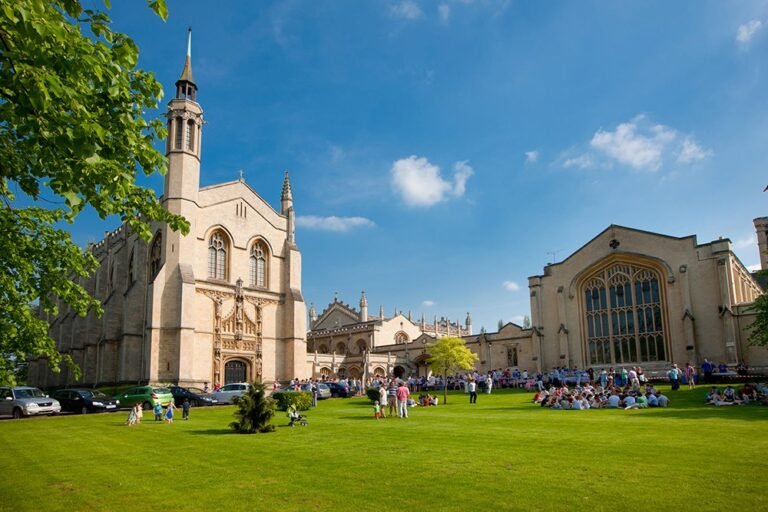
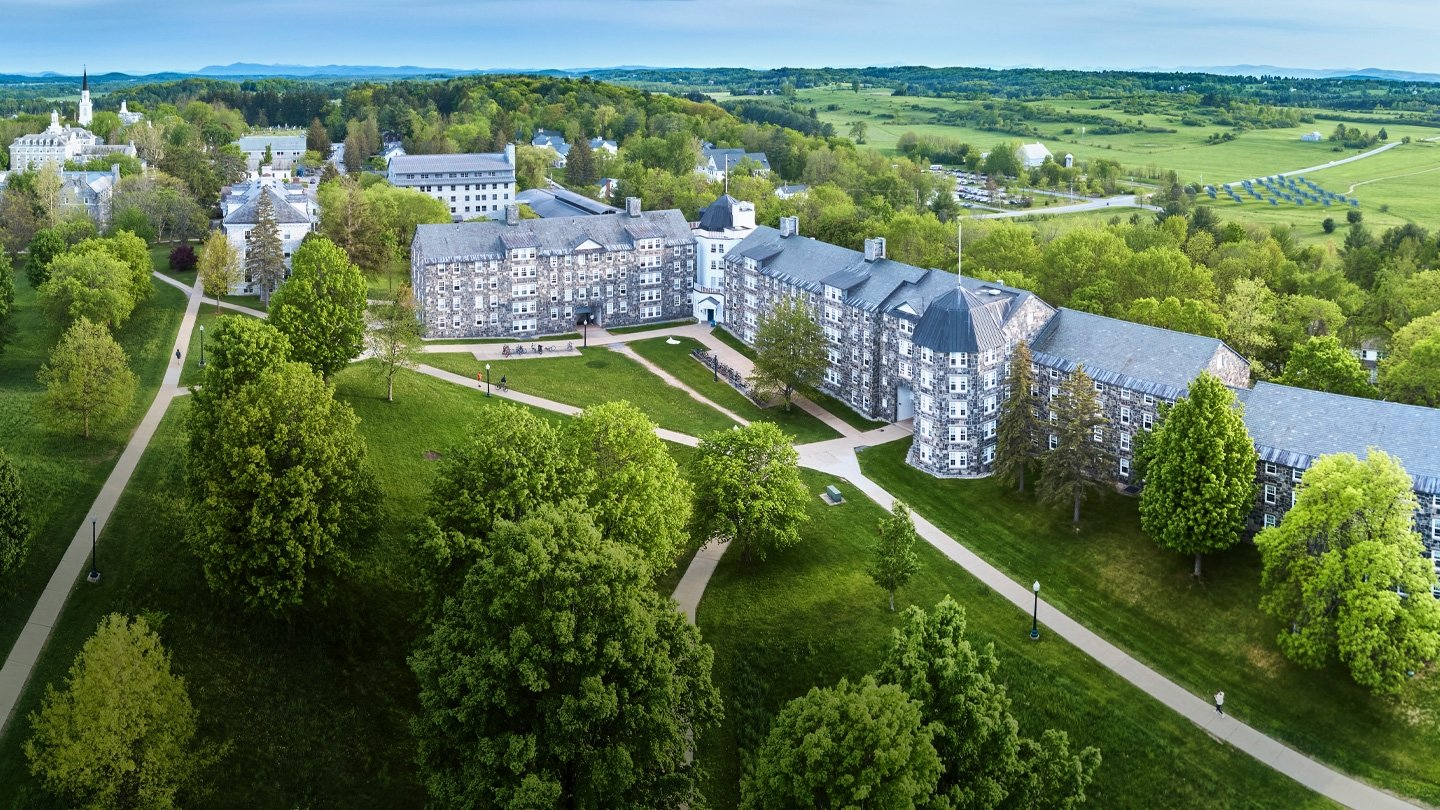
The college’s location in Vermont also contributes significantly to its identity. Instead of being situated in a large metropolitan area, Middlebury provides a residential campus environment surrounded by the landscapes of New England. Students can participate in academic activities, athletics, student organizations, research, cultural programs, outdoor recreation, internships, and international opportunities while living in a relatively close-knit college community.
Middlebury is also known for its long tradition of language education. Its broader educational philosophy connects liberal arts study with global engagement, allowing students to approach academic subjects from historical, cultural, scientific, social, and international perspectives.
This article explores Middlebury College in detail, including its history, academic philosophy, majors and programs, admissions process, financial aid, campus environment, student life, global education, research opportunities, athletics, career preparation, and reasons students may consider the institution.
1. History of Middlebury College
Middlebury College was founded in 1800, making it one of the older institutions of higher education in the United States. Its long history has played an important role in shaping its academic traditions and institutional identity.
From its beginning, Middlebury developed around the idea of providing students with a broad education. Liberal arts education traditionally emphasizes intellectual breadth rather than preparing students exclusively for one narrow profession. Students are encouraged to examine ideas from different disciplines and develop the ability to communicate and reason effectively.
The study of history, for example, has been part of Middlebury since the college’s founding. The institution’s History Department describes history as a cornerstone of its liberal arts mission and emphasizes research, argumentation, writing, and connections across different societies and periods.
Over the centuries, Middlebury expanded beyond its original educational structure. New academic departments, interdisciplinary programs, international opportunities, research centers, student organizations, and professional-development resources were developed as the needs of students and society changed.
The college’s history is therefore not simply a story of buildings and dates. It is also a story of changing approaches to undergraduate education.
Today, Middlebury presents itself as a 21st-century global liberal arts and sciences institution. Its academic model combines traditional liberal arts education with research, interdisciplinary study, global experiences, and opportunities outside the classroom.
2. Location of Middlebury College
Middlebury College is located in the town of Middlebury in Vermont.
Vermont is well known for its mountains, forests, lakes, seasonal landscapes, and small-town communities. Middlebury’s setting gives students access to an environment that is significantly different from the urban atmosphere of major American cities.
The college describes Vermont as more than simply a scenic location. Its admissions materials present the state as a starting point for students who want to connect their undergraduate education with broader national and international experiences.
The location can be particularly appealing to students who enjoy outdoor activities. Depending on the season, the surrounding region offers opportunities for hiking, skiing, snowboarding, cycling, walking, and exploring nature.
At the same time, the campus provides many activities for students who prefer academic, cultural, artistic, technological, or social experiences.
Middlebury is within driving distance of several Northeastern cities, while various airports provide additional transportation options. The college also offers campus and virtual visits for prospective students.
3. Middlebury’s Liberal Arts and Sciences Education
One of the defining features of Middlebury College is its liberal arts and sciences approach.
A liberal arts education does not necessarily mean studying only traditional humanities subjects. Instead, it generally means developing broad intellectual skills across fields while gaining depth in a chosen area.
At Middlebury, students can explore subjects in areas such as:
- Humanities
- Social sciences
- Natural sciences
- Mathematics
- Languages
- Environmental studies
- Economics
- Computer science
- Arts
- Cultural studies
- Interdisciplinary programs
The college explains that its curriculum is anchored in liberal arts and sciences while responding to an increasingly complex world. It also emphasizes collaboration among different academic fields.
This approach can help students understand connections between subjects.
For example, a student interested in environmental problems might study biology, economics, politics, geography, and environmental policy. A student interested in international affairs could combine history, languages, economics, political science, and cultural studies.
Such interdisciplinary exploration is an important part of the liberal arts tradition.
4. Academic Experience at Middlebury
Middlebury emphasizes close academic interaction and individualized educational planning.
The college states that academic advising is central to the undergraduate experience. Students receive support as they select courses, explore majors, plan research projects, prepare for graduation, and think about future careers.
The academic experience can include several different forms of learning.
Classroom Learning
Traditional classroom courses remain an important part of the Middlebury experience. Depending on the subject, students may participate in lectures, discussions, laboratory work, seminars, workshops, and project-based learning.
Seminar-Based Learning
Small seminars can provide students with opportunities to participate actively in discussions and develop arguments based on readings and research.
Independent Research
Students can also participate in independent research. In subjects such as history, research may involve primary documents, secondary scholarship, archival materials, and extended writing.
Interdisciplinary Learning
Students may connect multiple departments when their interests cross traditional academic boundaries.
Global Learning
Study abroad and international programs provide opportunities to experience academic subjects in different cultural and geographic contexts.
5. Academic Departments and Majors
Middlebury offers students numerous academic options.
The college’s academic structure is designed to allow students to explore subjects before and during their major studies. Students can develop specialized knowledge while maintaining the broader perspective associated with liberal arts education.
Potential areas of study include subjects such as:
- Biology
- Chemistry
- Physics
- Computer Science
- Economics
- Political Science
- History
- Psychology
- Sociology
- English
- Philosophy
- Mathematics
- Environmental Studies
- Geography
- Languages
- Film and Media
- Studio Art
- Music
- Neuroscience
- Religion
- Classics
Students interested in interdisciplinary subjects can also investigate programs that combine ideas from multiple fields.
The objective is not simply to collect courses. A strong undergraduate education requires students to develop relationships among ideas and understand how different academic approaches can illuminate the same problem.
6. Studying History at Middlebury
History has a particularly established role at Middlebury.
The college’s History Department explains that the discipline has been part of Middlebury since its founding in 1800. The department’s courses examine societies and cultures across different geographical regions and historical periods.
Students may study topics involving:
- North American history
- European history
- Latin American history
- Caribbean history
- Middle Eastern and North African history
- African history
- South and Southeast Asian history
- Chinese history
- Japanese history
- Korean history
- Environmental history
- Political history
- Economic history
- Social history
- History of science
- History of medicine
- Technology
The department also emphasizes original research.
History majors are required to complete courses across different geographical areas and take advanced seminars. The major includes a research seminar in which students develop a historical project using primary-source material.
Students who meet the department’s academic requirements may also pursue an honors thesis.
This illustrates an important feature of liberal arts education: students are not simply expected to memorize information. They are expected to interpret evidence, formulate arguments, conduct research, and communicate conclusions.
7. Research Opportunities
Research is an important part of undergraduate education at Middlebury.
Research opportunities can vary according to department and academic interest. Students may work with faculty members, conduct independent projects, participate in seminars, or pursue senior research.
Research teaches skills that can be valuable beyond academia.
Students learn how to:
- Identify a question.
- Locate reliable information.
- Evaluate evidence.
- Analyze competing interpretations.
- Organize information.
- Develop an argument.
- Write clearly.
- Present findings.
These skills can be useful in graduate school, journalism, law, business, public service, technology, education, and many other professional fields.
8. Global Education at Middlebury
Global education is one of the most distinctive aspects of Middlebury.
The college reports that more than 60 percent of its students study abroad at least once. Middlebury also describes a network of Schools Abroad located across regions including South America, Europe, Asia, and Africa.
Study abroad can transform the traditional college experience.
Instead of studying a language exclusively from a classroom in Vermont, a student may have an opportunity to use that language in another country.
Instead of studying international politics only through textbooks, a student can encounter different political, social, and cultural environments directly.
Instead of learning about regional history exclusively through lectures, students may visit museums, historical sites, archives, communities, and cultural institutions.
Global education can therefore connect academic knowledge with lived experience.
9. Language Learning
Language education has historically been an important component of Middlebury’s broader identity.
Language learning can provide students with more than vocabulary and grammar. It can also introduce different cultural perspectives and ways of communicating.
Students who become proficient in another language may find opportunities in:
- International business
- Diplomacy
- Education
- Journalism
- Translation
- International development
- Research
- Tourism
- Government
- Nonprofit organizations
- Global technology companies
Language study can also strengthen a student’s understanding of literature, history, politics, and culture.
Middlebury’s international orientation makes language education particularly relevant to students who want to work or study across borders.
10. Campus Life
College life extends far beyond academic classes.
Middlebury students can participate in a broad range of extracurricular activities. These can include student clubs, athletics, performing arts, publications, cultural organizations, volunteer activities, outdoor recreation, and academic organizations.
A residential college environment creates many opportunities for students to interact outside the classroom.
Students may meet classmates through:
- Residence halls
- Dining facilities
- Student organizations
- Sports
- Academic events
- Cultural programs
- Music
- Theater
- Outdoor activities
- Volunteer projects
These experiences can contribute to the development of communication, leadership, teamwork, and organizational skills.
11. Student Organizations
Student organizations can help students pursue interests that are not part of their formal academic program.
A student interested in journalism might participate in a campus publication.
A student interested in politics might join a discussion or civic organization.
Someone interested in environmental issues could participate in sustainability activities.
Students interested in arts can become involved in theater, music, dance, or visual arts.
The value of these activities is not necessarily measured by how many organizations a student joins. Meaningful participation can allow students to develop responsibility and leadership over time.
12. Athletics at Middlebury
Athletics are another component of Middlebury’s student experience.
The college competes in the New England Small College Athletic Conference, commonly known as NESCAC. Middlebury offers opportunities for students to compete in intercollegiate athletics as well as participate in recreational activities.
College athletics can provide students with experiences in:
- Teamwork
- Discipline
- Time management
- Leadership
- Competition
- Communication
- Resilience
- Goal setting
For students who enjoy sports, the combination of academic study and athletics can become an important part of college life.
13. Outdoor Recreation
Middlebury’s Vermont location provides an especially distinctive environment for outdoor recreation.
Students who enjoy nature can explore the surrounding landscape during different seasons.
Popular activities in Vermont and the surrounding region can include:
- Hiking
- Skiing
- Snowboarding
- Cycling
- Running
- Camping
- Walking
- Nature observation
The changing seasons also influence the atmosphere of campus.
Autumn can bring colorful foliage, winter brings snow and cold weather, spring produces changing landscapes, and summer creates opportunities for outdoor activities.
For students who enjoy seasonal variation, this setting can become an important part of their college experience.
14. Admissions to Middlebury College
Admission to Middlebury is selective.
For the Class of 2030, Middlebury reports 11,458 applications and an 18 percent admission rate. The entering class profile lists 755 students, including September and February starters.
Middlebury uses a holistic admissions process.
The college considers factors such as:
- Academic record
- Course rigor
- Teacher recommendations
- Personal essay
- Extracurricular involvement
- Personal background
- Community involvement
- Individual characteristics
Middlebury also states that its undergraduate admissions process is need-blind for students applying for financial aid in the context described by its admissions materials.
Applicants should always check the current admissions website before applying because deadlines, requirements, testing policies, and financial-aid procedures can change.
15. Standardized Testing
Middlebury currently has a test-optional admissions policy.
Applicants can choose whether to submit standardized test scores. For the Class of 2030, Middlebury reports a middle 50 percent SAT range of 1,460–1,530 and an ACT range of 33–34 among the relevant submitted-score population.
These figures should not be interpreted as universal requirements.
Students should consider their complete academic profile, including grades, course rigor, recommendations, essays, activities, and other application components.
16. Application Requirements
Middlebury accepts several application platforms, including the Common Application, Coalition Application, and QuestBridge Application.
The application requirements include items such as:
- Application form
- Personal essay
- Teacher recommendations
- School report
- Counselor recommendation
- Academic transcript
Middlebury does not require a supplemental essay according to its current application instructions.
Students whose educational background requires proof of English proficiency may also need to provide an accepted English-language test score.
Because application requirements can change, prospective students should consult the official admissions page for the year in which they intend to apply.
17. Early Decision and Regular Decision
Middlebury offers multiple application options.
These include:
- Early Decision I
- Early Decision II
- Regular Decision
- Transfer admission
Early Decision is binding, meaning applicants who are admitted and choose that option are expected to enroll, subject to the terms of the commitment.
Students should understand the financial-aid implications and application commitments before choosing an application plan.
Regular Decision provides applicants with more flexibility because it is not a binding admission plan.
18. International Students
Middlebury has a substantial international dimension.
Its current admissions information reports students from numerous countries and states. For the Class of 2030 profile, 11 percent of students are international, with students representing 61 countries.
International students contribute to the cultural diversity of the campus.
For an international applicant, the college experience can involve both academic and cultural adjustment. Students may need to consider:
- English proficiency
- Visa requirements
- Financial aid
- Travel arrangements
- Housing
- Academic preparation
- Cultural adjustment
- Health insurance
- Banking and financial planning
Applicants should review Middlebury’s international admissions guidance carefully because requirements can vary according to citizenship and educational background.
19. Financial Aid
The cost of attending a private U.S. college can be significant, making financial aid an important consideration.
Middlebury states that it meets 100 percent of demonstrated financial need for students under its financial-aid policies. Its admissions information currently reports that 46 percent of students receive financial aid and gives an average financial aid package figure of $64,631.
Financial aid can include grants, scholarships, employment expectations, and other forms of assistance depending on a student’s circumstances.
Students should not assume that the published cost of attendance is the amount every student pays. The actual family contribution depends on the financial-aid assessment.
International students should pay particular attention to the college’s separate financial-aid rules because Middlebury states that it is need-aware in admission for international students seeking financial assistance.
20. Academic Advising
Academic advising is an important component of Middlebury’s educational structure.
Students may need guidance when deciding:
- Which courses to take
- What major to choose
- Whether to study abroad
- How to combine academic interests
- Which research opportunities to pursue
- How to prepare for graduate school
- How to connect academic interests with careers
Middlebury describes advising as an ongoing conversation that begins early in a student’s college experience and continues as students plan for graduation and beyond.
Good advising can help students build an academic plan rather than simply selecting courses semester by semester.
21. Career Preparation
A liberal arts education can provide broad preparation for professional life.
Middlebury’s career resources support students as they explore internships, employment, graduate programs, and career possibilities.
The college’s admissions information reports strong outcomes for graduates, including high reported graduation rates and acceptance rates into law and medical school.
However, students should remember that career outcomes depend on many factors, including field of study, professional experience, geographic location, internships, graduate education, economic conditions, and individual career choices.
A Middlebury education can provide transferable skills such as:
- Writing
- Research
- Critical thinking
- Public speaking
- Collaboration
- Problem-solving
- Cross-cultural communication
- Independent learning
These skills can be applied across many professions.
22. Internships and Experiential Learning
Internships can help students connect classroom learning with professional environments.
A student studying economics might explore finance, consulting, public policy, or nonprofit organizations.
A student studying environmental subjects might work with conservation organizations.
A history student might pursue opportunities involving museums, archives, education, publishing, or public history.
A computer science student could seek software, research, data, or technology-related experiences.
The purpose of an internship is not only to improve a résumé. It can also help students determine what types of work they enjoy and what professional skills they need to develop.
23. Middlebury and the Environment
Environmental awareness is closely connected with Middlebury’s Vermont location.
The surrounding region provides students with opportunities to think about forests, agriculture, climate, biodiversity, water, energy, and sustainable development.
Environmental questions can also be studied academically through scientific, political, economic, and social perspectives.
This is another example of why interdisciplinary learning is valuable.
Climate change, for instance, is not only a scientific issue. It can also involve economics, public policy, international relations, ethics, agriculture, engineering, communication, and social behavior.
24. Arts and Culture
A college education is not limited to academic departments.
Arts and culture can contribute significantly to campus life.
Students may participate in creative activities involving:
- Music
- Theater
- Dance
- Visual arts
- Film
- Writing
- Performance
- Cultural events
These activities provide opportunities for students to express themselves while collaborating with others.
For students who are not majoring in the arts, participation can still provide an important creative balance to academic work.
25. The Importance of Community
A residential liberal arts college can create a different social environment from a very large university.
At a smaller institution, students may repeatedly encounter classmates and professors in different settings.
This can encourage the development of academic and personal communities.
Community can form around:
- Residence halls
- Academic departments
- Clubs
- Sports teams
- Research groups
- Cultural organizations
- Outdoor activities
- Dining spaces
- Volunteer projects
Students can therefore create multiple overlapping communities during their undergraduate years.
26. Diversity and Global Perspectives
Middlebury’s international student population and global programs contribute to the diversity of perspectives on campus.
The college’s current admissions information reports students representing numerous U.S. states and countries.
A diverse learning environment can expose students to different experiences and viewpoints.
In classroom discussions, students may approach the same question from different cultural, historical, disciplinary, or personal perspectives.
For students interested in international careers, this type of interaction can be especially valuable.
27. February Admission and the “Feb” Experience
One distinctive feature of Middlebury’s undergraduate program is its February start option.
The college reports that approximately 100 students each year have the opportunity to begin in February rather than September.
This can provide an alternative path for students whose educational schedules do not align with the traditional fall start.
The February option is also part of Middlebury’s broader effort to provide different entry pathways while maintaining the residential undergraduate experience.
28. Campus Visits
Prospective students can visit Middlebury either in person or virtually.
The college provides information sessions, tours, and online resources for prospective students.
A campus visit can help applicants understand aspects that are difficult to learn from statistics alone.
During a visit, students can observe:
- Campus atmosphere
- Residence areas
- Academic buildings
- Dining facilities
- Outdoor spaces
- Student activity
- Location of the town
- Transportation arrangements
Virtual visits can also help international students and applicants who cannot easily travel to Vermont.
29. What Makes Middlebury Different?
Several characteristics contribute to Middlebury’s institutional identity.
Liberal Arts Focus
Students receive a broad undergraduate education with opportunities for specialized study.
Global Orientation
Study-abroad programs and international education are central features.
Vermont Setting
The rural New England environment provides access to nature and outdoor activities.
Language Education
Language learning has an important place within the institution’s global educational philosophy.
Undergraduate Research
Students can engage in research and advanced academic projects.
Residential Community
Campus life encourages students to interact through academics, extracurricular activities, athletics, and social organizations.
Academic Advising
Students receive guidance while developing individualized educational paths.
30. Challenges Students Should Consider
Choosing a college requires looking at both opportunities and practical challenges.
Middlebury’s Vermont location can be attractive to students who enjoy nature, but students who prefer large metropolitan environments may need to consider the differences carefully.
Winter weather is another practical consideration. Students coming from warm climates may need time to adjust to Vermont winters.
The college’s selective admission process also means that admission is not guaranteed even for academically strong applicants.
Students should also consider:
- Total cost
- Financial-aid eligibility
- Distance from home
- Climate
- Campus size
- Academic programs
- Career goals
- Social environment
- Transportation
- Study-abroad interests
There is no single college environment that is ideal for every student.
31. Middlebury for Students Interested in Graduate School
Students planning to attend graduate school may benefit from the research-oriented aspects of a liberal arts education.
Graduate programs in fields such as law, medicine, humanities, social sciences, sciences, business, and public policy often require strong analytical and writing skills.
Undergraduate research can help students understand how scholars approach questions.
Independent projects can also provide experience with:
- Academic writing
- Research methodology
- Evidence evaluation
- Presentations
- Faculty collaboration
Students interested in graduate study should work with advisors and career resources to plan their undergraduate coursework and experiences.
32. Middlebury for Future International Professionals
Students interested in international careers may find the combination of liberal arts, language education, and study abroad particularly relevant.
Potential career areas include:
- International business
- Diplomacy
- Global development
- International education
- Journalism
- Translation
- Nonprofit work
- International law
- Research
- Tourism
- Global communications
However, international careers usually require more than simply studying abroad. Language proficiency, internships, professional networks, specialized knowledge, and relevant graduate education can all be important.
33. Middlebury’s Educational Philosophy
At the heart of Middlebury’s model is the idea that undergraduate education should develop the whole student.
Education is not simply about earning a credential.
Students need to learn how to:
- Ask meaningful questions
- Analyze information
- Communicate effectively
- Work with people
- Adapt to unfamiliar environments
- Understand different perspectives
- Continue learning independently
These abilities can remain useful long after graduation.
A liberal arts education is therefore designed to prepare students not only for their first job but also for a changing professional and social environment.
34. How to Prepare for Middlebury
Students interested in applying should begin preparation well before application deadlines.
Step 1: Build a Strong Academic Record
Take challenging courses appropriate to your educational system.
Step 2: Develop Meaningful Activities
Choose extracurricular activities that genuinely interest you rather than trying to participate in everything.
Step 3: Develop Writing Skills
The personal essay is an opportunity to communicate your experiences and perspective.
Step 4: Build Relationships With Teachers
Strong teacher recommendations require teachers who know your academic work and character.
Step 5: Research Middlebury Carefully
Explore academic departments, campus life, financial aid, global programs, and student organizations.
Step 6: Consider Financial Planning
Understand tuition, living costs, financial aid, and travel expenses.
Step 7: Visit if Possible
Use an in-person or virtual visit to determine whether the environment matches your expectations.
35. Frequently Asked Questions About Middlebury College
What is Middlebury College known for?
Middlebury is known for liberal arts and sciences education, global learning, language education, study abroad, undergraduate research, and its Vermont campus environment.
Where is Middlebury College located?
Middlebury College is located in Middlebury, Vermont, in the United States.
When was Middlebury College founded?
Middlebury College was founded in 1800.
Is Middlebury College a university?
No. Middlebury is a liberal arts college rather than a large research university.
Is Middlebury College selective?
Yes. Middlebury has a selective undergraduate admissions process. For the Class of 2030, the college reports an 18 percent admission rate.
Does Middlebury require SAT scores?
Middlebury currently has a test-optional policy for undergraduate applicants.
Does Middlebury accept international students?
Yes. Middlebury welcomes international applicants and currently reports students representing dozens of countries.
Does Middlebury offer financial aid?
Yes. Middlebury provides financial aid, and its admissions materials state that the college meets 100 percent of demonstrated financial need under its financial-aid policies.
Can students study abroad?
Yes. Study abroad is an important part of Middlebury’s global educational model, and the college reports that more than 60 percent of students study abroad at least once.
What is student life like?
Student life includes academics, athletics, clubs, arts, cultural activities, outdoor recreation, research, internships, and residential community activities.
Is Middlebury good for international studies?
Students interested in international education can explore language study, study abroad, global programs, and interdisciplinary academic opportunities.
36. Conclusion
Middlebury College represents a distinctive form of undergraduate education built around liberal arts and sciences, global engagement, close academic relationships, research, and a residential community.
Founded in 1800, the college has maintained a long tradition of undergraduate education while adapting its programs to contemporary academic and global challenges. Its Vermont location provides a setting that combines campus life with access to nature, while its international programs give students opportunities to engage with communities and academic environments around the world.
The college’s academic philosophy encourages students to explore different subjects, develop specialized knowledge, conduct research, communicate ideas clearly, and connect their education with broader questions.
Its international orientation is particularly notable. With study-abroad opportunities and students from many countries, Middlebury offers an educational environment in which global perspectives can become part of everyday undergraduate life.
For prospective students, the most important step is to look beyond rankings or reputation and examine whether the institution’s academic programs, location, financial-aid policies, campus culture, extracurricular opportunities, and global programs match their own educational goals.
Middlebury College can be understood not simply as a place to earn an undergraduate degree, but as a community designed to encourage intellectual curiosity, independent thinking, collaboration, cultural understanding, and lifelong learning.
For students seeking a liberal arts education with a strong international dimension and a distinctive Vermont residential setting, Middlebury offers a broad range of academic and extracurricular opportunities worth exploring.
SEO Information
SEO Title: Middlebury College: History, Academics, Admissions, Campus Life & Global Education
Meta Description: Explore Middlebury College in detail, including its history, academics, majors, admissions, financial aid, campus life, study abroad programs, research opportunities, athletics, and student experience.
Focus Keyword: Middlebury College
Related Keywords:
- Middlebury College history
- Middlebury College admissions
- Middlebury College academics
- Middlebury College majors
- Middlebury College acceptance rate
- Middlebury College tuition
- Middlebury College financial aid
- Middlebury College study abroad
- Middlebury College campus
- Middlebury College Vermont
- Middlebury College international students
- Middlebury College student life
- Middlebury College liberal arts
- Middlebury College application
- Middlebury College scholarships
- Middlebury College undergraduate programs