Bowdoin College: History, Academics, Campus Life, Admissions, and Legacy
Bowdoin College: History, Academics, Campus Life, Admissions, and Legacy
Introduction
Bowdoin College is one of the most respected liberal arts colleges in the United States. Located in Brunswick, Maine, Bowdoin has developed a distinctive identity through its long history, close-knit academic community, commitment to undergraduate education, and beautiful New England setting. Founded in the late eighteenth century, the college has experienced dramatic changes in American society while maintaining a strong emphasis on intellectual exploration, personal development, and service.
Unlike large research universities, Bowdoin is primarily focused on undergraduate liberal arts education. Students study across humanities, natural sciences, social sciences, mathematics, and interdisciplinary fields. The college encourages students to explore subjects broadly while also developing depth in their chosen areas of study.
Bowdoin’s history is closely connected with the development of higher education in New England. Over more than two centuries, the institution has transformed from a small nineteenth-century college into a modern liberal arts institution with a diverse student body and a broad academic curriculum.
Its location in Brunswick provides students with a combination of traditional college-town life, access to coastal Maine, and proximity to natural landscapes. The campus itself includes historic buildings, modern academic facilities, residence halls, libraries, athletic spaces, museums, and outdoor areas.
This article explores Bowdoin College’s history, academic programs, campus, student experience, admissions, traditions, notable alumni, athletics, financial aid, and continuing role in American higher education.
The History of Bowdoin College
Bowdoin College was founded in 1794, making it one of the oldest institutions of higher education in the United States. Its establishment occurred during the early years of the American republic, when educational institutions were expanding across the country.
The college was named in honor of James Bowdoin, a former governor of Massachusetts and an important political and intellectual figure of the colonial and revolutionary era. His son, James Bowdoin III, supported the institution and contributed to its early development.
Bowdoin’s founding reflected a broader belief that the young United States needed educated citizens capable of contributing to government, business, science, culture, and public life.
The college’s early years were challenging. Like many institutions established during this period, Bowdoin had to develop its curriculum, attract students, establish financial resources, and build a permanent campus.
Over time, however, the college became increasingly established within New England’s educational landscape.
Early Development
During the nineteenth century, Bowdoin gradually expanded its academic offerings and physical campus. Classical education played an important role in the curriculum, as it did at many American colleges of the period.
Students commonly studied subjects such as Latin, Greek, philosophy, mathematics, history, and moral philosophy. Education was designed not only to provide specialized knowledge but also to develop reasoning, communication, and civic responsibility.
As American society changed, Bowdoin’s curriculum also evolved.
The nineteenth century brought major developments in science, technology, industry, transportation, and political life. Colleges were increasingly expected to provide students with knowledge relevant to a rapidly changing society.
Bowdoin responded by expanding the range of subjects available to students.
Bowdoin College in the Nineteenth Century
The nineteenth century was an important period in Bowdoin’s development.
The college became associated with influential intellectual and political figures. Its graduates entered professions including law, medicine, education, government, journalism, business, and the ministry.
Bowdoin also became part of the wider intellectual culture of New England.
One of the most famous figures associated with the college during this era was Henry Wadsworth Longfellow, the American poet. Longfellow attended Bowdoin and later became one of the most widely known literary figures in nineteenth-century America.
Another important alumnus was Franklin Pierce, who became the fourteenth president of the United States.
These alumni helped increase Bowdoin’s national visibility.
Civil War Era
Like other American colleges, Bowdoin was affected by the American Civil War.
Students and graduates participated in the conflict, and the institution experienced the social and political consequences of the war.
The Civil War period also contributed to changes in American higher education. Questions about national identity, citizenship, political institutions, science, and social responsibility became increasingly important.
Bowdoin’s graduates continued to enter public service and professional careers during this period.
Bowdoin College in the Twentieth Century
The twentieth century brought substantial transformation to Bowdoin.
American higher education expanded significantly during this period. Colleges introduced new academic disciplines, developed professional programs, modernized facilities, and increasingly emphasized scientific research and interdisciplinary learning.
Bowdoin remained focused on undergraduate liberal arts education while modernizing its curriculum.
The college also experienced important social changes.
Women were eventually admitted to Bowdoin, transforming the character of the student body. The college moved toward a more inclusive educational model and gradually developed a student community representing a broader range of backgrounds.
Coeducation
Bowdoin became coeducational in the 1970s, marking a major transition in its history.
The move reflected broader changes throughout American higher education. During the twentieth century, many traditionally male colleges began admitting women.
Coeducation significantly expanded educational opportunities and changed campus life.
Today, Bowdoin is a coeducational institution with students from many different backgrounds.
Bowdoin College Today
Modern Bowdoin College is a private liberal arts college located in Brunswick, Maine.
Its educational model is centered on undergraduate learning.
The college is known for small classes, close interaction between students and professors, interdisciplinary study, and opportunities for research and experiential learning.
Students can pursue academic interests in areas ranging from biology and chemistry to economics, history, government, literature, computer science, environmental studies, mathematics, and the arts.
Bowdoin also emphasizes learning outside traditional classrooms.
Students may participate in:
- Research projects
- Internships
- Study abroad
- Community service
- Student organizations
- Athletics
- Performing arts
- Museum programs
- Environmental activities
- Independent projects
This combination of academic and extracurricular opportunities creates a comprehensive undergraduate experience.
Location of Bowdoin College
Bowdoin College is located in Brunswick, Maine.
Brunswick is a historic town in southern Maine and provides students with a traditional New England environment.
The location is particularly attractive to students who appreciate a balance between campus life and access to nature.
Maine is known for:
- Rocky coastline
- Forests
- Lakes
- Mountains
- Historic towns
- Outdoor recreation
- Maritime culture
Students at Bowdoin can experience a variety of outdoor activities.
Depending on the season, students may enjoy hiking, skiing, sailing, kayaking, cycling, camping, and other recreational activities.
The coastal setting also contributes to the college’s environmental and marine-related academic opportunities.
Bowdoin College Campus
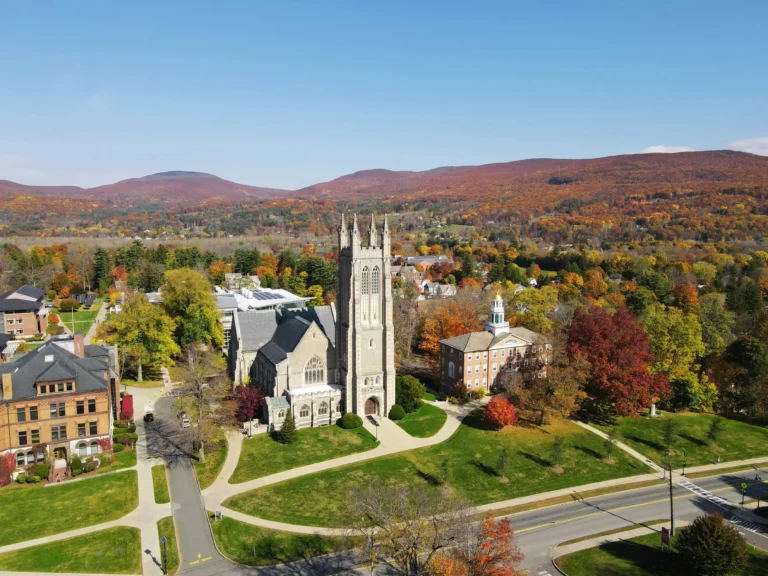
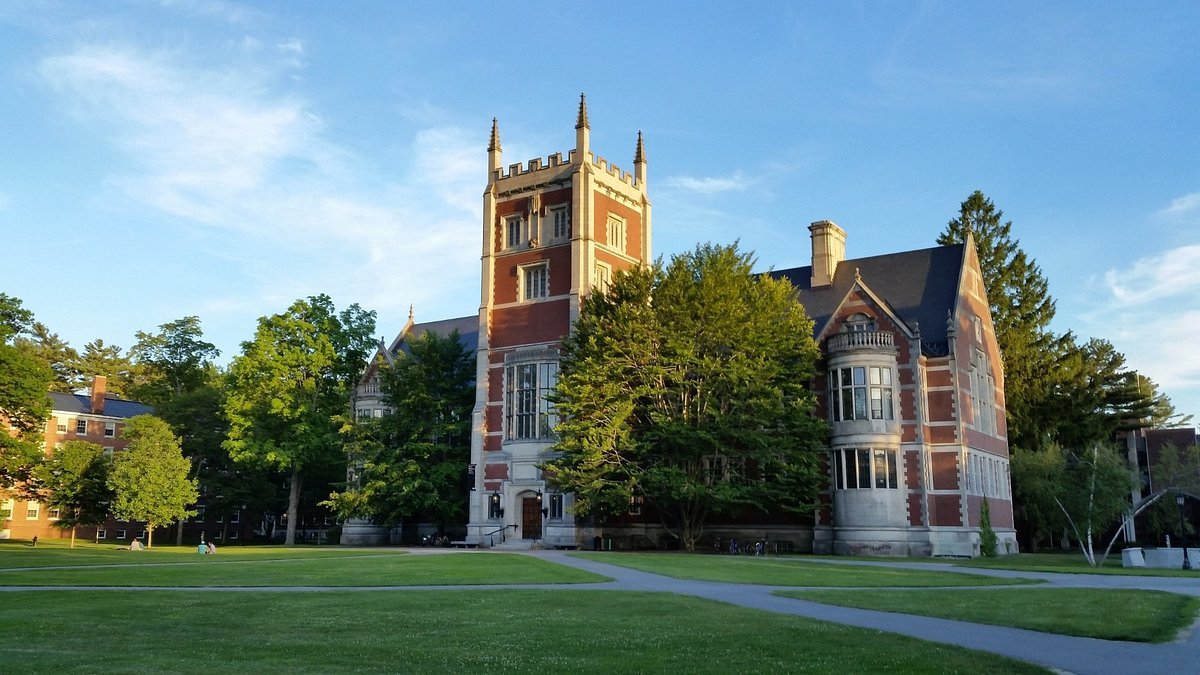
Bowdoin’s campus combines historic New England architecture with modern academic and residential facilities.
Many buildings reflect the college’s long history.
The campus includes:
- Academic buildings
- Residence halls
- Libraries
- Dining facilities
- Laboratories
- Athletic facilities
- Museums
- Student centers
- Performance spaces
- Outdoor areas
The architectural character of Bowdoin contributes to its traditional liberal arts atmosphere.
Historic Campus
Some of Bowdoin’s buildings have historical significance.
The campus provides students with a sense of continuity between the institution’s past and present.
Walking through the campus, students encounter buildings and spaces connected with generations of Bowdoin students.
This historic atmosphere is an important part of the college’s identity.
Academic Life at Bowdoin College
Academic life is one of the central features of Bowdoin College.
Because Bowdoin is a liberal arts college, students are encouraged to explore multiple fields rather than focusing narrowly on a single professional specialization.
The liberal arts model emphasizes:
- Critical thinking
- Writing
- Communication
- Research
- Problem solving
- Creativity
- Analytical reasoning
- Collaboration
Students can explore different academic subjects before deciding on a major.
This approach can be particularly valuable for students who have several interests and want to connect different disciplines.
Majors and Areas of Study
Bowdoin offers a wide variety of undergraduate fields.
Academic disciplines include areas such as:
Humanities
Students interested in humanities may study:
- English
- History
- Philosophy
- Classics
- Religion
- Languages
- Literature
- Art history
These fields encourage students to analyze human culture, history, ideas, and creative expression.
Social Sciences
Bowdoin’s social science offerings include fields such as:
- Economics
- Government
- Sociology
- Psychology
- Anthropology
- Education-related studies
Students examine human behavior, political institutions, economic systems, societies, and communities.
Natural Sciences
Science students can explore:
- Biology
- Chemistry
- Physics
- Earth and ocean sciences
- Environmental science
Laboratory courses and research opportunities allow students to apply classroom concepts to practical scientific questions.
Mathematics and Computer Science
Students interested in quantitative subjects can pursue mathematics, statistics-related study, computer science, and interdisciplinary programs involving technology and data.
The growing importance of technology has made these fields increasingly relevant across liberal arts education.
Interdisciplinary Education
One of the strengths of liberal arts education is the ability to connect different subjects.
A student interested in climate change, for example, might combine environmental studies with economics, government, biology, or public policy.
A student interested in technology could combine computer science with philosophy, economics, mathematics, or the humanities.
Interdisciplinary learning encourages students to examine complex issues from multiple perspectives.
Modern problems often cannot be solved through a single academic discipline.
Climate change, artificial intelligence, public health, inequality, global development, and international relations all involve multiple areas of knowledge.
Bowdoin’s liberal arts model provides opportunities for students to explore these connections.
Faculty and Student Relationships
Close relationships between students and professors are an important part of the Bowdoin experience.
At a small liberal arts college, students generally have opportunities to participate actively in classroom discussions.
Instead of simply listening to lectures, students may be expected to:
- Ask questions
- Participate in discussions
- Present research
- Write essays
- Conduct experiments
- Work on group projects
- Develop independent arguments
Professors can provide feedback on student work and help students develop academic interests.
This close academic environment can also support undergraduate research.
Undergraduate Research
Research is an important part of the Bowdoin experience.
Although Bowdoin is primarily an undergraduate institution rather than a large research university, students can participate in faculty-guided research.
Research opportunities may involve:
- Laboratory experiments
- Historical research
- Field studies
- Data analysis
- Literary research
- Environmental projects
- Social science research
- Independent projects
Students may present their findings through academic presentations, papers, or other forms of scholarly communication.
Research experience can also be valuable for students planning to attend graduate or professional school.
Bowdoin College Libraries
Libraries are an essential part of academic life.
Bowdoin students have access to library collections and research resources supporting a wide variety of disciplines.
Libraries provide spaces for:
- Individual study
- Group work
- Research
- Reading
- Digital scholarship
- Academic collaboration
Students can use books, journals, databases, archives, digital resources, and research assistance.
For students working on major papers or research projects, library services can become an important part of the academic experience.
Museums and Cultural Resources
Bowdoin has significant cultural and artistic resources.
The Bowdoin College Museum of Art is one of the most important cultural institutions associated with the college.
The museum’s collections provide opportunities for students to study works of art in person.
Museum-based learning can complement classroom education.
For example, students studying:
- Art history
- History
- Anthropology
- Literature
- Philosophy
- Visual culture
may benefit from direct engagement with museum collections.
Museums can also provide educational programming, exhibitions, lectures, and public events.
Student Life at Bowdoin College
College life extends beyond academics.
Bowdoin students participate in a wide range of activities.
Student organizations may focus on:
- Politics and public affairs
- Cultural interests
- Arts
- Music
- Sports
- Community service
- Environmental issues
- Entrepreneurship
- Academic interests
- Social activities
These organizations allow students to meet people with similar interests while developing leadership and organizational skills.
Residential Life
Most students at a residential liberal arts college experience an important part of their education through campus living.
Residence halls create opportunities for students to build friendships and become part of the college community.
Residential life may include:
- Community events
- Student activities
- Shared study spaces
- Social programs
- Residential leadership
- Peer support
Living on campus can also encourage students to interact with people from different backgrounds.
Dining and Campus Community
Food and dining are important elements of student life.
Campus dining provides students with convenient access to meals while also functioning as a social environment.
Students often meet friends, classmates, and professors in dining areas.
For a residential college, dining is not simply about food; it can contribute to the sense of community that defines campus life.
Athletics at Bowdoin College
Athletics are an important part of Bowdoin’s student experience.
The college competes in NCAA Division III athletics.
Bowdoin teams participate in a range of sports, including:
- Basketball
- Soccer
- Hockey
- Baseball
- Softball
- Lacrosse
- Tennis
- Swimming
- Cross country
- Track and field
- Field hockey
- Volleyball
- Golf
Athletics provide students with opportunities to compete while also developing teamwork, discipline, leadership, and time-management skills.
Bowdoin also offers opportunities for students who want to remain active without participating in varsity athletics.
Outdoor Activities
Maine provides an especially strong environment for outdoor recreation.
Students may participate in activities such as:
- Hiking
- Kayaking
- Sailing
- Camping
- Skiing
- Snowboarding
- Cycling
- Running
- Fishing
The natural environment surrounding Brunswick creates opportunities to explore the outdoors throughout the year.
For students interested in environmental studies, ecology, or marine science, the region can also serve as an educational resource.
Bowdoin and the Environment
Environmental education has an important place at Bowdoin.
Maine’s forests, coastline, rivers, lakes, and marine ecosystems create opportunities for students to examine environmental questions.
Environmental topics can include:
- Climate change
- Conservation
- Ecology
- Marine science
- Sustainability
- Renewable energy
- Environmental policy
- Biodiversity
These issues can be studied from scientific, economic, political, and social perspectives.
Admissions to Bowdoin College
Admission to Bowdoin is based on a holistic review of applicants.
Like many highly selective American liberal arts colleges, Bowdoin considers multiple aspects of an applicant’s background.
These may include:
- Academic performance
- Course selection
- Extracurricular involvement
- Essays
- Recommendations
- Personal achievements
- Leadership
- Community involvement
- Individual circumstances
Students should research current admissions requirements directly through Bowdoin’s official admissions resources because policies, deadlines, testing requirements, and application procedures can change.
Applying to Bowdoin
Prospective students generally submit an application through an accepted application platform.
The application process may involve:
- Personal information
- Academic history
- School reports
- Essays
- Recommendations
- Extracurricular activities
- Additional materials where appropriate
Applicants should carefully review the current requirements before submitting an application.
International students should also review requirements specifically applicable to applicants educated outside the United States.
International Students
Bowdoin attracts students from different parts of the world.
International students contribute to the diversity of the campus community and bring different cultural and educational experiences to classroom discussions.
For international applicants, important considerations may include:
- English-language preparation
- Academic credentials
- Financial aid
- Visa requirements
- Application deadlines
- Standardized testing policies
- Required documentation
Because these policies can change, international applicants should consult the college’s official admissions and international student information.
Financial Aid at Bowdoin College
Financial aid is an important consideration when evaluating a private college.
Bowdoin has a significant financial aid program designed to make education accessible to students from different economic backgrounds.
Financial aid may include:
- Grants
- Scholarships
- Student employment
- Other forms of assistance
Students should understand the difference between need-based financial aid and merit-based scholarships.
Prospective students should use the college’s current financial aid information to determine eligibility and application requirements.
Cost of Attending Bowdoin
The total cost of attending a private college can include more than tuition.
Students and families may need to consider:
- Tuition
- Housing
- Food
- Books
- Transportation
- Personal expenses
- Health-related expenses
- Other educational costs
Published costs can change each academic year.
Therefore, applicants should always check Bowdoin’s current official cost-of-attendance figures rather than relying on older figures from third-party websites.
Bowdoin’s Liberal Arts Philosophy
The liberal arts philosophy is central to Bowdoin’s identity.
Rather than preparing students exclusively for one specific profession, liberal arts education aims to provide broad intellectual foundations.
Students learn how to:
- Read critically
- Write effectively
- Analyze evidence
- Solve complex problems
- Communicate ideas
- Understand different perspectives
- Conduct research
- Think independently
These abilities can be useful across many careers.
A graduate may eventually work in business, government, education, technology, law, medicine, nonprofit organizations, journalism, science, or the arts.
Career Preparation
Although liberal arts colleges emphasize broad education, career preparation remains an important component of undergraduate life.
Students can pursue:
- Internships
- Career counseling
- Networking
- Alumni connections
- Research
- Fellowships
- Professional development
Career offices can help students explore possible career paths and prepare for applications.
The flexibility of a liberal arts education can also allow graduates to change career directions over time.
Graduate and Professional Education
Many Bowdoin graduates continue their education after completing undergraduate degrees.
Graduates may attend:
- Law school
- Medical school
- Business school
- Graduate humanities programs
- Science graduate programs
- Public policy programs
- Education programs
- Engineering and technology programs
Strong writing, analytical reasoning, research experience, and communication skills can provide a foundation for advanced study.
Famous Alumni of Bowdoin College
Bowdoin has produced graduates who became influential in politics, literature, science, business, education, and public service.
Among its best-known alumni is Franklin Pierce, who served as President of the United States.
Another internationally recognized alumnus is Henry Wadsworth Longfellow, one of America’s most famous poets.
Other alumni have contributed to fields such as:
- Law
- Medicine
- Science
- Journalism
- Business
- Government
- Literature
- Education
- Military service
The achievements of alumni have contributed significantly to Bowdoin’s historical reputation.
Franklin Pierce and Bowdoin
Franklin Pierce graduated from Bowdoin in the nineteenth century and later entered American political life.
He eventually became the fourteenth president of the United States.
His career illustrates the role Bowdoin played in preparing graduates for public service during the nineteenth century.
Although higher education has changed considerably since Pierce’s time, his connection to the college remains an important part of Bowdoin’s historical story.
Henry Wadsworth Longfellow and Bowdoin
Henry Wadsworth Longfellow is another major figure connected with Bowdoin.
Longfellow attended Bowdoin and became an important American poet.
His literary career helped establish him as one of the most recognizable American writers of the nineteenth century.
His connection to Bowdoin demonstrates the institution’s historical relationship with American literature and culture.
Robert E. Peary
Another famous Bowdoin alumnus was Robert E. Peary, the American explorer associated with Arctic expeditions.
His work represents another dimension of Bowdoin’s alumni history.
The connection between the college and exploration reflects the broader tradition of graduates applying education to challenging intellectual and physical environments.
Bowdoin Traditions
Like many historic colleges, Bowdoin has developed traditions over generations.
Traditions can help create a shared identity among students and alumni.
College traditions may involve:
- Orientation
- Graduation
- Athletic events
- Student organizations
- Alumni gatherings
- Academic ceremonies
- Seasonal campus activities
These traditions connect current students with previous generations.
The Polar Bear Tradition
One of Bowdoin’s most recognizable symbols is the polar bear.
The polar bear became associated with Bowdoin athletics and the college’s identity.
The symbolism is particularly appropriate given Maine’s northern climate and the college’s long relationship with Arctic exploration through figures such as Robert E. Peary.
The polar bear is now a familiar part of Bowdoin’s visual and athletic identity.
Bowdoin’s Commitment to Undergraduate Education
Bowdoin’s undergraduate focus distinguishes it from large research universities.
At a large university, undergraduate students may share campus space with tens of thousands of students and extensive graduate programs.
Bowdoin offers a different environment.
The college emphasizes:
- Small-scale learning
- Faculty interaction
- Undergraduate research
- Residential community
- Liberal arts exploration
- Student participation
This model can be particularly appealing to students who prefer a close academic community.
Diversity and Inclusion
Modern higher education places significant attention on diversity and inclusion.
Bowdoin has developed programs and initiatives intended to support students from different backgrounds.
A diverse campus can expose students to different:
- Cultures
- Perspectives
- Experiences
- Ideas
- Social backgrounds
This diversity can influence classroom discussions and campus life.
Students learn not only from professors but also from classmates.
Community Engagement
Colleges often have relationships with their surrounding communities.
Bowdoin students may participate in community service and civic activities.
These opportunities can help students connect classroom learning with real-world challenges.
Community engagement may involve:
- Education
- Environmental work
- Nonprofit organizations
- Youth programs
- Public service
- Local community projects
Such experiences can help students understand the practical implications of academic subjects.
Study Abroad Opportunities
International education can broaden students’ understanding of the world.
Bowdoin students may have opportunities to study outside the United States through approved programs.
Study abroad can allow students to:
- Learn another language
- Experience another culture
- Study international issues
- Conduct field research
- Develop independence
- Build international relationships
Students interested in studying abroad should investigate current program availability and eligibility requirements.
Arts and Culture at Bowdoin
The arts are an important part of liberal arts education.
Students can participate in:
- Music
- Theater
- Dance
- Visual arts
- Creative writing
- Film
- Art history
Performing arts programs provide opportunities for students to develop creativity and collaborate with others.
Cultural events also contribute to the intellectual atmosphere of campus.
Music at Bowdoin
Music offers students opportunities for performance and study.
Students may participate in ensembles, concerts, performances, and music-related academic courses.
Music can be both an academic discipline and an extracurricular interest.
The college environment allows students with different levels of musical experience to explore their interests.
Theater and Performance
Theater and performance activities encourage students to develop creativity, communication, teamwork, and confidence.
Productions may involve acting, directing, stage design, writing, lighting, and production management.
Theater can therefore bring together students from different academic backgrounds.
Student Leadership
Student leadership is another important aspect of college life.
Students can take leadership roles in:
- Clubs
- Athletic teams
- Student government
- Campus publications
- Cultural organizations
- Community service programs
- Residence life
- Academic organizations
Leadership opportunities can help students develop communication, organization, and decision-making skills.
Technology and Modern Education
Although Bowdoin has a long history, it operates in a modern technological environment.
Students use technology for:
- Research
- Communication
- Data analysis
- Presentations
- Writing
- Digital projects
- Coursework
Digital resources have become essential to contemporary liberal arts education.
At the same time, Bowdoin’s educational model continues to emphasize human interaction, discussion, writing, and critical thinking.
Bowdoin and Artificial Intelligence
Artificial intelligence is changing higher education.
Students and professors are increasingly discussing questions related to:
- AI-assisted writing
- Academic integrity
- Machine learning
- Ethics
- Employment
- Privacy
- Information quality
- Technology and society
A liberal arts education can provide useful frameworks for thinking about these issues.
AI is not simply a computer science topic. It also raises questions in philosophy, economics, politics, sociology, law, history, and ethics.
Sustainability at Bowdoin
Sustainability is an important topic for modern colleges.
A campus can address sustainability through:
- Energy efficiency
- Waste reduction
- Sustainable transportation
- Environmental education
- Food systems
- Conservation
- Research
Maine’s natural environment also provides a strong regional context for environmental learning.
The Importance of a Liberal Arts Education
A liberal arts education can be valuable because the modern employment landscape changes rapidly.
Specific technical skills can become outdated, while abilities such as communication, critical thinking, research, and adaptability remain broadly useful.
Students who develop broad intellectual skills may be better prepared to continue learning throughout their careers.
This is one reason liberal arts colleges continue to play an important role in American higher education.
Bowdoin’s Alumni Network
A college’s alumni community can remain valuable long after graduation.
Bowdoin graduates work across different industries and geographic regions.
Alumni may support current students through:
- Career advice
- Mentoring
- Networking
- Internships
- Professional connections
- Alumni events
For graduates entering competitive professional fields, alumni networks can provide additional opportunities to learn about careers.
Life After Bowdoin
Graduating from college is only the beginning of a student’s professional journey.
Bowdoin graduates may enter many different fields.
Some pursue immediate employment, while others continue to graduate or professional school.
Career paths may include:
- Technology
- Finance
- Consulting
- Education
- Law
- Medicine
- Government
- Journalism
- Nonprofit organizations
- Science
- Arts
- Entrepreneurship
The flexibility of liberal arts education allows graduates to apply their education in different contexts.
Why Students Consider Bowdoin College
Students considering Bowdoin may be attracted to several features.
These include:
Small College Environment
Students who prefer smaller academic communities may appreciate Bowdoin’s undergraduate focus.
Liberal Arts Education
Students can explore multiple disciplines and develop broad intellectual skills.
Historic Campus
The college’s long history gives it a distinctive New England character.
Maine Location
The location offers access to outdoor recreation and coastal environments.
Undergraduate Research
Students can participate in faculty-supported research.
Arts and Culture
Museums, performances, and cultural programs enrich campus life.
Athletics
Students can participate in varsity, club, and recreational sports.
Challenges and Considerations
Every college has characteristics that prospective students should carefully evaluate.
Bowdoin’s private-college tuition can be substantial before financial aid.
Its small size may also mean fewer course sections or specialized programs than a very large university.
Students who want extensive graduate-level research facilities, a large urban campus, or hundreds of professional majors might prefer a different type of institution.
Students should therefore consider:
- Academic interests
- Campus size
- Location
- Cost
- Financial aid
- Career goals
- Student culture
- Housing
- Transportation
- Weather
- Extracurricular interests
Choosing a college is a personal decision, and students should compare several institutions based on their own priorities.
Bowdoin College and the Maine Experience
One of Bowdoin’s distinctive characteristics is its relationship with Maine.
Maine offers a different environment from major American cities.
Students can experience:
- Coastal communities
- Forests
- Historic architecture
- Outdoor recreation
- Seasonal weather
- Small-town culture
The environment can be especially appealing to students interested in nature and outdoor activities.
Winter at Bowdoin
Maine winters can be cold and snowy.
Students who attend Bowdoin should be prepared for winter conditions.
At the same time, winter provides opportunities for:
- Ice skating
- Skiing
- Snowboarding
- Winter hiking
- Indoor cultural activities
- Campus events
Seasonal changes contribute to the character of the college experience.
Spring and Summer
Spring brings warmer temperatures and renewed outdoor activity.
Students can explore Maine’s natural landscapes, while summer may provide opportunities for internships, research, travel, or employment.
The changing seasons create a strong sense of place.
Bowdoin’s Historical Significance
Bowdoin’s significance extends beyond its campus.
For more than two centuries, the institution has contributed graduates to American public life.
Its alumni have participated in:
- Government
- Literature
- Science
- Exploration
- Education
- Business
- Law
- Medicine
- Public service
The college’s history therefore forms part of the broader history of American higher education.
Bowdoin College in the Modern Higher Education Landscape
American higher education includes many different types of institutions.
There are:
- Public universities
- Private universities
- Liberal arts colleges
- Community colleges
- Specialized institutions
- Research universities
Bowdoin belongs primarily to the liberal arts college tradition.
Its educational philosophy emphasizes intellectual breadth, undergraduate teaching, and community.
This model continues to attract students seeking an intimate academic environment.
How to Prepare for Bowdoin
Students interested in applying can begin preparation well before application deadlines.
Helpful steps include:
- Maintain strong academic performance.
- Take challenging courses appropriate for your school.
- Develop meaningful extracurricular interests.
- Read widely.
- Improve academic writing.
- Explore potential fields of study.
- Research the college carefully.
- Understand financial aid requirements.
- Prepare application materials early.
- Review current admissions information before applying.
Applicants should focus on presenting an authentic picture of their interests and achievements.
Questions Students Should Ask
Before applying, students can ask themselves:
- Do I prefer a small college or large university?
- What subjects interest me most?
- Do I want a liberal arts education?
- How important is access to nature?
- What type of campus community do I want?
- What financial resources are available?
- Do I want to participate in athletics?
- Am I interested in undergraduate research?
- Would I like to study abroad?
- What type of career might I pursue?
These questions can help applicants determine whether Bowdoin fits their individual educational goals.
Bowdoin College as a Place of Learning
At its core, Bowdoin College is an institution centered on learning.
Its long history demonstrates how higher education can evolve while maintaining fundamental educational principles.
Students today study subjects that would have been unimaginable when Bowdoin was founded in 1794.
Computer science, artificial intelligence, modern environmental science, neuroscience, and many contemporary disciplines are part of a very different intellectual world from that of the eighteenth century.
Yet the basic goals of education remain familiar:
- Ask important questions.
- Evaluate evidence.
- Communicate clearly.
- Understand different perspectives.
- Develop knowledge.
- Contribute to society.
These principles remain central to liberal arts education.
Conclusion
Bowdoin College is a historic American liberal arts college with a distinctive combination of tradition, undergraduate education, academic exploration, community life, and connection to Maine’s natural environment.
Founded in 1794, Bowdoin has experienced more than two centuries of American history. Its graduates have contributed to politics, literature, exploration, science, business, education, and public service.
Today, the college provides students with opportunities to study a broad range of academic disciplines while participating in research, athletics, arts, community service, and extracurricular activities.
Its location in Brunswick offers a traditional New England college-town setting alongside access to the forests, coastline, and outdoor environments of Maine.
For students interested in a small, undergraduate-focused liberal arts education, Bowdoin represents an important institution to research and consider. Prospective applicants should examine the college’s current academic programs, admissions requirements, financial aid policies, campus opportunities, and student resources through official sources before making application or enrollment decisions.
Bowdoin’s continuing identity is rooted in the idea that education should do more than prepare students for a first job. It should help them become thoughtful readers, careful researchers, effective communicators, independent thinkers, and engaged members of their communities.
With its historic foundations and modern educational programs, Bowdoin College continues to occupy a notable place in the landscape of American higher education.
Frequently Asked Questions About Bowdoin College
1. When was Bowdoin College founded?
Bowdoin College was founded in 1794 in Brunswick, Maine.
2. Where is Bowdoin College located?
Bowdoin College is located in Brunswick, Maine, United States.
3. What type of college is Bowdoin?
Bowdoin is a private liberal arts college primarily focused on undergraduate education.
4. Is Bowdoin a university?
Bowdoin is generally classified as a liberal arts college rather than a large research university.
5. What is Bowdoin known for?
Bowdoin is known for its liberal arts education, historic campus, undergraduate focus, academic community, alumni, and location in Maine.
6. Who are some famous Bowdoin alumni?
Notable alumni include Franklin Pierce, the fourteenth U.S. president; poet Henry Wadsworth Longfellow; and Arctic explorer Robert E. Peary.
7. Does Bowdoin have athletics?
Yes. Bowdoin has NCAA Division III athletic programs in numerous sports.
8. Is Bowdoin coeducational?
Yes. Bowdoin is a coeducational college.
9. Does Bowdoin offer financial aid?
Yes. The college provides financial aid programs. Applicants should consult current official financial aid information for eligibility and application requirements.
10. Can international students apply to Bowdoin?
Yes. International students can apply, subject to the college’s current admissions requirements and policies.
11. Does Bowdoin offer undergraduate research?
Yes. Students have opportunities to participate in faculty-supported research and independent academic projects.
12. What is Bowdoin’s mascot?
Bowdoin’s athletic mascot is the Polar Bear.
13. What can students study at Bowdoin?
Students can study subjects across the humanities, social sciences, natural sciences, mathematics, computer science, arts, and interdisciplinary fields.
14. What is student life like?
Student life includes academics, residential activities, athletics, arts, student organizations, community engagement, outdoor recreation, and campus events.
15. Is Bowdoin a good fit for everyone?
College fit depends on an individual’s academic interests, financial circumstances, preferred campus environment, location preferences, and long-term goals. Prospective students should compare Bowdoin with other institutions based on their own priorities.