Harvey Mudd College: History, Academics, Campus Life, Admissions, Research and Student Experience
Introduction
Harvey Mudd College is a private undergraduate college located in Claremont, California, United States. It is widely recognized for its focused approach to science, technology, engineering, mathematics, and interdisciplinary education. Unlike a large research university, Harvey Mudd is a small residential college where undergraduate students receive intensive academic instruction while also benefiting from the resources and collaborative environment of the Claremont Colleges.
The college was established in the late 1950s with an ambitious educational mission: to prepare students for careers in science and engineering while also giving them a strong foundation in the humanities and social sciences. This combination became one of the defining characteristics of the institution. Students are not simply trained to solve technical problems; they are encouraged to understand the social, ethical, economic, and human dimensions of technological development.
Harvey Mudd College is part of the Claremont Colleges consortium, a unique collection of institutions located next to one another in Claremont, California. Students at Harvey Mudd can take courses, participate in activities, use facilities, and build friendships across the broader consortium. This arrangement provides the academic intimacy of a small college together with access to a much larger educational community.
Over the decades, Harvey Mudd has developed a distinctive identity based on rigorous undergraduate education, close interaction between students and professors, hands-on learning, collaborative problem solving, research opportunities, and interdisciplinary study. Its curriculum combines technical subjects with communication, humanities, social sciences, and the study of the broader impact of science and technology.
This article explores the history, academic programs, campus environment, student experience, admissions process, research opportunities, career preparation, and educational philosophy of Harvey Mudd College.
1. History of Harvey Mudd College
Harvey Mudd College was founded during a period when the United States was experiencing rapid growth in science, engineering, mathematics, and technological research. The years following World War II saw major investments in scientific education, industrial research, aerospace, computing, and engineering.
The college was named after Harvey Seeley Mudd, a prominent mining engineer and businessman. Mudd was associated with the mining industry and had an interest in supporting education and scientific development. Although he died before the college opened, his family and associates continued efforts to establish an institution that would contribute to science and engineering education.
The college became part of the emerging Claremont Colleges educational community. Its founders envisioned an institution that would provide students with an exceptionally strong technical education while avoiding the narrow specialization that could sometimes characterize engineering programs.
Harvey Mudd officially opened its doors to students in 1957.
From its earliest years, the institution developed a curriculum designed to combine science, mathematics, engineering, and computer science with liberal arts education. This educational model became central to the college’s identity.
The founders believed that scientists and engineers should understand more than technical formulas and laboratory procedures. Graduates would eventually influence industries, public institutions, communities, and society, so they needed to understand communication, history, economics, ethics, culture, and human behavior.
That philosophy remains an important part of Harvey Mudd’s educational approach.
2. The Vision Behind Harvey Mudd College
Harvey Mudd College was created around the idea that technological education should be both rigorous and broadly humanistic.
The college’s educational philosophy can be understood through several major principles.
Strong Technical Preparation
Students receive intensive instruction in mathematics, natural sciences, engineering, computer science, and related disciplines. The academic environment expects students to engage deeply with challenging material.
Liberal Arts Education
Technical education is combined with courses in humanities, social sciences, communication, and other fields. This helps students develop broader perspectives.
Hands-On Learning
Students are encouraged to apply concepts through laboratories, projects, research, design activities, and collaborative assignments.
Interdisciplinary Thinking
Modern technological problems rarely belong to a single academic discipline. Harvey Mudd therefore emphasizes connections between different areas of study.
Social Responsibility
The college encourages students to think about how scientific and technological decisions affect people and communities.
This combination has helped distinguish Harvey Mudd from institutions that focus exclusively on technical specialization.
3. Location in Claremont, California
Harvey Mudd College is located in Claremont, a city in Southern California approximately 35 miles east of downtown Los Angeles.
Claremont is often described as a college-oriented community because of the presence of the Claremont Colleges. The area combines an academic atmosphere with residential neighborhoods, parks, restaurants, shops, and cultural attractions.
The Southern California location also places students within reach of major technology, aerospace, healthcare, entertainment, and business centers.
Students can experience a relatively quiet residential college environment while still having access to the opportunities associated with the greater Los Angeles region.
The location can therefore provide an interesting balance between campus-focused undergraduate life and exposure to a large metropolitan economy.
4. The Claremont Colleges Consortium
One of the most distinctive features of Harvey Mudd College is its membership in the Claremont Colleges consortium.
The consortium includes:
- Harvey Mudd College
- Claremont McKenna College
- Pomona College
- Scripps College
- Pitzer College
- Claremont Graduate University
- Keck Graduate Institute
The undergraduate colleges are located close together, creating a shared academic and social environment.
This arrangement means that Harvey Mudd students can experience the advantages of a small college while also interacting with students from other institutions.
For example, a student may take a course at another Claremont undergraduate college if permitted by the relevant academic policies. Students can also participate in organizations, events, lectures, and social activities across the consortium.
This structure expands the range of academic subjects and extracurricular opportunities available to students.
A student interested in computer science might study technical subjects at Harvey Mudd while also exploring economics, psychology, philosophy, literature, politics, or another discipline through the broader Claremont community.
5. Academic Philosophy
Harvey Mudd’s academic environment is known for being challenging and highly collaborative.
The college focuses on undergraduate education rather than building a large graduate-school structure. This means undergraduate students are central to the institution’s academic mission.
Professors teach students directly, and students may have opportunities to become involved in research and projects.
The college’s curriculum is designed to establish a strong foundation before students move into more specialized areas.
Rather than immediately narrowing students into highly specific professional tracks, the academic model encourages students to develop broad competence in mathematics, science, engineering, computing, and communication.
This approach can be particularly valuable for students who want flexibility in deciding how their technical education will eventually be applied.
6. The Core Curriculum
One of the most important components of a Harvey Mudd education is its common core.
Students are expected to develop knowledge across multiple technical areas rather than focusing exclusively on their eventual major.
The core traditionally emphasizes areas such as:
- Mathematics
- Physics
- Chemistry
- Biology
- Computer science
- Engineering
- Humanities and social sciences
This broad technical foundation allows students from different majors to understand one another’s fields.
For example, an engineering student may need to understand computational concepts, while a computer science student may gain exposure to physical science and engineering.
The goal is not to turn every student into an expert in every subject. Instead, students develop enough foundational understanding to collaborate across disciplines.
7. Major Academic Fields
Harvey Mudd offers undergraduate programs in several STEM-related disciplines.
Major areas include:
- Biology
- Chemistry
- Computer Science
- Engineering
- Mathematics
- Physics
The college also provides interdisciplinary opportunities that allow students to connect different fields.
Because the institution is relatively small, academic departments are closely connected. Students may find it easier to communicate with faculty and peers across disciplinary boundaries than at very large universities.
8. Biology at Harvey Mudd
Biology at Harvey Mudd is approached within the college’s broader scientific and quantitative environment.
Modern biology increasingly relies on mathematics, computation, engineering, imaging, data analysis, and other technological tools.
Students interested in biological sciences can therefore benefit from an environment where biology intersects with technical disciplines.
Potential areas of interest may include:
- Molecular biology
- Cellular biology
- Computational biology
- Quantitative biology
- Biotechnology
- Biomedical applications
The interdisciplinary nature of the college can be particularly useful for students who want to combine biology with engineering, computing, or mathematics.
9. Chemistry Education
Chemistry students develop an understanding of chemical principles while working within a college environment strongly connected to mathematics, physics, biology, and engineering.
Laboratory education is an important part of scientific training.
Students can learn how to:
- Design experiments
- Analyze data
- Interpret scientific results
- Work safely in laboratory environments
- Communicate scientific findings
- Connect chemistry with other scientific disciplines
Chemistry can also serve as a foundation for graduate study, medicine, biotechnology, materials science, and other professional directions.
10. Computer Science
Computer science is one of the major areas of study at Harvey Mudd.
Students can explore fundamental concepts such as:
- Algorithms
- Data structures
- Programming
- Computer architecture
- Artificial intelligence
- Software development
- Computational theory
- Systems
- Data analysis
Because computer science increasingly overlaps with nearly every other technical field, students may apply computing skills to engineering, biology, mathematics, physics, economics, and other disciplines.
A small undergraduate institution can also create opportunities for close interaction between students and faculty.
11. Engineering at Harvey Mudd
Engineering is another central component of the college’s identity.
The engineering program is designed to give students a broad foundation rather than restricting them too early to a narrow specialization.
Engineering students may encounter subjects involving:
- Mechanical systems
- Electrical systems
- Materials
- Design
- Computing
- Mathematics
- Physics
- Engineering analysis
A broad engineering education can prepare graduates for many professional environments.
Students may eventually work in areas such as aerospace, technology, energy, manufacturing, robotics, biomedical engineering, consulting, or research.
12. Mathematics
Mathematics plays a fundamental role throughout Harvey Mudd’s curriculum.
Students develop skills in mathematical reasoning, abstraction, modeling, proof, computation, and problem solving.
Mathematics is especially important because it supports nearly every STEM discipline.
Students can explore areas such as:
- Calculus
- Linear algebra
- Differential equations
- Probability
- Statistics
- Discrete mathematics
- Mathematical modeling
- Abstract mathematics
Students interested in mathematics may also combine their studies with computer science, physics, engineering, economics, or other fields.
13. Physics
Physics provides another major foundation for scientific education at Harvey Mudd.
Students study fundamental concepts involving matter, energy, motion, fields, and physical systems.
Physics education can include theoretical analysis, laboratory experiments, mathematical modeling, and computational approaches.
The discipline can lead toward careers or further education in:
- Physics research
- Engineering
- Aerospace
- Computing
- Materials science
- Energy
- Data science
- Graduate education
14. Humanities and Social Sciences
A distinctive feature of Harvey Mudd is its commitment to humanities and social sciences.
Students studying technical subjects also need to understand people and institutions.
Courses in humanities and social sciences can help students explore:
- History
- Philosophy
- Economics
- Political science
- Psychology
- Literature
- Communication
- Culture
- Ethics
These subjects encourage students to consider the broader consequences of technical decisions.
For example, creating a new technology is not only an engineering challenge. It can also involve questions about economics, privacy, access, law, ethics, culture, and public policy.
15. Communication Skills
Technical knowledge is only useful if professionals can communicate their ideas effectively.
Harvey Mudd therefore places importance on communication.
Students may be expected to:
- Write technical reports
- Present research
- Explain complex ideas
- Work in teams
- Communicate with non-specialists
- Defend analytical conclusions
These skills are important in professional environments because engineers and scientists frequently work with people who have different areas of expertise.
16. Interdisciplinary Education
Interdisciplinary education is one of Harvey Mudd’s strongest themes.
Today’s major challenges frequently cross traditional academic boundaries.
Consider climate technology.
Addressing climate challenges can require:
- Physics
- Chemistry
- Engineering
- Computer science
- Mathematics
- Economics
- Public policy
- Social science
Similarly, medical technology can involve biology, engineering, computing, statistics, and ethics.
Harvey Mudd’s curriculum encourages students to develop the ability to work across such boundaries.
17. Research Opportunities
Although Harvey Mudd is primarily an undergraduate institution, research is an important component of student education.
Students may work with faculty on projects in areas related to their academic interests.
Undergraduate research can provide experience in:
- Formulating questions
- Reviewing scientific literature
- Designing experiments
- Developing computational models
- Collecting data
- Analyzing results
- Presenting findings
Research experience can be valuable for students considering graduate school as well as those entering industry.
18. Hands-On Learning
Harvey Mudd emphasizes learning through doing.
Instead of relying exclusively on lectures and textbooks, students may encounter laboratory work, engineering projects, computer programming, design assignments, and collaborative problem solving.
Hands-on education helps students understand how theoretical concepts operate in practical situations.
For engineering students, this may mean building and testing systems.
For computer science students, it may involve writing and debugging software.
For science students, it can involve laboratory experiments and data analysis.
This practical component can make technical education more connected to real-world problems.
19. Student Projects
Project-based learning is common within STEM education at Harvey Mudd.
Students may work individually or in teams to solve open-ended problems.
A project can require more than finding a correct answer.
Students may need to:
- Define a problem.
- Identify constraints.
- Research possible solutions.
- Develop a design.
- Test the design.
- Analyze results.
- Improve the solution.
- Communicate the final outcome.
This process mirrors professional engineering and scientific work.
20. Senior Capstone Experience
Senior-level project work is another important part of the Harvey Mudd educational model.
Students can apply the knowledge they have developed throughout college to real-world problems.
Capstone-style projects may involve collaboration with external organizations or practical challenges.
Students gain experience in:
- Project planning
- Teamwork
- Technical design
- Client communication
- Problem solving
- Documentation
- Presentation
The experience can help bridge the gap between academic study and professional employment.
21. Campus Environment
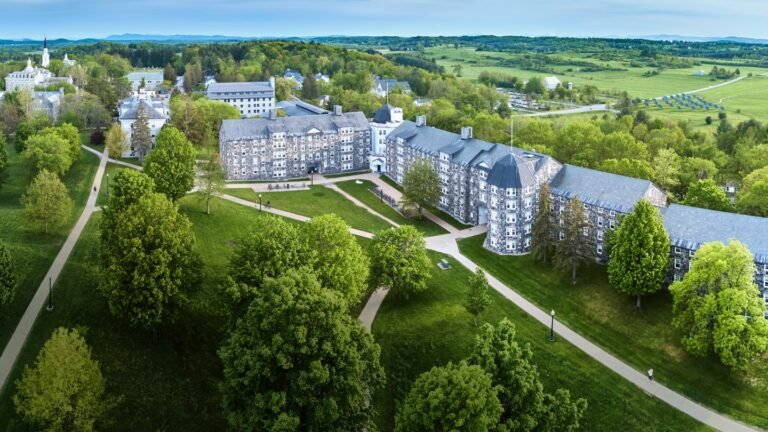
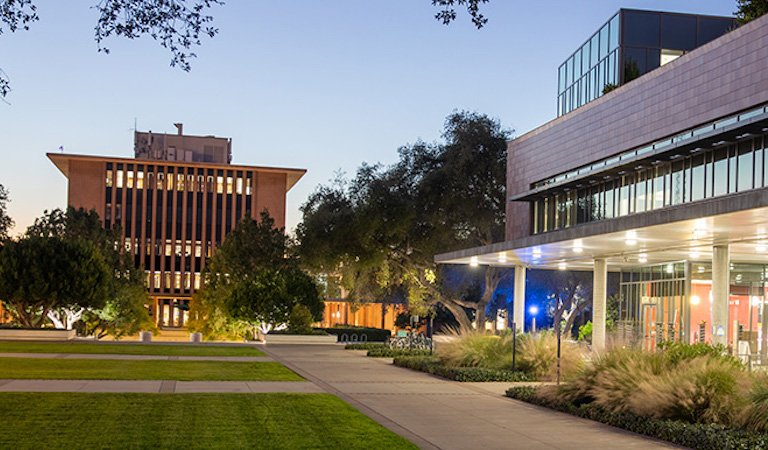
Harvey Mudd’s campus is relatively compact and designed around undergraduate life.
The college is located within the larger Claremont Colleges environment, so students have access to a broader network of facilities and activities.
The campus environment encourages students to spend significant time interacting with classmates and faculty.
Because of its residential structure, many academic and social experiences happen within the campus community.
Students may study together, participate in clubs, attend events, conduct research, and collaborate on projects.
22. Residential Student Life
Living on campus can be an important part of the Harvey Mudd experience.
Residential communities provide opportunities for students to develop friendships and work together.
Students often face demanding academic schedules, making peer support particularly valuable.
Residence halls can become spaces for:
- Study groups
- Social activities
- Student meetings
- Informal discussions
- Collaborative problem solving
The residential environment contributes to the sense of community associated with a small college.
23. Student Organizations
Students can participate in a wide range of extracurricular organizations.
These can include:
- Academic clubs
- Engineering organizations
- Computer science groups
- Cultural organizations
- Music activities
- Sports
- Community service
- Student government
- Entrepreneurship activities
Because Harvey Mudd is part of the Claremont Colleges, students can also engage with organizations across the consortium.
This greatly expands the extracurricular environment beyond what might be available at a small standalone college.
24. Athletics and Recreation
Student life is not limited to academics.
Students can participate in athletics and recreational activities through the broader Claremont Colleges environment.
Sports can provide opportunities for:
- Physical activity
- Teamwork
- Leadership
- Competition
- Social interaction
Students who prefer noncompetitive recreation can also participate in fitness and outdoor activities.
25. Diversity and Community
A modern college community includes students from different backgrounds, interests, cultures, and experiences.
Harvey Mudd has developed programs and initiatives aimed at creating an inclusive academic environment.
Diversity in STEM is especially important because scientific and technological products affect broad populations.
Bringing together students with different perspectives can encourage more thoughtful approaches to problem solving.
Students may engage in cultural organizations, discussions, community programs, and activities designed to support a welcoming campus environment.
26. Admissions to Harvey Mudd College
Admission to Harvey Mudd is highly selective.
Applicants generally need to demonstrate strong academic preparation, particularly in mathematics and science.
However, academic performance is only one part of an application.
Applicants may also present:
- Extracurricular activities
- Personal essays
- Leadership experiences
- Research or project experience
- Community involvement
- Creative interests
- Personal achievements
The admissions process is designed to evaluate students as individuals rather than looking only at numerical academic measures.
27. Preparing for Admission
Students interested in applying should build a strong academic foundation during secondary school.
Useful preparation can include rigorous coursework in:
- Mathematics
- Physics
- Chemistry
- Biology
- Computer science
- Writing and communication
Students can also benefit from pursuing projects outside the classroom.
Examples include:
- Programming projects
- Science competitions
- Robotics
- Research
- Engineering projects
- Mathematics competitions
- Community service
- Entrepreneurship
The goal should not simply be to collect activities. Meaningful involvement and genuine intellectual curiosity can provide stronger evidence of a student’s interests.
28. Application Essays
Personal essays can provide applicants with an opportunity to explain their experiences and interests.
A strong essay should communicate something meaningful about the applicant.
Students might discuss:
- Why they enjoy solving technical problems
- An experience that changed their perspective
- A project they found meaningful
- A challenge they overcame
- An intellectual question that interests them
- How they collaborate with others
The most useful essays generally provide specific examples rather than generic statements.
29. Financial Aid
The cost of attending a private college can be significant, so financial aid is an important consideration for families.
Harvey Mudd provides financial aid resources for eligible students.
Applicants should carefully review the college’s current financial aid policies, eligibility requirements, deadlines, and application procedures because these details can change.
Students should also compare the total estimated cost of attendance with available grants, scholarships, work opportunities, and other forms of assistance.
30. International Students
Harvey Mudd attracts students from different parts of the world.
International applicants should pay close attention to:
- Application requirements
- English-language requirements where applicable
- Academic credential requirements
- Financial documentation
- Visa procedures
- Financial aid policies
- Important deadlines
Because policies may change from year to year, international students should consult the college’s official admissions and international student resources for current information.
31. Career Preparation
A major reason students pursue STEM education is to prepare for future professional opportunities.
Harvey Mudd’s technical curriculum can provide a foundation for careers in fields such as:
- Software engineering
- Data science
- Engineering
- Research
- Consulting
- Technology
- Biotechnology
- Finance
- Aerospace
- Energy
- Entrepreneurship
The college’s emphasis on communication and interdisciplinary thinking can also be useful in professional environments.
32. Graduate School Preparation
Many students who enjoy academic research eventually consider graduate education.
A Harvey Mudd undergraduate education can prepare students for advanced study in fields including:
- Computer science
- Engineering
- Mathematics
- Physics
- Biology
- Chemistry
- Medicine
- Business
- Economics
- Public policy
Research experience and close faculty interaction can be particularly valuable for students preparing graduate-school applications.
33. Entrepreneurship and Innovation
STEM education can provide a foundation for entrepreneurship.
Students with technical knowledge can identify problems, develop prototypes, build software, analyze markets, and create new products.
Harvey Mudd’s interdisciplinary environment can help students understand that successful innovation requires more than technical ability.
Entrepreneurship can involve:
- Product design
- Business planning
- User research
- Economics
- Communication
- Marketing
- Engineering
- Software development
This combination can encourage students to think about how ideas move from the classroom into practical applications.
34. Harvey Mudd and Technology
Technology is deeply connected to the identity of the college.
Students can explore how technological systems are created and how they affect society.
Areas of modern technological interest include:
- Artificial intelligence
- Robotics
- Cybersecurity
- Data science
- Software systems
- Biomedical technology
- Sustainable engineering
- Computing
- Advanced materials
The college’s liberal arts component encourages students to consider the broader consequences of these technologies.
35. Artificial Intelligence and Computer Science
Artificial intelligence has become increasingly important across science and industry.
Students interested in AI can build foundational knowledge through mathematics, statistics, computer science, algorithms, and related subjects.
Understanding AI also requires thinking about questions beyond programming.
Important issues include:
- Privacy
- Bias
- Security
- Employment
- Regulation
- Human-computer interaction
- Ethical decision making
A broad technical and liberal arts education can help students understand these issues from multiple perspectives.
36. Sustainability
Sustainability is an important challenge for modern engineers and scientists.
Technical solutions may involve:
- Renewable energy
- Energy efficiency
- Sustainable materials
- Environmental modeling
- Water systems
- Transportation
- Climate science
- Resource management
Students can approach these challenges through multiple disciplines.
Engineering may provide technological solutions, while economics and social sciences can help explain how those solutions are adopted and implemented.
37. The Importance of Collaboration
Harvey Mudd’s educational model places considerable emphasis on collaboration.
Scientific and engineering problems are often solved by teams rather than individuals.
Students learn to:
- Divide responsibilities
- Communicate ideas
- Resolve disagreements
- Review each other’s work
- Combine technical skills
- Present collective results
Collaborative skills are especially valuable in professional environments.
38. Faculty and Student Interaction
One advantage of attending a small undergraduate college is the potential for close interaction between students and professors.
Students may have opportunities to ask questions directly, seek academic advice, participate in research, and discuss future educational plans.
Faculty interaction can also help students identify research opportunities and professional directions.
This relationship can be particularly important for students considering graduate school because professors may become mentors and provide recommendations.
39. Academic Challenges
Harvey Mudd’s rigorous curriculum can be demanding.
Students should expect to spend significant time studying, completing assignments, participating in projects, and preparing for examinations.
The workload can require careful time management.
Successful students often develop habits such as:
- Creating study schedules
- Working collaboratively
- Asking for help early
- Attending office hours
- Breaking large projects into smaller tasks
- Maintaining balance between academic and personal activities
The challenging environment can also encourage students to develop resilience and persistence.
40. Learning From Failure
Technical education often involves experimentation and failure.
A program may not work.
An experiment may produce unexpected results.
A mathematical proof may contain an error.
A software program may crash.
An engineering design may need to be rebuilt.
These experiences can become valuable learning opportunities.
Students learn that failure is often part of the process of developing better solutions.
41. Alumni and Professional Impact
Harvey Mudd alumni have entered many different professional fields.
Graduates can be found in:
- Technology
- Engineering
- Science
- Research
- Finance
- Consulting
- Education
- Medicine
- Entrepreneurship
- Government
The college’s interdisciplinary foundation allows graduates to move into different areas throughout their careers.
A student who begins in computer science, for example, may later move into entrepreneurship, finance, research, product management, or another field.
42. Why Students Choose Harvey Mudd
Students may choose Harvey Mudd because they want a combination of:
- Small-college community
- Strong STEM education
- Undergraduate research
- Hands-on learning
- Liberal arts education
- Interdisciplinary study
- Close faculty interaction
- Access to the Claremont Colleges
The college is particularly suited to students who enjoy technical problem solving but also want to understand the broader human context of science and technology.
43. Harvey Mudd Compared With Large Universities
Large research universities can offer thousands of courses, enormous research facilities, and extensive graduate programs.
Harvey Mudd offers a different model.
Its smaller undergraduate environment can provide:
- More intimate classroom settings
- Strong undergraduate focus
- Close community
- Direct faculty interaction
- Interdisciplinary collaboration
At the same time, the Claremont Colleges consortium provides access to a much broader academic community.
This combination is one of the college’s defining characteristics.
44. Harvey Mudd Compared With Engineering Schools
Traditional engineering schools may allow students to specialize relatively early.
Harvey Mudd takes a broader approach.
Students receive extensive exposure to mathematics, science, engineering, computing, and liberal arts.
This can help students understand how different technical fields connect.
The educational philosophy emphasizes developing adaptable problem solvers rather than preparing students for only one narrowly defined occupation.
45. Campus Culture
Campus culture at Harvey Mudd is strongly influenced by academic curiosity, collaboration, technical interests, and the wider Claremont community.
Students may spend their time balancing:
- Classes
- Projects
- Research
- Clubs
- Athletics
- Social activities
- Personal interests
The consortium environment means students can meet people with very different academic interests.
A technical student can form friendships with students studying politics, literature, economics, psychology, or the arts.
46. The Role of Creativity in STEM
Science and engineering are sometimes incorrectly viewed as purely analytical fields.
In reality, creativity plays an important role.
Engineers need creativity to design new systems.
Scientists need creativity to formulate research questions.
Programmers need creativity to develop new solutions.
Mathematicians often approach problems from unconventional perspectives.
Harvey Mudd’s interdisciplinary environment can support this combination of analytical and creative thinking.
47. Ethics and Technology
Technological innovation creates ethical questions.
Examples include:
- How should personal data be protected?
- How should artificial intelligence be regulated?
- Who should have access to advanced medical technology?
- How can engineers reduce environmental damage?
- How should automated systems make decisions?
- What responsibilities do technology companies have?
These questions demonstrate why technical education alone may not be enough.
Students need opportunities to think critically about the social implications of their work.
48. The Value of a Broad STEM Education
A rapidly changing economy can make narrow technical specialization risky.
Programming languages change.
Engineering technologies evolve.
Scientific knowledge expands.
New industries appear.
A broad STEM foundation can help students adapt.
Instead of learning only a specific technology, students develop fundamental concepts that can remain useful even as particular tools change.
This is one reason mathematical reasoning, scientific thinking, communication, and problem-solving skills remain central to technical education.
49. Preparing Students for an Uncertain Future
Nobody can know exactly which technologies will dominate twenty or thirty years from now.
However, students can develop transferable abilities.
These include:
- Critical thinking
- Quantitative reasoning
- Scientific literacy
- Programming
- Communication
- Collaboration
- Creativity
- Adaptability
- Ethical reasoning
Harvey Mudd’s curriculum is designed around many of these capabilities.
50. Student Support
Academic support is an important part of succeeding in a demanding college environment.
Students can seek assistance through faculty members, academic resources, peer support, and campus programs.
Students should not assume that asking for help indicates weakness.
In rigorous academic environments, seeking clarification and collaborating with peers can be an important part of learning.
51. Time Management
Time management can become especially important when students combine classes with research, clubs, athletics, and social activities.
A practical approach can include:
Create a Weekly Plan
Students can identify major deadlines at the beginning of each week.
Prioritize Difficult Work
Complex assignments may require more time than expected.
Avoid Last-Minute Work
Starting projects early creates room for unexpected problems.
Protect Personal Time
Rest and social activities are also important components of sustainable student life.
52. Building Professional Skills
Technical knowledge is only one part of career preparation.
Students also benefit from developing:
- Resume writing
- Interview skills
- Networking
- Professional communication
- Presentation skills
- Team leadership
- Project management
These skills can help students transition from college into internships, employment, or graduate education.
53. Internships and Industry Exposure
Students interested in professional careers may pursue internships during academic breaks.
Internships can provide exposure to:
- Corporate engineering
- Software development
- Research laboratories
- Healthcare technology
- Finance
- Aerospace
- Startups
- Consulting
Practical work experience can help students determine which professional areas they enjoy.
54. Research Versus Industry
Students at a STEM-focused institution do not have to choose between research and industry immediately.
A student might:
- Conduct undergraduate research.
- Complete an internship.
- Graduate from college.
- Work in industry.
- Later pursue graduate school.
Career paths are often flexible.
A strong undergraduate foundation can support multiple directions.
55. The Broader Claremont Experience
The Claremont Colleges create an educational environment larger than Harvey Mudd itself.
Students can interact with people studying:
- Business
- Economics
- Government
- Literature
- Psychology
- Art
- Sociology
- Environmental studies
- Science
- Engineering
This diversity can encourage students to think beyond their primary majors.
56. The Importance of Liberal Arts for Engineers
Engineering decisions can influence millions of people.
For example, transportation systems affect cities.
Software affects communication.
Medical devices affect patients.
Energy systems affect the environment.
Artificial intelligence affects workplaces.
Understanding these consequences requires knowledge beyond engineering formulas.
That is why liberal arts education can complement STEM training.
57. Problem Solving as a Core Skill
At the center of many Harvey Mudd programs is problem solving.
Students learn to approach complicated problems systematically.
A typical process might include:
- Understanding the problem.
- Identifying available information.
- Defining constraints.
- Developing hypotheses.
- Testing possible solutions.
- Evaluating evidence.
- Revising the approach.
- Communicating the result.
This method can be applied far beyond the classroom.
58. Communication Between Technical and Nontechnical People
Modern organizations often contain people with different professional backgrounds.
An engineer may need to communicate with:
- Managers
- Lawyers
- Designers
- Customers
- Policymakers
- Financial professionals
- Marketing teams
A technically correct solution is not enough if nobody understands it.
Strong communication therefore becomes a practical professional skill.
59. A Community of STEM Students
Students who enjoy mathematics, science, computing, and engineering can find a community of people with similar interests.
This can create opportunities for:
- Study groups
- Technical discussions
- Research collaborations
- Competitions
- Projects
- Innovation
- Friendships
At the same time, the broader Claremont environment allows students to interact with people outside STEM.
60. Future Opportunities for Graduates
The career possibilities available to STEM graduates continue to expand.
Fields such as artificial intelligence, renewable energy, biotechnology, cybersecurity, robotics, advanced computing, and data science are developing rapidly.
Graduates with strong technical foundations may be positioned to participate in these emerging areas.
However, long-term career success also depends on continuous learning.
Technology changes quickly, so graduates need to keep updating their skills.
61. How to Make the Most of a Harvey Mudd Education
Students can maximize their college experience by taking advantage of opportunities beyond required classes.
They can:
- Build relationships with professors.
- Participate in research.
- Join student organizations.
- Take interdisciplinary courses.
- Explore the Claremont Colleges.
- Complete meaningful projects.
- Seek internships.
- Develop communication skills.
- Learn outside their major.
- Maintain healthy personal routines.
A college education is more than completing a list of courses.
62. Advice for Prospective Students
Students considering Harvey Mudd should ask themselves several questions.
Do I enjoy STEM subjects?
The curriculum is strongly technical, so genuine interest in mathematics and science is important.
Do I enjoy problem solving?
Students should be comfortable facing difficult questions without immediate answers.
Do I like collaboration?
Many academic and project experiences involve working with other students.
Do I want a small college?
Students seeking an intimate undergraduate community may appreciate the environment.
Do I want liberal arts alongside STEM?
Students who value humanities and social sciences may find the interdisciplinary model attractive.
63. Frequently Asked Questions About Harvey Mudd College
What is Harvey Mudd College known for?
Harvey Mudd is known for its rigorous undergraduate education in science, technology, engineering, mathematics, and computer science, combined with a liberal arts approach.
Where is Harvey Mudd College located?
It is located in Claremont, California, in the greater Los Angeles region.
Is Harvey Mudd part of the Claremont Colleges?
Yes. Harvey Mudd is one of the undergraduate institutions within the Claremont Colleges consortium.
When was Harvey Mudd College founded?
Harvey Mudd College opened to students in 1957.
What majors does Harvey Mudd offer?
Major academic areas include biology, chemistry, computer science, engineering, mathematics, and physics.
Is Harvey Mudd a research university?
It is primarily a small undergraduate college, but undergraduate research is an important part of the educational experience.
Does Harvey Mudd have liberal arts courses?
Yes. Students study humanities and social sciences alongside STEM subjects.
Is Harvey Mudd good for computer science?
The college has a strong computer science program and provides an intensive undergraduate STEM environment.
Does Harvey Mudd offer engineering?
Yes. Engineering is one of the college’s central academic areas.
Can Harvey Mudd students take courses at other Claremont Colleges?
The consortium structure provides opportunities for students to take courses and participate in activities across the colleges, subject to applicable academic policies.
Is Harvey Mudd difficult academically?
The curriculum is rigorous, particularly in mathematics, science, engineering, and computer science. Students should expect substantial academic work.
Does Harvey Mudd provide financial aid?
The college provides financial aid resources for eligible students. Applicants should consult current official policies for the latest requirements.
Can international students apply?
Yes, international students can apply, but they should review current admissions, financial aid, and immigration requirements carefully.
What careers can Harvey Mudd graduates pursue?
Graduates can enter fields such as engineering, software, technology, research, consulting, finance, biotechnology, aerospace, education, and entrepreneurship.
64. Conclusion
Harvey Mudd College occupies a distinctive position in American higher education.
It combines the close community of a small undergraduate college with the academic resources of the Claremont Colleges consortium. Its educational philosophy emphasizes rigorous STEM preparation while maintaining a strong commitment to humanities, social sciences, communication, and ethical thinking.
The college’s history reflects a broader American effort to develop scientific and engineering talent while preparing students to understand the larger world in which technology operates.
For students interested in mathematics, science, engineering, computer science, and related disciplines, Harvey Mudd provides an environment centered on challenging academic work, hands-on learning, collaboration, research, and interdisciplinary education.
Perhaps the most important feature of the Harvey Mudd model is its attempt to connect technical knowledge with human responsibility. Engineers and scientists do not work in isolation. Their inventions and discoveries influence businesses, communities, governments, healthcare systems, economies, and everyday life.
A strong education therefore requires more than technical competence. It also requires communication, creativity, critical thinking, ethical awareness, and the ability to work with people from different backgrounds.
Harvey Mudd’s small size, STEM focus, liberal arts foundation, and connection to the Claremont Colleges make it an unusual and distinctive institution. Students who take advantage of its academic resources, research opportunities, interdisciplinary environment, and broader college community can build a strong foundation for future study and professional life.
For prospective students and families, the most important step is to examine current official information about academic programs, admissions, financial aid, housing, deadlines, and student opportunities before making application or enrollment decisions. College policies and requirements can change, so current information should always be checked directly with the institution.
Overall, Harvey Mudd College represents an educational model in which science and technology are studied not only as technical subjects but also as tools that interact with society. Its emphasis on rigorous learning, practical problem solving, collaboration, and broad education continues to make it an important institution within the landscape of American undergraduate STEM education.