Sydney Grammar School: A Complete History, Education, Campus, Traditions, Academics, and Legacy
Sydney Grammar School is one of Australia’s oldest and most historically significant independent schools. Located in Sydney, New South Wales, the school has developed over more than a century and a half into an institution known for its classical educational traditions, broad academic curriculum, extracurricular activities, cultural life, and long connection with the University of Sydney. Although the modern school operates in a very different educational environment from the nineteenth century, many of the principles established at its foundation continue to influence its identity.
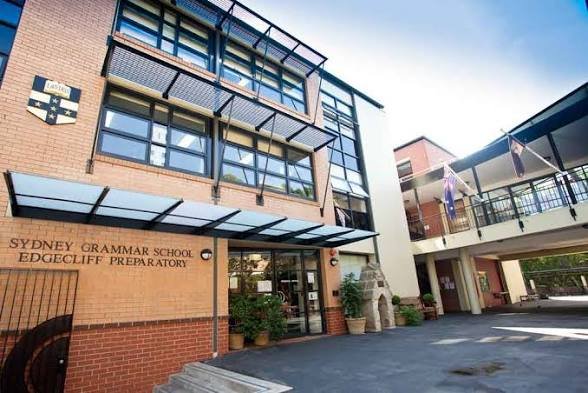
Sydney Grammar School is an independent, secular school for boys. Its senior school is located on College Street in Darlinghurst, close to the central Sydney area, while its preparatory schools operate at St Ives and Edgecliff. The school describes itself as a community with a strong sense of history, purpose and values. (Sydney Grammar School)
The history of Sydney Grammar School is particularly interesting because the institution did not simply appear in 1857. Its origins can be traced through earlier educational institutions in colonial Sydney, including the Sydney Public Free Grammar School and Sydney College. The school that opened its doors to students in August 1857 was therefore the result of several decades of educational development in New South Wales. (Sydney Grammar School)
1. Introduction to Sydney Grammar School
Sydney Grammar School, often abbreviated as SGS or simply called “Grammar,” occupies an important position in the history of Australian education. Its story is closely connected with the development of Sydney itself, the emergence of higher education in New South Wales, and changing ideas about what a broad education should accomplish.
The school is independent and secular, meaning that it is not controlled by a particular religious denomination. At the same time, its founding legislation placed emphasis on morality, useful knowledge, and a liberal course of education. The school continues to describe character formation, intellectual development, service, and broad learning as important elements of its educational purpose. (Sydney Grammar School)
Unlike a school created recently to meet the needs of a modern suburb, Sydney Grammar developed during a period when Sydney was transforming from a colonial settlement into a major Australian city. Education was becoming increasingly important to families who wanted their children prepared for universities, professions, public service, business, science, law, medicine, and cultural life.
The school’s location is also historically important. Its College Street campus is associated with the early educational history of Sydney and with the University of Sydney. The University was officially inaugurated in the school’s present building in 1852, and Sydney Grammar subsequently acquired the College Street site in 1855. (Sydney Grammar School)
Today, Sydney Grammar combines traditional subjects and educational values with contemporary teaching, technology, sport, music, drama, science, languages, and other activities. Its history remains visible not only in its architecture and archives but also in its curriculum, traditions, publications, alumni community, and institutional culture.
2. The Educational Background Before Sydney Grammar School
To understand Sydney Grammar School, it is useful to look at education in Sydney before the school opened in 1857.
One of its important predecessors was the Sydney Public Free Grammar School, which opened in 1825 under headmaster L. H. Halloran. This institution represented an early attempt to provide formal education in the growing colonial settlement. (Sydney Grammar School)
In 1830, Sydney College was founded. Sir Francis Forbes, Chief Justice of New South Wales, became its President and laid the foundation stone of the College Street building on 26 January 1830. Sydney College eventually opened in the building in 1835 under headmaster W. T. Cape. (Sydney Grammar School)
Sydney College closed in 1850. Its closure demonstrated some of the difficulties facing educational institutions in colonial Sydney, particularly the challenge of maintaining effective financial support.
The need for a stronger educational institution remained. At the same time, the University of Sydney was being established. The University was officially inaugurated in 1852, creating a need for a reliable source of well-prepared students.
These developments eventually contributed to the creation of Sydney Grammar School.
3. The Foundation of Sydney Grammar School
Sydney Grammar School was established through an Act of Parliament in 1854. According to the school’s historical account, the legislation followed a petition presented by Sir Henry Parkes on behalf of citizens who wanted an educational “nursery” for the newly established University of Sydney. (Sydney Grammar School)
The founding legislation was significant because it presented education as something intended for people from different classes and religious denominations. The stated objectives included the advancement of religion and morality, the promotion of useful knowledge, and the provision of a regular and liberal education.
The school was therefore not founded merely as a place where students would memorize information. The idea was to provide a broad education that could prepare young people for university and public life.
The relationship with the University of Sydney was especially important. The Act appointed the University’s Chancellor and professors of Classics and Mathematics as trustees of the school. In 1855, Sydney Grammar purchased its College Street site from the University. (Sydney Grammar School)
The school officially opened to pupils at 9 a.m. on 3 August 1857. The date has remained an important part of the school’s historical identity. (Sydney Grammar School)
4. The Early Years
The Sydney Grammar School of 1857 was very different from the institution students know today.
Nineteenth-century education placed considerable emphasis on classical studies. Latin and Greek were important parts of the intellectual tradition inherited from British grammar schools. At the same time, the trustees intended the school to provide both classical and modern subjects.
Historical material from the school describes the curriculum as combining classical and modern education, while giving classical studies a significant role similar to prominent English schools of the period. (Sydney Grammar School)
Students were expected to develop strong foundations in language, mathematics, history, literature, and other areas of knowledge.
The atmosphere of nineteenth-century schooling was also more formal than that of a modern school. Discipline, manners, academic achievement, memorization, and examinations were important features of education.
The school quickly became part of Sydney’s educational landscape. Families interested in academic education could send their sons to an institution connected with the intellectual and professional development of the colony.
5. The College Street Campus
The College Street campus is one of the defining features of Sydney Grammar School.
Its location places the school within one of Sydney’s most historically significant educational districts. The relationship between the site and the University of Sydney dates back to the nineteenth century. The University itself was inaugurated in the school’s historic building in 1852, several years before Sydney Grammar began operating there. (newscentre.sydgram.nsw.edu.au)
The campus therefore represents more than a collection of classrooms. It reflects the history of higher education and intellectual life in New South Wales.
Over the decades, buildings and facilities have been developed and adapted to meet changing educational requirements. Nevertheless, the historic character of the College Street environment remains central to the school’s identity.
Students attending Grammar today study in a setting shaped by generations of teachers and pupils.
6. The Philosophy of a Liberal Education
One of the most important ideas associated with Sydney Grammar School is the concept of a liberal education.
A liberal education is broader than vocational training. Rather than preparing students exclusively for one profession, it seeks to develop intellectual flexibility, communication skills, critical thinking, cultural awareness, and a broad understanding of human knowledge.
The school states that its academic curriculum is organized around the ideals of liberal education. Students are expected to study a range of academic disciplines rather than concentrating exclusively on a narrow set of subjects. (Sydney Grammar School)
This philosophy has historical roots.
When Sydney Grammar was founded, classical education was considered valuable because subjects such as Latin, Greek, mathematics, literature, philosophy, and history were believed to develop intellectual discipline.
The modern school has expanded considerably beyond that nineteenth-century model. However, the principle that education should encourage students to explore multiple fields remains important.
7. Academic Curriculum
Sydney Grammar School offers a broad academic curriculum.
According to the school’s current academic information, students study subjects across areas including English, mathematics, science, languages, history, geography, art, applied arts, music, and personal development, health and physical education. (Sydney Grammar School)
This breadth is particularly significant in the senior years.
The school maintains a requirement for academic breadth in the final years rather than allowing students to focus only on English, mathematics, and science. Students must include humanities subjects as part of their broader program. (Sydney Grammar School)
This approach reflects the school’s long-standing belief that students benefit from encountering different forms of knowledge.
For example, science can develop observation and analytical skills, while history can encourage students to understand change and causation. Literature can develop interpretation and communication, while mathematics develops logical and quantitative reasoning.
A broad curriculum can therefore help students build intellectual connections between subjects.
8. Classical Education and Modern Learning
Classical education remains an important part of Sydney Grammar’s identity, but the meaning of classical education has changed over time.
In the nineteenth century, Latin and Greek had a much more dominant position in academic education. Today, students have access to a much wider range of disciplines and educational technologies.
The school continues to offer Latin and French among its subjects, while also providing modern science, mathematics, technology, arts, and other areas of learning. (Sydney Grammar School)
The combination of traditional and modern subjects allows the school to maintain historical continuity while responding to contemporary educational needs.
This balance is one of the most interesting characteristics of an institution that has existed for more than 160 years.
9. The Preparatory Schools
Sydney Grammar School’s educational structure extends beyond the main College Street senior school.
The school operates preparatory schools at St Ives and Edgecliff. The official school information identifies major entry points at Preschool, Kindergarten, Third Class, Fifth Class, and Form I, corresponding to different stages of the preparatory and senior schools. (Sydney Grammar School)
St Ives Preparatory School serves younger boys and has a curriculum covering areas such as English, mathematics, history and geography, science and technology, physical development and health, and creative and practical arts. (St Ives Preparatory School)
The objective is not limited to academic knowledge. The preparatory curriculum describes intellectual, moral, social, cultural, and physical development as interconnected aspects of a child’s education. (St Ives Preparatory School)
This creates a pathway from early schooling through to the senior school.
10. The Role of Teachers
Teachers have always played a central role in the Sydney Grammar tradition.
In the early school, teachers were expected to possess strong academic backgrounds, particularly in classical subjects and mathematics. Over time, the teaching profession itself changed, with education becoming increasingly specialized.
One fascinating example from the school’s history is Edwin Whitfeld, who arrived from England in 1857 to become an Assistant Master in Classics and Mathematics. He remained at the school for 32 years, and his descendants maintained a connection with Grammar across six generations. (Sydney Grammar School)
Stories such as this demonstrate how the institution developed long-lasting relationships between teachers, families, and students.
The school archives preserve evidence of teachers and pupils across generations, allowing researchers to study how education at Grammar changed over time.
11. School Traditions
Tradition is an important part of Sydney Grammar School’s identity.
School traditions help connect present-day students with earlier generations. Assemblies, publications, sporting activities, music, drama, academic competitions, school ceremonies, and alumni events all contribute to institutional continuity.
The school has maintained historical records through publications such as The Sydneian, which was established in 1875. The school archives hold editions spanning many decades. (Sydney Grammar School)
Such publications are valuable historical resources because they contain information about student activities, academic achievements, teachers, sporting events, cultural life, and important developments.
The school archives were formally established in 1981 to facilitate research into the history of Sydney Grammar School. The collection includes registers, speech-day reports, photographs, magazines, historical books, correspondence, architectural records, and wartime material. (Sydney Grammar School)
12. Sport at Sydney Grammar School
Sport has traditionally been an important part of school life.
Australian schools have historically viewed sport as a means of developing discipline, teamwork, resilience, leadership, and community.
Sydney Grammar has participated in sporting activities across generations, including cricket and other competitive sports.
Historical records provide evidence of the school’s strong sporting traditions. For example, George Pitty Barbour, who later became a teacher and headmaster, had been a member of the school’s cricket team as a student. (Australian Dictionary of Biography)
Sport at Grammar therefore has a history extending deep into the nineteenth century.
At the same time, the school’s history demonstrates that the relationship between sport and education has sometimes been debated. Former headmaster Alastair Mackerras, for example, had a distinctive view of the role of sport and placed particular emphasis on academic and musical culture. The Australian Dictionary of Biography records the debates surrounding his approach. (Australian Dictionary of Biography)
This illustrates that school traditions are not completely static. They evolve as educational philosophies change.
13. Music and the Arts
Music has also played an important role in the history of Sydney Grammar School.
The arts provide students with opportunities to develop creativity, expression, communication, and cultural understanding.
The school curriculum includes music and visual and applied arts. (Sydney Grammar School)
The historical importance of music became particularly visible during the headmastership of Alastair Mackerras, who later became a prominent conductor. According to the Australian Dictionary of Biography, musical culture was one of the major priorities of his leadership at Grammar. (Australian Dictionary of Biography)
The school therefore has a history that extends beyond traditional academic achievement into music and the broader cultural life of Sydney.
14. Sydney Grammar and the University of Sydney
The relationship between Sydney Grammar School and the University of Sydney is one of the most distinctive features of its history.
The two institutions share a nineteenth-century educational connection.
The University of Sydney was officially inaugurated in the Big School building on 11 October 1852. Two years later, Sydney Grammar School was established by Act of Parliament. The University Chancellor and professors of Classics and Mathematics were appointed as trustees of the school, and the school purchased the College Street site from the University in 1855. (Sydney Grammar School)
This relationship helps explain why preparation for university was such an important part of the school’s original purpose.
The founders wanted students to receive an education that would prepare them for higher learning.
Although modern students have many university choices in Australia and internationally, the historical connection remains an important part of the school’s story.
15. Alumni and Public Life
Over more than 160 years, Sydney Grammar School has educated generations of Australians who have gone into many different professions.
Former students have entered fields including law, medicine, science, engineering, public administration, education, business, literature, music, journalism, and the arts.
The Australian Dictionary of Biography contains numerous entries involving people who attended Sydney Grammar School.
For example, Sir Timothy Augustine Coghlan attended Sydney Grammar School on scholarship from 1867 to 1869 and later became an important statistician and public servant. (Australian Dictionary of Biography)
Saul Symonds, a barrister and Jewish community leader, was another former student. He attended Grammar, excelled in languages, became school captain, and later returned to the school as an assistant master. (Australian Dictionary of Biography)
Such examples illustrate how the school’s alumni have participated in many aspects of Australian public and professional life.
16. Academic Achievement
Academic achievement is a central feature of Sydney Grammar School’s educational culture.
The school emphasizes high academic standards, hard work, intellectual curiosity, critical thinking, creativity, and communication. (Sydney Grammar School)
However, the school’s stated philosophy also suggests that education should not be reduced to examination results.
This is an important distinction.
Examinations provide measurable evidence of academic performance, but education can also involve developing curiosity, judgment, communication, cultural knowledge, creativity, and character.
Sydney Grammar’s liberal-education model seeks to combine these elements.
17. Character and Moral Education
Character development has been part of the school’s mission since its foundation.
The 1854 legislation referred to morality and useful knowledge. The school’s modern description similarly emphasizes character, service, gratitude, moral leadership, and contributing positively to the wider community. (Sydney Grammar School)
The concept of character education has changed over time.
In the nineteenth century, ideas about discipline, morality, duty, and social responsibility were often expressed differently from the way schools discuss them today.
Nevertheless, the underlying principle remains recognizable: education is intended to influence not only what students know but also how they use their knowledge.
18. Independence and Secular Education
Sydney Grammar School is independent and secular.
This means the school operates independently of government school systems and is not affiliated with a particular religious denomination.
Its founding legislation was notable for its intention to provide education without distinction based on religious denomination. The school’s current leadership continues to describe the institution as independent of church and state. (Sydney Grammar School)
The school’s secular character distinguishes it from many historic Australian schools that were established by churches.
At the same time, the school continues to discuss moral values and meaningful questions as important parts of education.
19. Admissions and Entry
Admission to Sydney Grammar School occurs at several stages.
The school’s current admissions information lists Preschool, Kindergarten, Third Class, Fifth Class, and Form I as principal points of entry across its preparatory and senior schools. (Sydney Grammar School)
Form I corresponds to Year 7 and represents an important entry point to the College Street senior school.
The school also offers scholarships and fee assistance. Its leadership states that financial assistance is intended to help ensure that qualified boys are not prevented from attending solely because their families cannot afford the fees. (Sydney Grammar School)
Admission policies and available places can change from year to year, so prospective families should consult the school’s current admissions information.
20. School Fees
Independent schools generally require families to pay tuition fees, and Sydney Grammar is no exception.
For 2026, the school’s published fee schedule lists an annual tuition fee of A$52,410 for Forms I–VI, or Years 7–12, payable in three instalments. (Sydney Grammar School)
Fees can change annually, and additional costs may apply for particular activities, services, or programs.
Because fee structures are time-sensitive, families considering enrolment should always check the latest official fee schedule rather than relying on older articles.
The existence of scholarships and fee-assisted places is also relevant when considering access to the school. (Sydney Grammar School)
21. Sydney Grammar’s Educational Environment
The educational environment at Sydney Grammar combines classroom learning with activities outside conventional lessons.
Students may participate in sport, music, drama, cultural activities, competitions, clubs, and other forms of school life.
This broad environment reflects the school’s understanding of education as more than academic instruction.
A student might spend part of the day studying mathematics or science and another part participating in music, sport, drama, or a community activity.
Such experiences can help students develop communication and teamwork skills while also allowing them to explore individual interests.
22. The Importance of History
History has a particularly strong role at Sydney Grammar because the school itself is an important historical institution.
Students attend a school whose origins stretch back to the educational developments of colonial Sydney.
The school’s archives provide a unique record of school life over generations. The collection includes the Liber Nominum, speech-day reports, copies of The Sydneian, photographs, books, architectural plans, and wartime records. (Sydney Grammar School)
These resources make it possible to study not only the history of the school but also broader changes in Australian society.
School records can reveal changes in language, clothing, sport, curriculum, technology, social attitudes, and family life.
23. Sydney Grammar During a Changing Australia
The school has survived and adapted through enormous changes in Australian history.
When it opened in 1857, Australia was still a collection of colonies rather than a federated nation.
Communication and transportation were much slower than today. Universities were fewer, cities were smaller, and technology was limited.
Over the following decades, Australia experienced federation, industrialization, world wars, economic changes, migration, technological development, and major social transformations.
Sydney Grammar changed alongside the country.
Subjects that were central in the nineteenth century gradually shared space with modern sciences and other disciplines.
The school also developed new facilities and educational programs while preserving important historical traditions.
Its survival across these changes is one of the most remarkable aspects of its history.
24. Publications and Documentation
A major strength of Sydney Grammar School is the quantity of historical material that has been preserved.
The school publishes the SGS Magazine, which reports on contemporary school events and community activities. The magazine is published twice a year. (Sydney Grammar School)
The Sydneian has a much longer history, having been established in 1875. Historical editions covering numerous decades are held by the school. (Sydney Grammar School)
These publications are valuable for understanding how the school has changed.
They provide information about academic results, sporting teams, performances, student organizations, teachers, alumni, school buildings, and important events.
The preservation of these materials also helps maintain institutional memory.
25. School Archives
Sydney Grammar’s archives were established in 1981 specifically to facilitate research into the school’s history. (Sydney Grammar School)
The archive collection includes material covering more than a century and a half of school history.
Among the resources are:
- Sydney College Register
- Sydney Grammar School Liber Nominum
- Speech Day Reports
- The Sydneian
- School magazines
- Photographs
- Correspondence
- Architectural drawings
- Building records
- Wartime records
- Publications
- Material relating to Old Sydneians
The archives are especially valuable because they allow historians to examine the school through original records rather than relying only on later summaries.
26. Famous Historical Figures Connected With Grammar
Sydney Grammar’s history includes teachers and students who later became prominent in Australian cultural and public life.
One particularly notable example is Alastair Mackerras. He attended the school during the 1940s, later studied at the University of Sydney and Cambridge, and became headmaster of Sydney Grammar School. He subsequently became internationally associated with music and conducting. (Australian Dictionary of Biography)
Another example is Timothy Coghlan, who attended Grammar on scholarship and later became a distinguished statistician and public servant. (Australian Dictionary of Biography)
George Pitty Barbour also had a long relationship with the school, first as a student and later as a teacher and headmaster. (Australian Dictionary of Biography)
These examples demonstrate the variety of careers associated with the school’s alumni and staff.
27. The Meaning of the Sydney Grammar Experience
The concept of a “Grammar education” is broader than the acquisition of examination knowledge.
The school’s own description emphasizes high academic standards, intellectual curiosity, breadth of study, communication, creativity, service, and character. (Sydney Grammar School)
Students therefore encounter an educational model that combines academic expectations with participation in a wider community.
The objective is to encourage students to become capable of thinking independently and engaging with different areas of knowledge.
This philosophy is consistent with the school’s long-standing commitment to liberal education.
28. Sydney Grammar and Modern Technology
Modern education is significantly influenced by technology.
Students today have access to digital information, online research, educational software, multimedia resources, and communication technologies that were unimaginable when the school opened in 1857.
For a historic institution, adapting to technological change presents an important challenge.
The objective is not simply to introduce new devices. Technology needs to support learning, research, communication, creativity, and collaboration.
At the same time, the school’s emphasis on traditional intellectual skills remains relevant.
Students still need to read carefully, write clearly, reason logically, evaluate evidence, and communicate ideas effectively.
29. The Importance of Critical Thinking
Critical thinking is particularly relevant in contemporary education.
Students live in an environment where information is available almost instantly. The challenge is therefore not simply finding information but evaluating it.
A liberal education can provide a useful foundation for this process.
History can teach students to examine evidence and context. Science can demonstrate the importance of testing claims. Literature can develop interpretation. Mathematics can strengthen logical reasoning.
Communication skills allow students to explain conclusions clearly.
These abilities are valuable regardless of the career students eventually choose.
30. Community and Alumni Connections
A school that has existed since the nineteenth century naturally develops a large alumni community.
Old Sydneians remain connected through school events, publications, sporting activities, professional networks, and historical organizations.
The continued publication of school magazines and maintenance of archives help preserve these connections.
Alumni stories also demonstrate the long-term impact of the school.
Generations of families have maintained connections with Sydney Grammar. The Whitfeld family, for example, had a relationship with Grammar extending across six generations. (Sydney Grammar School)
Such connections are unusual and demonstrate how institutions can become part of family history.
31. Sydney Grammar in the Twenty-First Century
The modern Sydney Grammar School operates in a very different environment from the school of 1857.
Contemporary students live in a globalized society and have access to enormous amounts of information.
Universities and workplaces increasingly value communication, collaboration, technological literacy, creativity, adaptability, and analytical thinking.
Sydney Grammar’s broad curriculum is designed within this changing environment while maintaining its historical commitment to liberal education. (Sydney Grammar School)
The school continues to combine academic study with sport, arts, music, cultural activities, and community life.
Its historic buildings and traditions coexist with contemporary educational practices.
32. Why Sydney Grammar School Remains Historically Important
Sydney Grammar School is important for several reasons.
First, it is one of Australia’s oldest schools.
Second, its origins are closely connected with the development of formal education in colonial Sydney.
Third, its history is connected with the University of Sydney and the development of higher education in New South Wales.
Fourth, the school has preserved extensive archives documenting Australian educational and social history.
Fifth, its alumni and teachers have contributed to many areas of Australian public and cultural life.
Finally, the school provides an example of how an educational institution can preserve historical traditions while adapting to changing social and educational conditions.
33. Sydney Grammar School’s Legacy
The legacy of Sydney Grammar School is not simply found in its buildings.
Its deeper legacy is found in the generations of students, teachers, families, and alumni connected with the institution.
From its nineteenth-century origins to the modern era, the school has maintained a strong emphasis on education, intellectual development, character, and broad knowledge.
Its founders wanted students to receive preparation for university and public life. More than a century and a half later, those principles remain visible in the school’s stated commitment to liberal education.
The school has also demonstrated that tradition can coexist with change.
Latin and classical education remain part of its historical identity, but students today also study modern science, technology, contemporary subjects, arts, and other disciplines.
34. Conclusion
Sydney Grammar School has a history that reflects the broader development of education in Australia.
Its story begins before 1857, with earlier educational institutions such as the Sydney Public Free Grammar School and Sydney College. The establishment of the University of Sydney helped create a need for a strong preparatory institution, while public support eventually resulted in the Act of Parliament establishing Sydney Grammar School in 1854. (Sydney Grammar School)
The school opened its doors on 3 August 1857 and has continued operating for more than 160 years. (Sydney Grammar School)
Throughout its history, Sydney Grammar has maintained a commitment to broad education. Its curriculum has evolved from a nineteenth-century emphasis on classical learning to a modern program incorporating humanities, mathematics, sciences, languages, arts, music, physical education, and other fields. (Sydney Grammar School)
Its College Street campus remains an important historical location, while its preparatory schools at St Ives and Edgecliff provide education for younger students.
The school’s archives, publications, alumni stories, and traditions provide an unusually detailed record of educational life in Australia.
For students and families researching historic Australian schools, Sydney Grammar School offers an especially interesting case study. It demonstrates how an institution founded in colonial Sydney can continue into the twenty-first century while preserving connections with its nineteenth-century origins.
Its history is therefore not simply a story about one school. It is also a story about Australia’s changing approach to education, the development of Sydney, the growth of universities, the evolution of professional life, and the continuing importance of broad intellectual education.
Frequently Asked Questions About Sydney Grammar School
1. When was Sydney Grammar School founded?
Sydney Grammar School was established by an Act of Parliament in 1854 and opened to pupils on 3 August 1857. (Sydney Grammar School)
2. Where is Sydney Grammar School located?
The senior school is located on College Street in Darlinghurst, Sydney, New South Wales. The school also operates preparatory schools at St Ives and Edgecliff. (Sydney Grammar School)
3. Is Sydney Grammar School a boys’ school?
Yes. Sydney Grammar describes itself as an independent secular school for boys. (Sydney Grammar School)
4. What type of education does Sydney Grammar provide?
The school emphasizes a broad liberal education combining academic study with intellectual, cultural, physical, and personal development. (Sydney Grammar School)
5. Is Sydney Grammar School connected to the University of Sydney?
The two institutions have a historic relationship dating to the nineteenth century. The University of Sydney was inaugurated in the school’s historic building in 1852, and the Grammar site was purchased from the University in 1855. (Sydney Grammar School)
6. Does Sydney Grammar offer scholarships?
Yes. The school provides scholarships and fee-assisted places as part of its admissions and financial-assistance programs. (Sydney Grammar School)
7. What subjects are taught at Sydney Grammar?
Subjects include English, mathematics, science, Latin, French, history, geography, art, applied arts, music, and personal development, health and physical education, among others. (Sydney Grammar School)
8. Does Sydney Grammar have a long history of sport?
Yes. Sport has been part of the school’s culture for generations, with historical records documenting activities including cricket and other competitive sports. (Australian Dictionary of Biography)
9. Does Sydney Grammar have school archives?
Yes. The School Archives were established in 1981 and contain historical registers, publications, photographs, correspondence, architectural records, and other material. (Sydney Grammar School)
10. What makes Sydney Grammar historically significant?
Its age, connection with early Sydney education and the University of Sydney, extensive archives, long-standing traditions, and generations of alumni make it an important institution in Australian educational history.
SEO Information
SEO Title: Sydney Grammar School: Complete History, Education, Campus and Legacy
Meta Description: Explore the complete history of Sydney Grammar School, including its 1854 foundation, 1857 opening, College Street campus, academic curriculum, traditions, alumni, archives, sport, arts, and educational philosophy.
Focus Keyword: Sydney Grammar School
Secondary Keywords:
Sydney Grammar School history, Sydney Grammar School Australia, Sydney Grammar School fees, Sydney Grammar School curriculum, Sydney Grammar School College Street, Sydney Grammar School admission, Sydney Grammar School alumni, Sydney Grammar School history and traditions, Sydney schools, historic Australian schools
Suggested URL Slug:sydney-grammar-school-history
Suggested Article Categories:
Education, Australian Schools, School History, World Schools, Sydney Education