Appleby College Canada: A Complete History, Academic Experience, Campus Life, and Educational Journey
Introduction
Appleby College is one of Canada’s well-known independent schools, located on the shores of Lake Ontario in Oakville, Ontario. With a history dating back to 1911, the school has developed from its early beginnings into a modern educational community that combines academic learning with athletics, arts, service, leadership, outdoor education, global experiences, and boarding life.
The school’s location in Oakville places it within the Greater Toronto Area while also giving students access to a campus environment that is distinct from the highly urban character of downtown Toronto. Appleby describes itself as having been educating students since 1911 and continues to develop programs intended to prepare young people for university, professional life, and broader participation in society.
Appleby College is particularly notable for its combination of day and boarding education. Boarding is an important part of the school experience, and Appleby’s current registration policies include specific expectations for students who enter boarding. Senior Two students, for example, are generally required to board for their final year in order to graduate with the Appleby College Diploma, subject to approved exceptional circumstances.
This article explores Appleby College’s history, educational philosophy, academic programs, student life, boarding experience, athletics, arts, outdoor education, global opportunities, leadership development, campus environment, student support, university preparation, and the role of the school in contemporary Canadian independent education.
1. Appleby College at a Glance
Appleby College is an independent school in Oakville, Ontario, Canada. Its official address is 540 Lakeshore Road West, Oakville, Ontario. The school’s official materials identify 1911 as the beginning of its history.
The school provides an educational environment in which academic courses are combined with numerous co-curricular opportunities. These include athletics, arts, community service, leadership, boarding, outdoor education, and international experiences.
Appleby’s educational model is therefore broader than classroom instruction alone. Students are expected to participate in a community in which academic achievement is one part of a wider developmental experience.
The school’s official communications identify academics, athletics, arts, service, boarding life, Chapel, Temagami experiences, and global experiential trips among its major areas of student life.
This broad structure reflects a traditional independent-school approach in which education is viewed as a combination of intellectual development, character formation, community participation, and preparation for life after graduation.
2. The History of Appleby College
Founded in 1911
Appleby College traces its origins to 1911. More than a century later, the school continues to use “Fascinating Minds Since 1911” in its official communications and public-facing materials.
The early twentieth century was a period of significant change in Canadian education. Independent schools were developing educational models that emphasized academic preparation, personal responsibility, community life, and extracurricular activities.
Appleby emerged during this period and gradually established its identity as a school serving students in the Oakville and wider Toronto-area community.
Over the decades, the institution evolved in response to changes in Canadian society, higher education, technology, internationalization, and expectations surrounding secondary education.
3. Growth and Development
Like many long-established schools, Appleby College has changed considerably since its foundation.
The physical campus has expanded and modernized, while educational programs have developed beyond the traditional classroom model.
Modern Appleby combines established traditions with contemporary programs. The school continues to invest in academic facilities, student life, athletics, boarding, technology, wellbeing, and other areas of campus development.
One example of recent development is Cockwell Hall, which the school has described as an addition intended to support academic, co-curricular, and boarding-life requirements.
Such developments demonstrate how the school has continued to adapt its physical environment to changing educational needs.
4. Location in Oakville, Ontario
Appleby College is located at 540 Lakeshore Road West in Oakville, Ontario.
Oakville is situated on the shore of Lake Ontario and forms part of the Greater Toronto Area.
The location provides students with a combination of suburban community life and access to the cultural, educational, professional, and recreational opportunities of the Toronto region.
The school’s location is also relevant to its boarding community. Students who come from outside the immediate Oakville area can live on campus while remaining relatively close to Toronto.
Appleby’s official directions provide access information from Toronto, Niagara Falls, Hamilton, Burlington, and the Oakville GO Station.
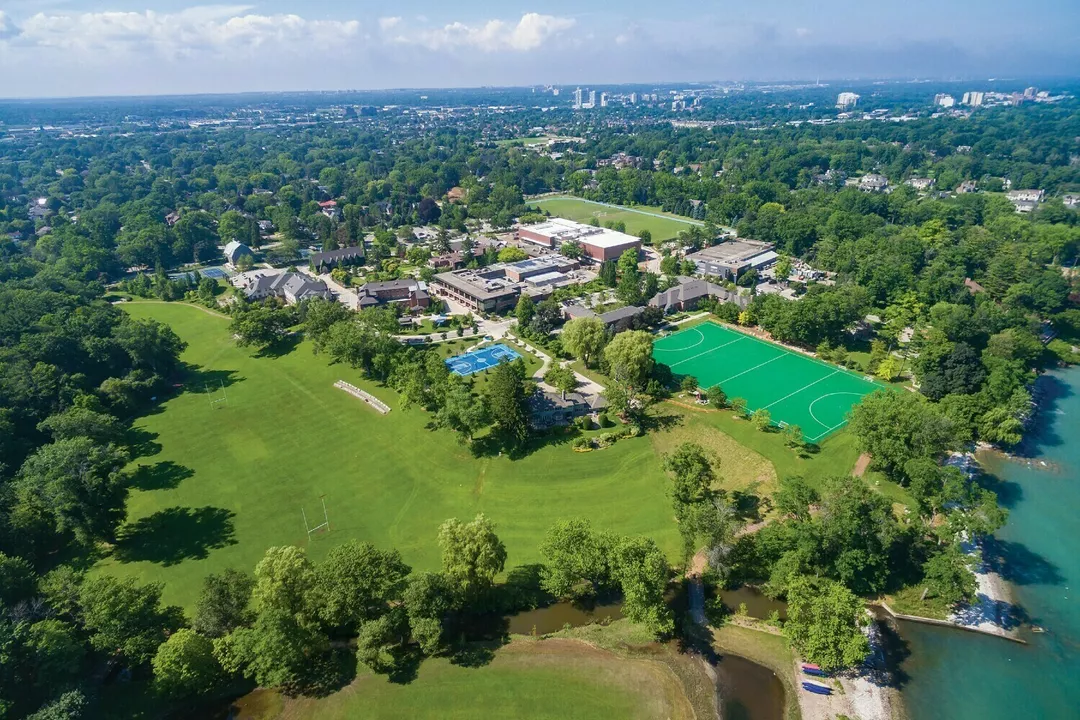
5. Campus Environment
A school’s physical environment can have a significant effect on student life.
Appleby’s campus is located close to Lake Ontario, giving the school a distinctive setting within the Greater Toronto Area.
The campus supports academic learning as well as sports, arts, boarding, community activities, and student events.
The school has continued to invest in facilities designed around the changing needs of students.
Recent school communications have referred to developments such as Cockwell Hall and enhancements to boarding, wellbeing, and other areas of student experience.
6. Academic Philosophy
Academics form one of the central pillars of Appleby College.
The goal of an independent school is not simply to deliver a curriculum but to create an environment in which students can develop intellectual curiosity, analytical skills, communication abilities, independence, and a strong foundation for post-secondary study.
Appleby’s academic environment is connected to its broader educational philosophy.
Students are encouraged to combine classroom learning with activities outside the classroom. The school’s own communications describe academics, athletics, arts, service, and boarding life as major parts of its educational experience.
This approach recognizes that students have different interests and strengths.
One student may find a strong interest in science or mathematics, while another may become deeply involved in visual arts, theatre, athletics, leadership, or community service.
A broad educational environment allows students to explore several areas during their school years.
7. Academic Support
Academic success often depends on more than classroom teaching.
Appleby provides student support structures intended to help students work toward their potential.
The school’s Student Services documentation describes learning-support processes in which documentation can be reviewed by appropriate learning strategists and used to create a Student Success Profile outlining accommodations and strategies.
This approach recognizes that students can have different learning needs.
Academic support can include strategies for organization, classroom learning, assessment, study habits, and other areas depending on individual circumstances.
The purpose of such support is to help students participate successfully in the academic environment while developing greater independence.
8. University and Post-Secondary Preparation
For many secondary-school students, preparation for university or other post-secondary pathways is an important part of their education.
Appleby has a guidance and post-secondary counselling structure that supports students as they consider their future options.
School communications have described information sessions for families concerning the timeline and support offered by the guidance department as students prepare for and apply to post-secondary institutions.
University preparation involves more than submitting an application.
Students must consider their interests, academic strengths, possible fields of study, geographic preferences, financial considerations, and long-term goals.
A school environment that provides guidance throughout this process can help students understand the range of opportunities available after graduation.
9. Boarding at Appleby College
Boarding is one of the distinctive aspects of Appleby College.
For boarding students, school is not limited to classroom hours. Students live within a structured residential community and participate in academic, social, athletic, cultural, and community activities.
The boarding experience can help students develop independence and responsibility.
Students learn to manage schedules, maintain living spaces, participate in community routines, and balance academic requirements with extracurricular activities.
Appleby’s policies establish specific expectations for boarders. Its current registration policies state that once a student is enrolled as a boarder, the student generally remains in boarding unless an approved exemption applies.
10. Senior Two Boarding Requirement
One distinctive element of Appleby’s boarding structure concerns Senior Two students.
According to the school’s registration policies, Senior Two students are required to board for the entire Senior Two year in order to graduate and receive the Appleby College Diploma, subject to approved exceptional or extenuating circumstances.
This policy reflects the importance Appleby places on the final-year community experience.
The final year of secondary school can be a period of significant transition.
Students are preparing for university while also taking on leadership responsibilities within the school community.
A residential final year can provide opportunities for students to participate deeply in community activities and leadership.
11. Boarding Houses and Community Life
Boarding houses provide students with a smaller community within the larger school.
Students live with peers and are supported by adults involved in boarding life.
Residential education can create strong friendships because students spend significant amounts of time together outside formal classes.
Meals, study periods, activities, evening routines, and weekend programming all contribute to residential life.
Appleby has also offered long-weekend programming for students who remain on campus during selected weekends. Official school communications have described activities and excursions that can include trips into Toronto, sports events, outdoor activities, shopping, entertainment, and other experiences.
12. Day Students and Boarding Students
Appleby offers both day and boarding experiences.
This allows students from the surrounding region to attend as day students while also providing a residential option for students who live farther away.
The combination creates a community in which students with different backgrounds can interact.
The school has also provided pathways for some existing day students to transition into boarding during later years. Appleby communications describe a Senior One boarding opportunity for certain Upper Two day students.
This flexibility can allow families to choose an educational arrangement that changes as a student becomes older.
13. Athletics at Appleby College
Athletics are an important component of Appleby’s student experience.
School communications identify athletics as one of the core areas of the Appleby program.
Sports can provide students with opportunities to develop physical fitness, teamwork, communication, discipline, leadership, and resilience.
Competitive athletics can also teach students how to handle both success and disappointment.
For many students, sports become an important part of their social experience at school.
Appleby maintains athletic facilities and organized team programs, and its communications have referenced the A.W.B. Alumni Centre for Athletics and Student Life, including gym facilities and athletic programming.
14. Arts and Creative Development
Education at Appleby is not limited to traditional academic subjects.
The arts form another important part of school life.
Students can explore creative fields and develop skills in areas such as visual arts and other artistic disciplines.
Creative education can help students develop communication, imagination, confidence, collaboration, and the ability to express ideas in different forms.
Appleby’s academic and co-curricular structure provides opportunities for students with strong artistic interests to develop those interests alongside their academic studies.
The school has also introduced a Diploma of Distinction program that includes Creative Arts Leadership among its areas of specialization.
15. Leadership Development
Leadership is another significant component of Appleby’s educational model.
Leadership is not necessarily limited to holding a formal title.
Students can develop leadership through athletics, clubs, service, arts, boarding, student government, and other activities.
The school’s Diploma of Distinction initiative includes Global Leadership, Creative Arts Leadership, STEM Leadership, and Business Leadership.
This structure allows students to develop leadership within areas connected to their individual interests.
Leadership education can teach students how to collaborate, communicate, organize projects, take responsibility, and make decisions.
16. Global Education
The modern world is increasingly interconnected.
For secondary-school students, international experiences can provide opportunities to encounter different cultures, educational systems, languages, and communities.
Appleby offers global educational opportunities as part of its wider program.
The school has described a Student Global Exchange Program in which eligible students can spend several weeks at partner schools in other countries. One official communication described exchanges lasting approximately four to six weeks.
These programs can provide students with experiences beyond their normal classroom environment.
17. Experiential Learning
Experiential learning means learning through direct experience.
Rather than relying entirely on textbooks and lectures, students can learn through projects, travel, outdoor experiences, service, research, teamwork, and practical activities.
Appleby’s communications specifically refer to global experiential trips and Temagami experiences as part of the broader Appleby educational experience.
Experiential education can encourage students to connect academic concepts with real-world situations.
It can also help students develop independence and adaptability.
18. Temagami and Outdoor Education
Outdoor education has a long tradition within many Canadian independent schools.
Canada’s geography provides an especially strong environment for outdoor learning.
Appleby’s program includes Temagami experiences, which are identified by the school as part of its broader educational model.
Outdoor experiences can teach students about teamwork, environmental responsibility, navigation, planning, physical endurance, and leadership.
They also provide an opportunity for students to experience environments very different from classrooms and urban communities.
19. Community Service
Community service is another important component of the Appleby experience.
Service can encourage students to understand their responsibilities toward other people and their communities.
Students may encounter social, environmental, educational, or community challenges through service experiences.
The broader purpose is to develop awareness and encourage students to contribute constructively.
Appleby identifies service as one of its core areas alongside academics, athletics, arts, and boarding life.
20. Student Wellbeing
Student wellbeing has become an increasingly important topic in modern education.
Schools have a responsibility to create environments in which students can learn effectively while developing healthy routines and supportive relationships.
Appleby has identified wellbeing as an area of ongoing development.
Its recent communications have referred to enhancements to wellbeing programming and student support.
Boarding life also requires attention to wellbeing because students live away from home and must balance academic, social, and residential responsibilities.
21. Technology and Student Life
Technology is an essential part of contemporary education.
Students use digital tools for communication, research, coursework, collaboration, and organization.
At the same time, schools must consider how technology affects sleep, attention, social interaction, and student wellbeing.
Appleby has implemented policies concerning technology use in boarding.
One school communication described an after-hours technology policy for certain boarding grades that included restrictions on cellphone access around bedtime. The school explained that the policy was intended to support healthy bedtime routines and student wellbeing.
This illustrates the way modern boarding schools attempt to balance technology with residential community life.
22. A Typical School Year
The Appleby academic year includes classes, evaluation periods, holidays, boarding transitions, extracurricular activities, and special programs.
The school’s published 2025–2026 calendar shows the structure of the academic year, including the September start, Thanksgiving break, November long weekend, winter holiday, February long weekend, March Break, spring weekend, May long weekend, final evaluation period, graduation, and Immersives.
The inclusion of Immersives near the end of the school year illustrates the importance of experiential education in the Appleby model.
23. Immersive Learning
Immersive programs can give students an opportunity to focus on a particular experience or subject outside the ordinary timetable.
According to Appleby’s 2025–2026 school calendar, Immersives are scheduled for Middle One through Senior One students after the regular academic year.
These experiences can provide opportunities for exploration, teamwork, practical learning, and personal development.
Immersive learning can be particularly valuable for students who learn best through direct participation.
24. Student Leadership and Prefects
Student leadership is an important element of Appleby’s community.
The school highlights student leaders and prefects through its communications.
Prefect roles can provide students with opportunities to represent their peers, support younger students, contribute to school events, and participate in community leadership.
Appleby’s recent communications have included prefect spotlights as part of its school community updates.
Leadership opportunities can help students develop confidence and responsibility before entering university or professional environments.
25. Diversity, Equity, Inclusion and Belonging
Modern schools increasingly focus on creating communities where students from different backgrounds can participate meaningfully.
Appleby has organized programming around diversity, equity, inclusion, and belonging.
A 2026 school communication described DEIB Day as an opportunity for dialogue, learning, and celebration focused on diversity, equity, inclusion, and belonging.
Such programs can encourage students to listen to different perspectives and understand the experiences of members of their community.
26. International Students
Appleby’s boarding and global programs create opportunities for students from outside Canada.
International students must navigate educational, cultural, and practical differences when attending a Canadian school.
Appleby’s administrative processes include residency-status documentation for non-Canadian citizens, demonstrating the additional requirements that can apply to international families.
For international students, boarding can provide a structured environment in which they can become familiar with Canadian education and campus life.
27. Preparing Students for University
A major purpose of a secondary education is preparing students for their next stage.
Appleby’s academic programs, guidance services, extracurricular activities, and leadership opportunities can all contribute to post-secondary preparation.
University admissions increasingly consider students as more than examination results.
Academic performance remains important, but students may also benefit from developing communication skills, leadership experience, independent thinking, creativity, teamwork, and community involvement.
Appleby’s broad educational structure gives students opportunities to explore these areas.
28. The Importance of Independent Education
Independent schools operate differently from many public education systems.
They often have greater flexibility to create distinctive programs, develop specialized facilities, establish residential communities, and organize extensive co-curricular opportunities.
Appleby College represents this model through its combination of academics, boarding, athletics, arts, service, outdoor education, global programs, and leadership.
This broad structure requires students to participate actively in school life.
29. Appleby College and Personal Development
Education is not only about grades.
Teenagers are developing identities, interests, relationships, values, and personal goals.
A school environment can influence how students learn to manage responsibility and interact with others.
Appleby’s combination of academic and residential experiences creates numerous situations in which students can practice independence.
Boarding students, in particular, must manage parts of daily life away from their families.
This can encourage maturity and self-management.
30. The Role of Teachers
Teachers are central to the educational experience.
A strong teacher can help students understand difficult concepts, ask better questions, develop confidence, and discover new interests.
In an independent-school environment, teachers may also become involved in athletics, clubs, advising, residential life, trips, and other student activities.
This can create relationships that extend beyond traditional classroom instruction.
31. Advising and Student Support
Students often need guidance beyond academic subjects.
Advising can help students organize their responsibilities, understand school expectations, and navigate social and academic challenges.
Appleby’s communications refer to an advisor program as part of the broader process of monitoring student progress and development.
Such systems can give students another adult within the school community whom they can approach for guidance.
32. Community and School Traditions
Long-established schools often develop traditions that contribute to a sense of identity.
Appleby’s history since 1911 provides more than a century of institutional continuity.
Traditions can include ceremonies, athletic events, arts performances, community activities, boarding customs, leadership roles, and alumni connections.
These experiences help connect current students with generations of former students.
33. Alumni Community
An established school also develops an alumni network.
Appleby’s alumni community remains connected to the school and receives updates concerning academic developments, leadership, programs, and campus initiatives.
The school has described alumni engagement through events such as the Alumni Leaders Forum.
An active alumni community can contribute to institutional memory and provide students with connections to graduates working in different fields.
34. Modernization and the Future
A school with a history extending back more than a century must balance tradition and innovation.
Appleby continues to develop its academic programs, facilities, technology, wellbeing initiatives, leadership opportunities, and experiential learning.
The school’s recent introduction of specialized Diploma of Distinction programs is one example of this effort to expand opportunities for students.
The areas include Global Leadership, Creative Arts Leadership, STEM Leadership, and Business Leadership.
Such initiatives reflect the changing expectations of secondary education.
35. Diploma of Distinction
Appleby has introduced the Diploma of Distinction as an additional achievement that students can pursue alongside the Appleby Diploma.
The school describes specialized areas including:
- Global Leadership
- Creative Arts Leadership
- STEM Leadership
- Business Leadership
The program combines elements such as courses, co-curricular activities, clubs, and external requirements.
This type of program can provide students with a structured pathway for developing deeper expertise in a particular area.
36. STEM at Appleby College
Science, technology, engineering, and mathematics play important roles in modern education.
STEM education can help students develop analytical thinking, problem-solving, research skills, and technical knowledge.
Appleby’s Diploma of Distinction structure includes STEM Leadership as one of its specialized pathways.
For students interested in science and technology careers, opportunities to combine academic study with leadership and extracurricular experiences can be valuable.
37. Business Leadership
Business education can help students understand organizations, entrepreneurship, economics, decision-making, and leadership.
Appleby includes Business Leadership among the specialized areas of its Diploma of Distinction.
This provides students interested in business-related fields with an opportunity to develop leadership experiences alongside their regular academic studies.
38. Global Leadership
Global leadership is increasingly relevant in an interconnected world.
Students may eventually work with people from different countries and cultural backgrounds.
Appleby’s Global Leadership pathway connects leadership development with international and global experiences.
The school’s wider global education initiatives, including student exchanges and experiential programs, complement this area of development.
39. Creative Arts Leadership
Creative industries require more than technical artistic ability.
Artists, designers, performers, and creative professionals often need communication, collaboration, organization, and leadership skills.
Appleby’s Creative Arts Leadership pathway combines this broader leadership concept with creative education.
This reflects the school’s approach of connecting academic and co-curricular interests.
40. Life as an Appleby Student
Student life at Appleby can be highly active.
A student’s week may involve:
- Academic classes
- Homework and independent study
- Athletics
- Clubs
- Arts activities
- Community service
- Leadership
- Boarding activities
- Advisory meetings
- Special events
- Outdoor experiences
- Global opportunities
This variety means students need strong time-management skills.
41. Time Management
A broad educational program can provide many opportunities, but it also requires organization.
Students who participate in multiple activities must learn to manage deadlines and commitments.
Time management is particularly important for boarding students, who must balance schoolwork with residential responsibilities.
Learning to prioritize tasks during secondary school can provide useful preparation for university and future employment.
42. Friendships and Community
School friendships can become one of the most memorable aspects of secondary education.
Boarding can intensify this experience because students spend much of their daily life with peers.
Students study, eat, play sports, participate in activities, and attend events together.
This creates a strong social environment.
At the same time, students must learn how to manage disagreements and respect differences.
These interpersonal experiences are part of personal development.
43. Why Appleby’s Location Matters
Appleby’s location in Oakville provides a distinctive combination of accessibility and campus life.
The school is within the Greater Toronto Area while maintaining a campus environment close to Lake Ontario.
The official school website provides travel directions from Toronto and other surrounding areas, as well as information about reaching the campus from Oakville GO Station.
This location can be convenient for families living in the broader region while also supporting students who come from farther away.
44. Boarding and Independence
Boarding can be a significant step for a young person.
Students living away from home must gradually take responsibility for daily routines.
They must manage belongings, schedules, assignments, social relationships, and personal responsibilities.
The experience can therefore be an important transition between childhood and adulthood.
Appleby’s residential structure is designed around this broader educational experience.
45. Long-Weekend Boarding Life
Boarding does not necessarily stop when regular classes finish for a long weekend.
Appleby has offered optional long-weekend programming for boarders who remain on campus.
Official communications have described organized activities and excursions, with meals included as part of the program.
These activities can help students remain connected with their peers and make residential life more active outside normal school days.
46. Health and Student Support
A boarding school needs systems that address student wellbeing and support.
Appleby provides student services and has described learning support, wellbeing initiatives, health-related resources, and boarding support in its official communications.
The school’s Student Services documentation describes procedures for reviewing learning assessments and establishing appropriate accommodations.
This type of support is particularly relevant in a demanding academic environment.
47. The Importance of Experiential Education
Traditional classroom learning provides essential knowledge.
Experiential education adds another dimension by giving students opportunities to apply what they have learned.
For example, a student may develop leadership skills through an outdoor expedition, communication skills through an arts activity, teamwork through athletics, or cultural understanding through international travel.
Appleby’s educational model incorporates several of these experiences.
48. Appleby College as a Canadian School
Appleby is part of the long tradition of independent education in Canada.
Canadian independent schools have often emphasized academic preparation, character, community, sports, arts, and leadership.
Appleby’s history since 1911 places it within more than a century of Canadian educational development.
The school has evolved with changing expectations while maintaining established traditions.
49. A Modern Educational Environment
Today’s students face a different world from students who attended Appleby in its early decades.
Technology has transformed communication.
University options are increasingly international.
Climate change, global cooperation, cultural diversity, artificial intelligence, entrepreneurship, and rapidly changing employment patterns are all part of the world young people will enter.
Modern schools therefore need to prepare students not simply to memorize information but to think, communicate, collaborate, adapt, and continue learning.
50. The Future of Appleby College
Appleby College continues to develop as an educational institution.
Its future will likely involve a continuing balance between traditional school values and emerging educational needs.
Campus development, academic innovation, global programs, student wellbeing, technology, leadership, and experiential learning are all areas that can influence the school’s future.
Recent initiatives such as specialized leadership diplomas and campus development demonstrate the school’s ongoing evolution.
Conclusion
Appleby College is a historic Canadian independent school with a story that extends back to 1911.
Located in Oakville, Ontario, the school combines academic education with a broad range of experiences, including athletics, arts, service, leadership, boarding, outdoor education, global education, and experiential learning.
Its location near Lake Ontario and within the Greater Toronto Area gives it a distinctive Canadian setting, while its boarding program creates an environment for students from different regions and countries.
Appleby’s educational experience extends beyond the classroom. Students can participate in sports, creative activities, leadership programs, service initiatives, global exchanges, outdoor experiences, and residential community life.
The school’s recent educational developments, including specialized Diploma of Distinction pathways in Global Leadership, Creative Arts Leadership, STEM Leadership, and Business Leadership, show how it continues to adapt its programs to contemporary educational needs.
For students and families researching Canadian independent schools, Appleby College provides an example of an educational model that combines academics with a wide range of personal and community experiences.
Its history, campus environment, boarding structure, experiential programs, and emphasis on broad student development have helped shape its identity over more than a century.
Frequently Asked Questions About Appleby College
1. Where is Appleby College located?
Appleby College is located at 540 Lakeshore Road West in Oakville, Ontario, Canada.
2. When was Appleby College founded?
Appleby College traces its history to 1911.
3. Is Appleby College a boarding school?
Yes. Appleby offers both day and boarding experiences, and boarding is an important part of the school’s educational community.
4. Does Appleby College have international students?
Yes. The school accommodates students from outside Canada and has administrative processes concerning residency documentation for non-Canadian citizens.
5. What activities are available at Appleby College?
The school offers opportunities involving academics, athletics, arts, service, leadership, boarding, outdoor education, and global learning.
6. Does Appleby offer global exchange opportunities?
Yes. Appleby has described a Student Global Exchange Program involving partner schools in other countries.
7. Does Appleby provide academic support?
Yes. The school provides learning-support processes and accommodations based on individual student needs.
8. What is Appleby College known for?
Appleby is known for its long history, independent-school education, boarding program, academic environment, athletics, arts, service, leadership, outdoor education, and global learning opportunities.
9. Does Appleby have leadership programs?
Yes. The school has introduced Diploma of Distinction pathways in areas including Global Leadership, Creative Arts Leadership, STEM Leadership, and Business Leadership.
10. Is Appleby College near Toronto?
Appleby College is in Oakville, within the Greater Toronto Area. The school’s official directions provide routes from downtown Toronto and other surrounding locations.
11. What makes boarding at Appleby different?
Boarding integrates residential life with academics and extracurricular activities. Students live within the school community and participate in organized activities, study, athletics, and social events.
12. Does Appleby offer outdoor education?
Yes. Outdoor and experiential education are part of the wider Appleby experience, including references to Temagami experiences and Immersives.
13. Does Appleby help students prepare for university?
Yes. The school has a guidance and post-secondary counselling structure that supports students and families through the post-secondary planning process.
14. What is the Appleby College Diploma?
The Appleby College Diploma is the school’s graduation credential. Current registration policies state that Senior Two students generally must participate in boarding throughout their final year in order to graduate with the diploma, subject to approved exceptions.
15. Why is Appleby College historically significant?
Its history extends back to 1911, giving the institution more than a century of educational development in Canada.
SEO Information
SEO Title: Appleby College Canada: History, Academics, Boarding & Student Life
Meta Description: Discover Appleby College Canada, including its history since 1911, academics, boarding life, athletics, arts, global education, leadership, campus, and student experience.
Focus Keyword: Appleby College Canada
Secondary Keywords:
- Appleby College
- Appleby College history
- Appleby College Ontario
- Appleby College Oakville
- Appleby College boarding school
- Appleby College academics
- Appleby College student life
- Appleby College Canada history
- Appleby College admissions
- Appleby College campus
- Appleby College boarding
- Appleby College international students
- Appleby College global education
- Appleby College athletics
- Appleby College leadership programs
Suggested URL Slug:appleby-college-canada
Suggested Article Tags:
Appleby College, Canada Schools, Ontario Schools, Oakville Schools, Boarding Schools Canada, Independent Schools Canada, Canadian Education, Appleby College History, Student Life, Boarding Education