Charterhouse School: A Complete History, Education, Traditions and Legacy
Charterhouse School: A Complete History, Education, Traditions and Legacy
Introduction
Charterhouse School is one of England’s historic independent schools, with a story that stretches back more than four centuries. Today, Charterhouse is located near Godalming in Surrey, where it operates as a boarding and day school for boys and girls. Its identity is closely connected with a much older institution in London and with the remarkable charitable vision of Thomas Sutton, whose foundation in the early seventeenth century created an educational institution that would eventually become known as Charterhouse School.
The history of Charterhouse is particularly interesting because the school has not always stood in Surrey. For much of its early existence, the school was based in London at the Charterhouse site. The eventual move to Godalming in the nineteenth century transformed the physical environment of the school while allowing many of its historic traditions and institutional memories to continue.
The name “Charterhouse” itself reaches back to the medieval Carthusian religious community that occupied the London site before the school was established. Consequently, the history of the school cannot be understood simply as the history of an educational institution. It is also a story about medieval London, religious change, philanthropy, social development, Victorian education and the evolution of British independent schooling.
Over the centuries, Charterhouse developed from its original foundation into a major educational community. Academic study became an important part of school life, but education at Charterhouse has also traditionally involved sport, music, drama, societies, leadership, community life and personal development.
The school continues to maintain a strong connection with its past while operating as a modern educational institution. Its calendar includes academic, sporting, performing-arts, music, outdoor-education and co-curricular activities, reflecting the breadth of contemporary school life.
This article explores the history and development of Charterhouse School, from its medieval background and seventeenth-century foundation to its move to Surrey and its role in modern education.
1. The Medieval Origins of the Charterhouse Site
To understand Charterhouse School, it is useful to begin long before the school itself existed.
The London site associated with Charterhouse has medieval religious origins. A Carthusian monastery was established in London during the fourteenth century. The Carthusians were members of a Christian religious order known for their disciplined spiritual life and relative isolation.
The London Charterhouse became an important religious foundation. Its buildings, gardens and community formed part of the medieval landscape of London.
The name “Charterhouse” is derived from the English form of the name associated with the Carthusian order and the location. The medieval institution therefore provided the historical foundation for the name that would later become associated with education.
The religious community existed for generations, but the religious changes of the sixteenth century transformed the situation.
2. The Reformation and the Dissolution of the Monasteries
The sixteenth century was a period of enormous religious and political change in England.
During the reign of Henry VIII, England experienced the English Reformation. Religious houses across the country were dissolved, and their lands and properties were transferred, sold or otherwise reorganised.
The Charterhouse in London was affected by these changes.
The dissolution of the medieval religious community meant that the site entered a new phase of its history. Although its original religious purpose disappeared, the buildings and land continued to have significance.
This transition is important because it created the physical and historical setting from which the later charitable foundation of Thomas Sutton emerged.
The site therefore passed through several different identities: medieval religious foundation, private property and eventually charitable educational institution.
3. Thomas Sutton and the Foundation of Charterhouse
The central figure in the creation of Charterhouse as a charitable institution was Thomas Sutton.
Thomas Sutton was an English businessman and financier who accumulated considerable wealth. He became particularly interested in using his resources for charitable purposes.
Sutton acquired the Charterhouse property in London and developed plans for a major charitable foundation.
His vision was broader than the creation of a school alone. The foundation was intended to provide support and education, and the institution became associated with both educational and charitable work.
In 1611, Sutton’s foundation was established.
This date is fundamental to the history of Charterhouse School.
The foundation created an institution that would provide education for boys while also supporting people in need. The charitable character of the original foundation remained an important part of the institution’s historical identity.
Thomas Sutton died in 1611, but his plans survived him through the organisation established around his charitable foundation.
4. Charterhouse as a School in London
For centuries, Charterhouse School operated in London.
The school developed within a distinctive environment. Its surroundings contained historic buildings, courtyards, religious architectural remains and a strong sense of institutional tradition.
The London setting also meant that Charterhouse was part of a rapidly developing capital city.
Education in seventeenth- and eighteenth-century England was very different from education today. The curriculum placed strong emphasis on classical subjects, particularly Latin and Greek, together with religious and moral instruction.
As the centuries passed, the curriculum gradually expanded.
Mathematics, science, modern languages, history and other subjects became increasingly important.
The school also developed traditions that contributed to its distinctive culture.
Boarding-school life was another important feature. Pupils did not simply attend lessons during the day; many lived within the school community.
This residential structure created strong relationships among pupils and teachers and helped establish traditions that could continue from generation to generation.
5. The Meaning of a Traditional English Boarding School
Charterhouse became part of a wider tradition of English boarding education.
In a boarding school, education extends beyond the classroom. Students live together, eat together, participate in activities together and develop relationships within houses and year groups.
This model can create a strong community identity.
At historic schools such as Charterhouse, traditions often became important markers of school life. Ceremonies, uniforms, house systems, sports competitions, music, drama and other activities became part of the broader educational experience.
The concept of education therefore became wider than academic examination results.
A successful school community was expected to develop confidence, independence, discipline and social responsibility.
Charterhouse’s later development continued to reflect this broad educational philosophy.
6. The Nineteenth Century and Changing Educational Expectations
The nineteenth century brought major changes to Britain.
Industrialisation transformed the economy. Cities expanded rapidly. Scientific discoveries changed people’s understanding of the world. New professions developed, and educational expectations changed accordingly.
Schools had to respond to these developments.
Classical education remained important, but mathematics and science gained greater prominence. Modern languages and other subjects also became increasingly useful.
Sport became another major element of British school culture during the nineteenth century.
Organised games were increasingly used not only for physical exercise but also for teamwork, leadership and competition.
This wider educational culture affected the development of Charterhouse.
However, the London location eventually presented challenges.
The city was becoming increasingly crowded and industrialised, while educational institutions were increasingly interested in spacious campuses.
7. The Move from London to Godalming
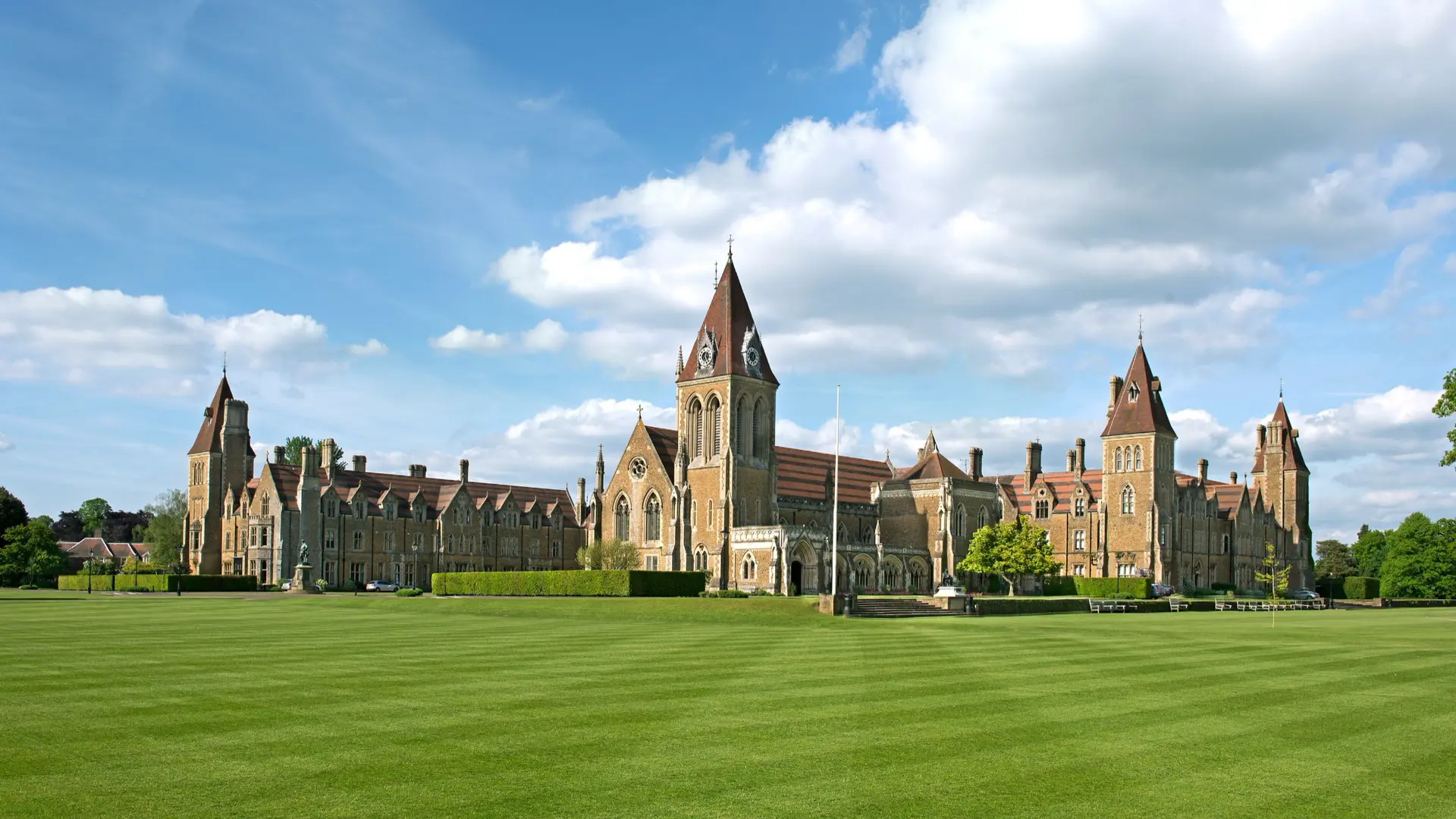
One of the most significant events in Charterhouse history occurred in the nineteenth century: the school moved from London to Godalming in Surrey.
The move was completed in the 1870s.
This represented a major transformation.
Instead of operating within the increasingly crowded environment of central London, the school established a purpose-designed educational environment in Surrey.
The new location offered space for buildings, gardens, playing fields and other facilities.
The move also helped shape the physical character of Charterhouse for generations to come.
The Surrey campus became closely associated with the school’s identity.
While the institution had moved geographically, its traditions did not simply disappear. Many elements of the historic Charterhouse culture continued in the new environment.
The result was an unusual combination of old traditions and a new physical setting.
8. Charterhouse in Godalming
Godalming became the school’s long-term home.
The Surrey location provided a very different atmosphere from the original London site.
The campus could develop around educational and residential needs rather than being constrained by a dense urban environment.
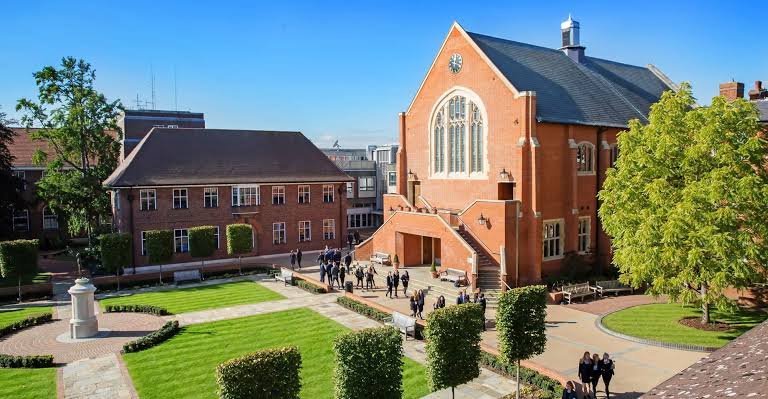
Buildings could be arranged around courtyards and open spaces. Sports grounds became an important feature of school life.
The campus environment also supported boarding education.
Students could live, study and participate in activities within one connected community.
Today, the school’s official visitor information describes tours that include boarding houses, academic departments and co-curricular spaces, illustrating how these different aspects remain interconnected within school life.
9. Architecture and the Character of the Campus
Architecture has always played an important role in the identity of historic British schools.
At Charterhouse, the campus is more than a collection of classrooms.
Buildings, houses, chapels, academic areas and recreational spaces contribute to a sense of place.
Historic architecture can provide students with a daily connection to previous generations.
At the same time, schools must continually modernise their facilities.
Science teaching requires specialist laboratories. Modern technology requires appropriate learning spaces. Music and drama require performance facilities. Sport requires changing rooms, pitches and specialist areas.
The challenge for a historic school is therefore to balance preservation with innovation.
Charterhouse has continued to develop its facilities while retaining the sense of history associated with the institution.
10. Academic Education at Charterhouse
Academic education remains central to Charterhouse School.
Like other major independent schools, Charterhouse offers a broad curriculum designed to prepare students for further education and adult life.
The academic experience is not limited to memorising information.
Students are encouraged to analyse ideas, ask questions, develop arguments and communicate clearly.
Subjects traditionally associated with a classical education remain important, while modern academic disciplines have become an integral part of school life.
Science and mathematics provide opportunities for analytical thinking.
Humanities encourage students to explore history, society, politics, literature and culture.
Languages open access to other cultures and ways of thinking.
Creative subjects allow students to develop imagination and practical skills.
The result is a broad educational programme rather than a single-track curriculum.
11. The Importance of Teachers
No school can succeed without effective teachers.
At a boarding school, teachers can have a particularly influential role because their relationship with pupils may extend beyond classroom lessons.
Teachers can become academic advisers, tutors, coaches, activity leaders and mentors.
The relationship between students and teachers can therefore be an important part of school culture.
Good teaching involves more than delivering a syllabus.
Teachers help students learn how to approach difficult problems, respond to criticism, work independently and develop intellectual curiosity.
A historic school such as Charterhouse also benefits from accumulated educational experience.
Generations of teachers have contributed to the development of subjects, traditions and teaching practices.
12. Boarding Houses and Community Life
Boarding is one of the defining characteristics of Charterhouse.
A boarding house provides a smaller community within the larger school.
Students live together under the guidance of house staff.
This structure can create friendships and encourage a sense of responsibility.
Older pupils may support younger students, while house competitions and shared activities can strengthen community identity.
Boarding also teaches practical independence.
Students learn to manage their belongings, organise their time and live respectfully with others.
For many pupils, the boarding house becomes one of the most memorable parts of school life.
13. Pastoral Care
Academic achievement is only one part of education.
Students also need support with friendships, personal challenges, time management and the transition between different stages of adolescence.
Modern boarding schools therefore place considerable emphasis on pastoral care.
Pastoral systems can include house staff, tutors, teachers and other members of the school community.
The aim is to ensure that students have adults they can approach when they need advice or support.
This aspect of school life is particularly important in a residential environment.
A student’s experience at school is shaped not only by lessons but also by relationships, routines and the wider community.
14. Sport at Charterhouse
Sport has traditionally been a major component of British independent-school education.
At Charterhouse, sporting activities form part of the broader co-curricular programme.
Team sports can develop cooperation and communication.
Individual sports can encourage discipline and personal improvement.
Competitive sport also provides opportunities for students to experience success and disappointment in a structured environment.
The value of sport is not necessarily limited to winning.
Training can teach persistence, planning and responsibility.
Playing in a team requires students to consider the needs of others.
These experiences can contribute to personal development.
The school’s calendar includes sport among its major categories of activity, demonstrating its continuing role in school life.
15. Football, Cricket and Other Games
Traditional British school sports have played an important role in the culture of many boarding schools.
Cricket, football, rugby and other games have historically provided opportunities for inter-house and inter-school competition.
Different sports appeal to different students.
Some enjoy team competition, while others prefer individual activities.
A broad sporting programme allows students to explore their interests and develop physical confidence.
Sport can also become an important source of school identity.
School teams represent the institution when competing against other schools, while house competitions create friendly rivalry within the community.
16. Music at Charterhouse
Music is another important part of a broad education.
Students can encounter music through lessons, ensembles, performances, concerts and other activities.
A school with a strong musical culture can provide opportunities for beginners as well as experienced performers.
Music develops concentration and listening skills.
It can also encourage collaboration.
An ensemble depends on individuals working together rather than simply performing independently.
For students interested in music, school can therefore become an environment where they can experiment, perform and improve.
The modern Charterhouse calendar includes music among its recognised school activities.
17. Drama and Performing Arts
Performing arts provide another way for students to express themselves.
Drama can help students develop confidence, communication skills and awareness of different perspectives.
A theatre production also involves much more than actors.
Students can participate in directing, lighting, sound, costume design, stage management and production.
This makes performing arts a genuinely collaborative activity.
For some students, the stage becomes a place where they discover confidence that they may not have demonstrated in the classroom.
18. Art and Creativity
Creative education gives students opportunities to explore ideas visually.
Art can involve drawing, painting, design, photography, sculpture and other forms of creative work.
The creative process teaches students to experiment and accept that the first solution is not always the best.
This is particularly valuable in a modern world where innovation and design are increasingly important.
The school’s calendar identifies art as one of its activity categories, reflecting the place of creative work within the wider school programme.
19. Outdoor Education
The Surrey setting provides opportunities for outdoor activities.
Outdoor education can involve physical challenges, environmental learning, teamwork and exploration.
Such experiences can encourage independence.
Students may need to plan, cooperate and respond to changing conditions.
Outdoor education therefore complements classroom learning.
The modern school calendar includes outdoor education among its co-curricular categories.
20. Co-Curricular Activities
One of the defining characteristics of modern education is the importance of activities outside formal lessons.
Students have different interests.
Some may be fascinated by science.
Others may enjoy music, theatre, sport, debating, art, technology or outdoor activities.
A broad co-curricular programme allows students to explore these interests.
Charterhouse’s current calendar demonstrates the breadth of its activity programme, including co-curricular activities, performing arts, music, outdoor education and sport.
This approach supports the idea that education is not confined to the classroom.
21. Leadership and Responsibility
School communities provide opportunities for students to take responsibility.
Leadership may involve formal positions, house responsibilities, sports teams, societies or student-led activities.
The most useful form of leadership is not simply giving instructions.
It involves listening, organising, cooperating and accepting responsibility for outcomes.
Boarding schools can provide many natural opportunities for this development because students share daily responsibilities within their communities.
22. The Role of Tradition
Tradition is an important part of Charterhouse’s identity.
Historic schools often maintain customs that have developed over many generations.
Traditions can include ceremonies, language, clothing, buildings, house structures, sporting events and other elements of school life.
Tradition can give students a sense that they are participating in something larger than their own school years.
However, traditions also evolve.
A modern school must respond to changing expectations, technology, society and educational research.
The survival of a tradition often depends on its ability to remain meaningful.
23. Charterhouse and Changing Society
British society has changed dramatically since Charterhouse was founded in the seventeenth century.
The school has therefore had to adapt repeatedly.
The world of Thomas Sutton was very different from the world of a modern student.
Education was once primarily available to a relatively small part of society.
Modern education has broader expectations.
Students need digital literacy, scientific understanding, communication skills and the ability to navigate an increasingly interconnected world.
The school’s long history provides continuity, but its educational mission must remain relevant to contemporary students.
24. From Classical Education to Modern Learning
Classical subjects were once at the heart of elite education.
Latin and Greek were considered essential for understanding literature, philosophy and historical texts.
Over time, schools expanded their curricula.
Science became increasingly important.
Modern languages became more valuable in an internationally connected economy.
Computing and digital technology eventually became central parts of modern education.
This transformation illustrates one of the major themes of Charterhouse history: continuity alongside change.
The institution has retained a historical identity while operating within a modern educational environment.
25. The Importance of History
History is especially visible at Charterhouse because the institution itself is historically significant.
Students attending the school become part of a tradition that began centuries before their arrival.
Understanding this history can provide a broader perspective on education.
It also raises interesting questions.
What should a historic school preserve?
What should it change?
How should traditions be interpreted?
How can an old institution remain relevant to a new generation?
These questions are relevant to Charterhouse and to many historic schools around the world.
26. Charterhouse and the Wider World
Modern education is increasingly international.
Students grow up in a world where communication, travel, commerce and technology connect countries and cultures.
Schools therefore have a responsibility to prepare young people for environments that may be very different from their immediate surroundings.
A broad education can expose students to different languages, histories, cultures and ideas.
This is particularly relevant for independent boarding schools, which may bring together students from different regions and backgrounds.
The experience of living with people who have different perspectives can encourage communication and cultural understanding.
27. The Charterhouse Experience
The Charterhouse experience is difficult to reduce to a single feature.
For one student, the most important part of school may be academic study.
For another, it may be sport.
Another student may remember music, drama, art or outdoor activities.
For others, friendships and boarding-house life may become the strongest memories.
This variety is one of the strengths of a broad educational model.
Students do not have to define themselves through one talent.
They can explore multiple interests.
28. The Campus as a Learning Environment
A school campus can influence education in subtle ways.
Open spaces encourage outdoor activities.
Libraries support independent study.
Laboratories enable practical science.
Performance spaces support theatre and music.
Sports grounds support physical education.
Boarding houses provide residential communities.
At Charterhouse, these different spaces form part of a connected educational environment.
The school’s official visitor programme specifically highlights academic departments, boarding houses and co-curricular spaces as important parts of the school experience.
29. The Role of the Chapel and Spiritual Tradition
Religious education has historically been part of English schooling.
Charterhouse’s origins are connected to a medieval religious institution, and the school’s foundation also emerged within a Christian context.
Over the centuries, religious education and chapel traditions have formed part of the wider life of the school.
Modern educational institutions often approach spirituality and religion in ways that reflect contemporary society.
The historical connection remains significant because it helps explain the institution’s origins and many of its traditions.
30. The Evolution of Student Life
Student life at Charterhouse has changed considerably over four centuries.
Students in earlier centuries lived under very different expectations.
Technology did not exist.
Travel was slower.
Communication depended on letters and printed materials.
Medical knowledge was different.
The curriculum was narrower.
Modern students live in a highly connected world.
They have access to computers, digital resources and global communication.
The school environment has therefore evolved dramatically even though the institution’s name and broad educational purpose have remained recognizable.
31. The Modern School Calendar
A modern school requires extensive organisation.
Charterhouse maintains a detailed calendar covering different aspects of school life.
Its categories include admissions, art, foundation activities, reporting, term dates, chapel, co-curricular activities, performing arts, music, outdoor education, sport and general events.
This gives an insight into how much happens beyond normal lessons.
The school year is therefore structured around multiple dimensions of student development.
32. Admissions and Visiting Charterhouse
For families considering the school, visiting is an important part of understanding its environment.
Charterhouse currently provides organised visits for prospective families.
Its official visitor information describes Saturday Open Mornings and mid-week tours, including opportunities to see boarding houses, academic departments and co-curricular spaces.
A school visit can provide information that cannot easily be communicated through written descriptions.
Families can observe the campus, speak with staff and students and develop a clearer understanding of daily life.
33. The Importance of a School Community
A school is not simply a collection of classrooms.
It is a community of students, teachers, support staff, families and former pupils.
In historic boarding schools, this community can extend across generations.
Former students often remain connected to the institution through alumni networks and events.
This creates a sense of continuity.
A student may arrive as an individual but eventually become part of a long institutional story.
34. Alumni and the Charterhouse Legacy
Like other historic schools, Charterhouse has educated generations of people who later entered different professions.
Former pupils have contributed to fields including literature, science, politics, business, the arts, sport and public life.
The significance of alumni is not simply the fame of individual graduates.
An alumni community demonstrates the long-term reach of an educational institution.
Every generation carries something from its school experience into wider society.
35. Education Beyond Examination Results
Examinations are important because they provide recognised academic qualifications.
However, education is broader than examination performance.
Students also need communication skills, resilience, curiosity and the ability to work with other people.
They need to understand how to manage responsibilities.
They need to learn how to respond to failure.
They need to develop confidence without losing humility.
A school with a broad co-curricular programme can provide opportunities for these forms of development.
36. Why the History of Charterhouse Matters
The history of Charterhouse matters for several reasons.
First, it illustrates the development of English education over more than four centuries.
Second, it shows how charitable foundations could create long-lasting institutions.
Third, its move from London to Surrey illustrates how educational institutions adapted to social and urban change.
Fourth, its continued development demonstrates how historic schools can combine tradition with modern education.
The school’s history is therefore not simply a list of dates.
It is a story of adaptation.
37. Charterhouse in the Twenty-First Century
The twenty-first century presents new challenges for education.
Technology has transformed learning.
Artificial intelligence and digital tools are changing how students find and process information.
Climate change has increased attention to environmental education.
Globalisation has made intercultural understanding increasingly important.
Students also need to develop critical thinking so that they can distinguish reliable information from misinformation.
A historic school such as Charterhouse must respond to these changes while preserving the aspects of its identity that remain valuable.
38. Balancing Tradition and Innovation
The central challenge for a historic school can be described in two words: tradition and innovation.
Tradition provides identity.
Innovation provides adaptation.
If an institution changes everything, it may lose the characteristics that distinguish it.
If it changes nothing, it may fail to meet contemporary needs.
Charterhouse’s long history demonstrates repeated adaptation.
The move from London to Godalming was itself a major transformation.
Later developments in curriculum, facilities, technology and student life continued the process.
39. The Educational Philosophy of a Broad School Experience
A broad school experience recognises that young people develop in different ways.
One student may excel academically.
Another may have exceptional sporting ability.
Another may become a talented musician.
Another may discover a passion for theatre.
Another may be interested in science, technology or outdoor activities.
A successful educational community gives students space to explore.
This is why co-curricular opportunities are an important part of modern school life.
40. Friendship and Social Development
Friendships are a major part of the school experience.
Boarding can intensify these relationships because students share more of their daily lives.
Living together requires compromise.
Students learn that other people may have different habits, interests and personalities.
They must learn how to cooperate.
These experiences can prepare students for university, employment and wider society.
41. Preparing Students for Higher Education
Independent schools traditionally place considerable emphasis on preparing students for universities and future careers.
Academic preparation involves strong subject knowledge.
However, students also need independent study skills.
They must be able to manage deadlines and organise their work.
They need to communicate effectively.
They need to evaluate evidence.
They need to work independently without constant supervision.
These skills become increasingly important after school.
42. The Importance of Independent Thinking
Education should encourage students to think rather than simply repeat information.
Independent thinking involves asking questions.
It involves examining evidence.
It means being willing to change one’s mind when better evidence becomes available.
This approach is valuable in every academic subject.
It is also valuable in everyday life.
43. Character and Responsibility
The idea of character has traditionally been important in British boarding education.
Character can involve honesty, responsibility, perseverance and respect for others.
Modern education may use different language, but the underlying goal remains relevant.
Students need to understand that their decisions affect other people.
Living within a community provides daily opportunities to practise responsibility.
44. A Historic Institution with a Modern Future
Charterhouse’s history stretches from medieval London through the seventeenth-century foundation of Thomas Sutton, the nineteenth-century move to Surrey and the modern educational world.
Few institutions remain unchanged for four centuries.
The fact that Charterhouse continues to operate demonstrates its ability to adapt.
The school today is very different from the institution founded in 1611.
Yet the historical connection remains central to its identity.
45. Charterhouse and the Future of Education
The future will require schools to address new challenges.
Artificial intelligence will change learning and assessment.
Digital communication will continue to reshape education.
Environmental concerns will influence campus planning and curriculum.
International connections will continue to expand.
At the same time, many traditional educational goals will remain important.
Students will still need teachers.
They will still need opportunities to collaborate.
They will still benefit from sport, art, music and creative activities.
They will still need communities in which they can develop confidence and responsibility.
The future of Charterhouse will therefore probably involve the same balance that has characterised much of its history: preserving a distinctive identity while adapting to new circumstances.
46. Why Charterhouse School Remains Historically Significant
Charterhouse School is historically significant because its story connects several periods of British history.
Its name reaches back to a medieval Carthusian foundation.
Its educational foundation was established through Thomas Sutton’s seventeenth-century philanthropy.
Its London history reflects centuries of educational development.
Its nineteenth-century move to Godalming reflects changing ideas about schooling and urban life.
Its modern programme reflects the needs of contemporary students.
This combination makes Charterhouse a useful example of institutional continuity.
47. Frequently Asked Questions About Charterhouse School
When was Charterhouse School founded?
Charterhouse’s educational foundation dates to 1611, when the charitable foundation associated with Thomas Sutton was established.
Where is Charterhouse School located?
Charterhouse School is located near Godalming in Surrey, England.
Was Charterhouse originally located in London?
Yes. The school was originally based at the Charterhouse site in London before moving to Surrey in the nineteenth century.
Who founded Charterhouse School?
The foundation is associated with Thomas Sutton, whose charitable plans created the institution in 1611.
When did Charterhouse move to Surrey?
The school moved from London to its present Surrey location in the 1870s.
Is Charterhouse a boarding school?
Yes. Boarding is an important part of the school’s structure, alongside day education.
What activities are available at Charterhouse?
The school’s current programme includes academic study alongside sport, music, performing arts, art, outdoor education and other co-curricular activities.
Can prospective families visit Charterhouse?
Yes. Charterhouse provides organised visits, including Saturday Open Mornings and mid-week tours for prospective families.
Why is Charterhouse historically important?
Its history extends across more than four centuries and connects medieval religious foundations, seventeenth-century philanthropy, English boarding education and modern schooling.
48. Conclusion
Charterhouse School has a remarkable educational history.
Its story begins with the medieval religious foundation that gave the London site its identity. It continued through the religious changes of the sixteenth century and the charitable vision of Thomas Sutton. The establishment of the foundation in 1611 created the institutional basis for the school.
For centuries, Charterhouse operated in London.
Then, in the nineteenth century, the school moved to Surrey, creating the spacious environment that became its modern home.
The move did not erase the school’s past. Instead, Charterhouse carried its traditions into a new setting.
Over time, education at Charterhouse expanded beyond classical studies. Science, mathematics, modern languages, creative subjects, sport and co-curricular activities became important components of school life.
Today, Charterhouse represents a combination of historical continuity and modern education.
Its boarding houses provide residential communities. Its academic departments support formal learning. Sport, music, art, performing arts and outdoor education broaden the student experience. Its detailed school calendar demonstrates how many different activities contribute to modern school life.
The history of Charterhouse also demonstrates that institutions survive not simply by preserving the past but by adapting to new circumstances.
The Charterhouse of the twenty-first century is not the same institution that existed in seventeenth-century London. Yet the connection between the two remains clear.
Its story is ultimately one of continuity, adaptation and education.
From its historic foundation in 1611 to its modern Surrey campus, Charterhouse School has remained connected to the idea that education should extend beyond textbooks and examinations. Academic knowledge, community life, sport, creativity, responsibility and personal development all contribute to the experience of education.
That combination of history and contemporary life explains why Charterhouse continues to occupy an important place in the story of British independent schooling.