LaGuardia High School: A Complete History, Arts Education, Programs, Admissions, Alumni and Legacy
Introduction
Fiorello H. LaGuardia High School of Music & Art and Performing Arts, commonly known as LaGuardia High School, is one of the best-known public arts high schools in New York City. Located in Manhattan, the school has a distinctive educational mission: students receive rigorous academic preparation while also pursuing intensive training in the arts.
LaGuardia’s story is unusual because the modern school grew from two important New York City institutions. The first was the High School of Music & Art, established in 1936 by New York City Mayor Fiorello H. LaGuardia. The second was the School of Performing Arts, established in 1948 to prepare students interested in professional careers in dance, drama, and music. The two schools eventually became one organization in 1961 and physically came together in a new facility in 1984.
Today, LaGuardia describes itself as New York City’s only specialized high school devoted specifically to the arts. The school combines conservatory-level arts education with a college-preparatory academic curriculum and serves students from all five boroughs. The official school website states that approximately 2,400 students train in one of six studios while completing academic studies.
The school’s history is also connected with the wider history of arts education in the United States. LaGuardia helped demonstrate that talented young artists could receive serious professional-level preparation inside a publicly funded secondary school rather than having to attend a private conservatory or abandon their artistic ambitions in favor of a conventional academic program.
1. What Is LaGuardia High School?
The official name of the institution is Fiorello H. LaGuardia High School of Music & Art and Performing Arts.
The school is a public high school in Manhattan, New York City. Its educational model brings together two major areas:
- College-preparatory academic education
- Intensive arts education
This combination is central to the identity of the school.
Students do not simply take an occasional art or music class. Instead, they enter a specialized educational environment in which artistic training forms a major part of their high-school experience.
The school currently offers arts education through six major studio areas. These represent the traditions inherited from Music & Art and the School of Performing Arts while also reflecting the modern structure of LaGuardia’s arts curriculum.
The school is particularly distinctive because admission is based on artistic evaluation through auditions and portfolios, depending on the discipline. The official school website describes admission as a highly competitive audition process.
2. The Beginning: High School of Music & Art in 1936
The origins of LaGuardia High School go back to 1936.
At that time, Fiorello H. LaGuardia was serving as mayor of New York City. He believed that talented young people should have opportunities to develop their abilities through public education.
The result was the establishment of the High School of Music & Art.
The purpose of the school was to give talented public-school students an opportunity to study music or visual art while completing a full academic program. This was an important idea because it treated artistic ability as something worthy of serious educational investment.
The official history of LaGuardia states that Mayor LaGuardia established Music & Art so gifted New York City public-school students could pursue their artistic talents while receiving a complete academic education.
This educational philosophy became the foundation for the later LaGuardia institution.
Instead of separating artistic education from academic education, Music & Art attempted to bring the two together.
3. Fiorello H. LaGuardia and His Educational Vision
The school’s name honors Fiorello H. LaGuardia, whose administration supported the creation of Music & Art.
LaGuardia was an important figure in New York City’s history, and his name became permanently associated with the school’s educational mission.
The concept behind Music & Art was particularly significant for a public-school system.
A student did not have to come from a wealthy family to receive specialized artistic education. The school was created as a public institution, giving talented students access to opportunities that might otherwise have been difficult to obtain.
This philosophy remains an important part of the school’s historical identity.
The school describes itself as part of a tradition in which students can develop artistic skills while receiving rigorous academic preparation.
4. The Early High School of Music & Art
During its early decades, Music & Art developed a reputation for combining serious artistic study with traditional high-school academics.
Students studied areas such as music and visual art while also completing subjects required for secondary education.
This was important because the school’s purpose was not simply to train artists.
It was designed to educate students as complete individuals.
A student could therefore develop artistic abilities while also studying subjects such as English, mathematics, history and science.
This combination eventually became one of the most recognizable characteristics of LaGuardia’s educational model.
5. The Creation of the School of Performing Arts
A second major chapter began in 1948, when the School of Performing Arts was established.
The School of Performing Arts had a somewhat different emphasis from Music & Art.
While Music & Art focused primarily on music and visual art, the School of Performing Arts emphasized preparation for careers in:
- Dance
- Drama
- Music
The official history of LaGuardia records 1948 as the founding year of the School of Performing Arts.
The creation of this institution expanded New York City’s experiment with specialized public arts education.
Young people who wanted to become dancers, actors or musicians could now receive intensive training during their secondary-school years.
6. Performing Arts Education in New York City
The School of Performing Arts developed a distinctive culture.
Students were expected to practice, rehearse, perform and improve their technical abilities.
For dancers, training required physical discipline and repetition.
For actors, education involved performance, interpretation, rehearsal and stage work.
For musicians, study involved technique, musicianship and performance.
This approach was different from treating the arts as ordinary extracurricular activities.
Artistic development became part of the student’s central educational experience.
7. The Importance of the Two-School Tradition
The modern LaGuardia High School cannot be fully understood without understanding its two predecessor schools.
Music & Art contributed a tradition of:
- Visual art education
- Music education
- Academic preparation
- Public access to specialized arts education
The School of Performing Arts contributed a tradition of:
- Drama
- Dance
- Performance
- Professional artistic preparation
Together, these traditions eventually produced the modern LaGuardia model.
8. The 1961 Organizational Merger
A major milestone occurred in 1961.
According to the official history, the High School of Music & Art and the School of Performing Arts became one organization in anticipation of eventually consolidating the two schools into one building.
It is important to understand that 1961 did not mean that both communities immediately moved into one building.
The organizational relationship came first.
The physical consolidation came much later.
This distinction is important when discussing LaGuardia’s history because the transition from two schools to one institution took several decades.
9. The Planned New Building
During the 1960s, plans developed for a new facility that could bring the two educational traditions together.
A combined arts school required an unusual type of building.
Traditional classrooms alone would not be enough.
Students needed:
- Art studios
- Music rooms
- Dance spaces
- Drama facilities
- Rehearsal areas
- Performance spaces
- Academic classrooms
- Supporting facilities
The building therefore had to support many different forms of specialized education.
In 1969, the New York City Board of Education honored former Mayor Fiorello H. LaGuardia by naming the planned building after him.
This decision helped establish the identity that would eventually become today’s LaGuardia High School.
10. The West 46th Street Performing Arts Era
Before the eventual move to the new facility, the School of Performing Arts was strongly associated with 120 West 46th Street in Manhattan.
The location was significant because it was close to Times Square and New York City’s Broadway theater district.
For students interested in performing arts, this was a remarkable environment.
The surrounding neighborhood contained theaters, performers, musicians and other elements of New York’s entertainment industry.
The building itself had originally been used as a public school and later became associated with the School of Performing Arts.
Generations of students therefore experienced their arts education in an environment connected to one of the world’s major cultural centers.
11. The Influence of New York City
LaGuardia’s location in Manhattan has always been an important part of its story.
New York City is home to major institutions in:
- Theater
- Dance
- Classical music
- Popular music
- Film
- Television
- Visual art
- Museums
- Design
- Architecture
A specialized arts school in New York therefore exists within a huge cultural ecosystem.
Students have historically been surrounded by professional artistic activity.
This environment helped make the school more than an ordinary secondary school with arts classes.
It became part of New York’s broader cultural landscape.
12. The 1984 Consolidation
The most important physical milestone in the school’s history came in 1984.
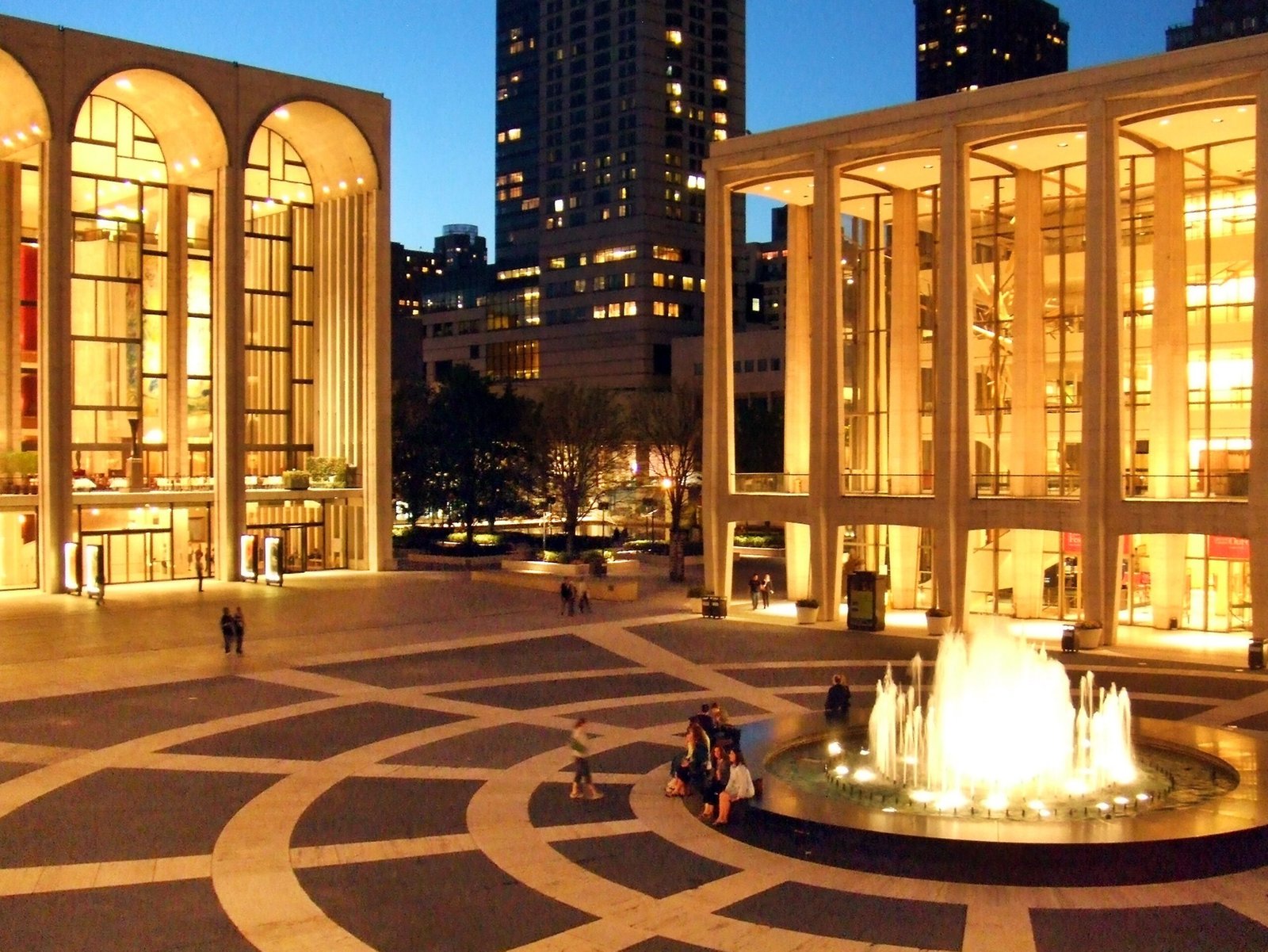
Music & Art and Performing Arts began the school year together in a new facility near Lincoln Center. This marked the opening era of the institution now known as Fiorello H. LaGuardia High School of Music & Art and Performing Arts.
The move represented the culmination of decades of planning.
Two separate institutional traditions had finally been brought together in one facility.
The result was a comprehensive public arts high school offering multiple artistic disciplines alongside academic education.
13. The Modern LaGuardia Campus
The school is currently located at 100 Amsterdam Avenue in Manhattan. New York City Public Schools lists 100 Amsterdam Avenue as the building location for the school.
The campus is associated with the Lincoln Center area, one of New York City’s major cultural districts.
This location gives the school a strong connection to the city’s performing and cultural institutions.
For students studying the arts, the environment provides a natural connection between secondary education and the wider cultural world of Manhattan.
14. LaGuardia’s Educational Philosophy
LaGuardia’s educational philosophy is built around two parallel objectives.
First, students need a strong academic foundation.
Second, they need serious artistic preparation.
The school describes its mission as cultivating artists and thinkers through the combination of conservatory-level arts education and rigorous academics.
This philosophy recognizes that artistic ability and academic development do not have to be separate.
A student can be a serious musician and a strong academic student.
A dancer can also study history and science.
An artist can develop both creative and analytical abilities.
This combination is one of the defining ideas behind the institution.
15. Academic Education at LaGuardia
Although LaGuardia is famous for its arts programs, academics remain a major part of the school.
Students complete a college-preparatory curriculum.
Academic departments include subjects such as social studies and other traditional areas of secondary education.
For example, the school’s Social Studies Department describes courses in World History, United States History, Government and Economics. Students are also taught to analyze documents, construct historical arguments and understand historical perspectives.
This illustrates the broader philosophy of the school.
Arts training does not replace academics.
Instead, both are intended to operate together.
16. The Arts Studios
The modern school organizes students into specialized artistic studios.
The official school website states that students train in one of six studios while completing a rigorous academic program.
These areas represent the broad artistic heritage of the institution.
Depending on the program, students may spend substantial time developing:
- Technical skills
- Artistic interpretation
- Performance skills
- Creative thinking
- Collaboration
- Portfolio development
- Rehearsal discipline
- Presentation skills
The studio system allows students to receive concentrated instruction in their chosen discipline.
17. Visual Arts Education
Visual art is one of the oldest traditions of LaGuardia.
It can be traced directly to the High School of Music & Art, founded in 1936.
Visual arts education can involve drawing, painting, design, observation, composition and other forms of artistic expression.
The purpose is not simply to teach students how to make attractive images.
Students also learn how to develop ideas, communicate visually and respond to criticism.
The studio environment encourages experimentation and revision.
Students must learn that artistic development often comes through practice rather than instant perfection.
18. Music Education
Music has been part of LaGuardia’s institutional identity since the founding of Music & Art in 1936.
The later School of Performing Arts also developed music as an important part of its curriculum.
Music education can require years of technical development.
Students may work on:
- Instrumental technique
- Vocal technique
- Musicianship
- Ensemble performance
- Interpretation
- Rehearsal
- Music theory
- Performance preparation
The school therefore provides an environment in which music can be treated as a serious field of study.
19. Dance Education
Dance became particularly important through the School of Performing Arts tradition.
Dance training requires a combination of physical conditioning, technique, coordination, musicality and artistic expression.
Students must learn through continuous practice.
Unlike some academic subjects, physical artistic skills cannot simply be memorized from a textbook.
They must be developed through repetition and performance.
This makes discipline one of the central elements of dance education.
20. Drama and Theater
Drama is another major part of the school’s heritage.
The School of Performing Arts was created partly to prepare students for professional careers in drama.
Drama education can involve acting, interpretation, movement, voice, rehearsal and performance.
Students also learn about collaboration.
A theater production requires actors, directors, musicians, designers, technicians and other participants to work together.
This means that theater education teaches both individual expression and teamwork.
21. Why LaGuardia Is Sometimes Called the “Fame” School
LaGuardia has often been associated with the famous 1980 film Fame, which was inspired by the New York City performing-arts-school environment.
The film increased public awareness of the idea of a specialized New York arts high school.
However, it is important to distinguish the fictional story shown in a movie from the actual educational history of the school.
LaGuardia’s history began decades before the film.
The school’s official history traces its institutional roots to 1936, when Music & Art was founded.
The film became part of the school’s broader cultural image, but the institution itself has a much longer history.
22. Admission to LaGuardia High School
Admission is an important part of LaGuardia’s identity.
Unlike an ordinary neighborhood high school, LaGuardia uses an arts-based admissions process.
The school states that entrance is based on a competitive audition process and that applicants must also demonstrate academic achievement.
Depending on the arts discipline, applicants may need to demonstrate their abilities through auditions or portfolios.
This means that students generally enter because of a demonstrated interest and ability in a specific artistic field.
23. The Audition Experience
An audition can be an important educational experience in itself.
Students have to prepare their work carefully.
A musician may have to prepare musical selections.
A dancer may need to demonstrate technical and performance ability.
An actor may need to perform prepared material.
Visual artists may need to present portfolios or complete required artistic exercises.
The process requires preparation, confidence and attention to detail.
24. Academic and Artistic Balance
One of the biggest challenges for students at an arts-focused school is balancing two demanding areas.
A student may have:
- Academic assignments
- Exams
- Studio work
- Rehearsals
- Practice sessions
- Performances
- Portfolio projects
This can create a demanding schedule.
The educational philosophy behind LaGuardia assumes that students can develop both academically and artistically.
This makes time management an important skill.
25. Student Life
Student life at LaGuardia is influenced heavily by the arts.
Students come from different neighborhoods and backgrounds across New York City’s five boroughs.
They share an interest in creative work.
This creates a community in which students may meet peers who are deeply interested in music, dance, theater or visual art.
The school’s official website describes its students as a community of young artists and thinkers drawn from across New York City.
26. Collaboration and Community
Arts education naturally encourages collaboration.
A theatrical production requires many people.
A concert requires an ensemble.
A dance performance requires coordination.
An art project can involve critique and discussion.
These experiences teach students that creativity is not always an individual activity.
Sometimes the strongest artistic work emerges from cooperation between people with different skills.
27. Competitions and Performances
LaGuardia students participate in artistic events and competitions.
The school reports that students are recognized in national, regional and local arts competitions.
Performances also provide practical experience.
Students can take what they learn in classrooms and studios and apply it in real situations.
This is especially valuable in performing arts because performance experience cannot be completely recreated through textbooks.
28. College Preparation
LaGuardia is not only a professional arts school.
Its students also prepare for higher education.
The school describes its academic curriculum as college preparatory and notes that graduates continue to universities, liberal arts colleges and conservatories.
This creates multiple pathways after graduation.
A student may continue directly into a conservatory.
Another may attend a university and study an academic subject.
Another may combine artistic study with another field.
29. Conservatory Pathways
For students who want advanced arts training, conservatories can provide a natural continuation.
A conservatory generally focuses intensely on a particular artistic discipline.
LaGuardia gives students an opportunity to experience serious arts training before reaching that stage.
This can help students understand what intensive artistic study requires.
30. University Pathways
Other students may choose traditional universities.
The school’s academic structure helps students maintain college options beyond conservatory programs.
This is one reason the combination of academics and arts is so important.
Students do not necessarily have to choose between becoming an artist and receiving a broad academic education.
31. Notable Alumni
One of LaGuardia’s most famous characteristics is its extensive alumni community.
The school states that since 1936 it has produced notable alumni whose contributions have influenced the arts worldwide.
Former students have gone into areas including:
- Film
- Television
- Theater
- Music
- Dance
- Visual arts
- Writing
- Education
- Public life
- Other professional fields
The alumni network demonstrates the variety of possible outcomes from arts-focused education.
32. The Broader Alumni Legacy
The importance of LaGuardia’s alumni cannot be measured only by celebrity.
Many graduates contribute through teaching, design, production, research, writing and other creative professions.
The school’s educational model can therefore have an influence beyond famous performers.
A successful arts school creates artists, but it also creates educators, collaborators, cultural workers and creative professionals.
33. LaGuardia and American Arts Education
The history of LaGuardia is part of a larger American educational story.
For many years, arts education has faced questions about how much emphasis schools should place on artistic subjects.
LaGuardia provides one model in which arts education is not an optional addition.
Instead, it becomes an important part of the student’s educational identity.
The school’s history shows that public education can support specialized artistic training while maintaining academic requirements.
34. A Public School With Specialized Training
One of the most significant aspects of LaGuardia is its public-school status.
Specialized arts education is sometimes associated with private schools or conservatories.
LaGuardia represents a different model.
It demonstrates how public education can create opportunities for students with artistic ambitions.
The school’s official history describes Music & Art as the first free, publicly funded high school dedicated to the arts in the United States.
That historical claim helps explain why the institution occupies a distinctive place in American arts education.
35. The Importance of Accessibility
The public nature of the school is historically significant.
A specialized institution within the public-school system can provide opportunities to students who may not otherwise have access to expensive private training.
At the same time, the competitive admissions process means that students must demonstrate artistic ability and meet the school’s requirements.
This creates a distinctive combination of public education and specialized selection.
36. LaGuardia’s Relationship With New York’s Cultural Life
New York City has one of the world’s largest cultural ecosystems.
The city includes Broadway theaters, museums, galleries, concert halls, dance companies, film organizations and numerous creative businesses.
LaGuardia exists within this environment.
This gives the school a particularly strong cultural context.
Students are studying the arts in a city where professional artistic activity takes place every day.
37. Lincoln Center and the School’s Location
The school’s modern location is associated with the Lincoln Center area.
Lincoln Center is one of New York City’s major cultural complexes.
The connection is particularly appropriate for a school focused on music, dance, drama and visual arts.
The move to the new facility in 1984 therefore represented not just the physical combination of two schools but also the creation of a major arts-focused educational institution within one of Manhattan’s important cultural districts.
38. Academic Departments and Intellectual Development
LaGuardia’s educational philosophy emphasizes that artists should also be thinkers.
Academic subjects encourage students to understand society, history, science, language and other areas of knowledge.
The school’s Social Studies Department, for example, emphasizes historical reasoning, document analysis and argument development.
This approach supports the idea that artistic creativity can benefit from intellectual curiosity.
39. Creativity and Critical Thinking
Artists frequently need to solve problems.
A painter must decide how to communicate an idea.
A musician must interpret a piece.
An actor must understand a character.
A dancer must communicate through movement.
These activities require creativity and analysis.
Academic education can strengthen those abilities by exposing students to different ideas and perspectives.
40. Discipline at LaGuardia
Talent alone is not enough for most forms of serious artistic development.
Students need practice.
They need feedback.
They need patience.
They need the ability to repeat difficult exercises.
They need to learn from mistakes.
This is particularly true in music and dance, where technical development may require years of consistent practice.
LaGuardia’s conservatory-style model is therefore built around sustained effort.
41. The Role of Teachers
Teachers play a major role in specialized arts education.
A good arts teacher does more than explain information.
Teachers can help students identify weaknesses, develop technique and discover their artistic voice.
In performance disciplines, teachers may also prepare students for auditions and performances.
In visual art, teachers can guide students through critique and revision.
In academics, teachers develop analytical and communication skills.
The combination of these roles helps create the school’s distinctive environment.
42. The Meaning of a Studio Environment
A studio environment differs from an ordinary classroom.
Students often work on projects over extended periods.
They may receive individual feedback.
They may observe classmates.
They may revise their work.
They may present the final product.
This creates an educational cycle of:
Practice → Feedback → Revision → Performance or Presentation
That cycle is valuable across many creative fields.
43. Preparing Students for the Real World
One purpose of specialized education is to prepare students for future challenges.
Arts careers can be highly competitive.
Students need more than raw talent.
They need communication skills, discipline, collaboration and resilience.
They also need to understand how to present their work.
LaGuardia’s combination of academic and arts education can help students develop several of these skills during high school.
44. The Cultural Legacy of the School
LaGuardia’s cultural legacy extends beyond its physical campus.
Its two predecessor schools became important examples of specialized public arts education.
The 1936 founding of Music & Art and the 1948 creation of Performing Arts represented different approaches to artistic training.
The 1961 organizational merger and 1984 consolidation eventually brought those approaches together.
The modern school continues that combined tradition.
45. Timeline of LaGuardia High School History
A simplified timeline helps explain the institution’s development.
1936
The High School of Music & Art is established by Mayor Fiorello H. LaGuardia.
1948
The School of Performing Arts is established to provide training in dance, drama and music.
1961
Music & Art and Performing Arts become one organization in anticipation of eventual consolidation.
1969
The planned new building is named in honor of Fiorello H. LaGuardia.
1984
The two legacy schools begin the school year together in the new facility near Lincoln Center.
Today
LaGuardia operates as a specialized public arts high school combining rigorous academics with intensive arts training.
46. Why the History Matters
The history of LaGuardia High School matters because it demonstrates how educational institutions can evolve.
The school did not appear fully formed in 1984.
Instead, its identity developed over almost five decades.
Music & Art established the idea of public arts education.
Performing Arts expanded the model into professional performance training.
The 1961 organizational change brought the two traditions together.
The 1984 facility created the modern combined institution.
This gradual development explains why the school’s full name is so long: it preserves the history of both predecessor schools.
47. The Full Name and Its Meaning
The official name is:
Fiorello H. LaGuardia High School of Music & Art and Performing Arts
Every part of this name carries historical meaning.
Fiorello H. LaGuardia honors the mayor associated with the founding of Music & Art.
Music & Art preserves the identity of the 1936 school.
Performing Arts preserves the identity of the 1948 school.
The name therefore functions almost like a historical record.
48. LaGuardia as a Specialized High School
New York City has several specialized high schools with different academic and educational focuses.
LaGuardia occupies a distinctive position because its specialization is the arts.
The school describes itself as New York City’s only specialized high school where admission is earned through audition and portfolio-based evaluation.
This gives LaGuardia a different admissions and educational structure from many other public high schools.
49. Diversity of Artistic Interests
One of the strengths of a multidisciplinary arts school is the interaction between different creative fields.
A musician may work with a dancer.
An actor may collaborate with musicians.
Visual artists may contribute to productions.
Students can therefore encounter artistic disciplines outside their primary area.
This can broaden their understanding of creativity.
50. The Value of Collaboration
Creative industries rarely operate entirely through individual work.
Film involves actors, directors, cinematographers, designers and editors.
Theater involves performers, directors, musicians, designers and technicians.
Music can involve composers, performers, producers and engineers.
Dance involves choreographers, dancers, musicians and designers.
By bringing different artistic disciplines together, a school can create opportunities for students to understand collaborative production.
51. LaGuardia and the Future of Arts Education
Arts education continues to change.
Technology has introduced new tools for artists.
Digital media has transformed music, film and visual design.
Social media has changed how artists communicate with audiences.
Artificial intelligence is also influencing creative industries.
A modern arts school therefore has to prepare students for a rapidly changing environment.
At the same time, foundational skills such as practice, creativity, communication and collaboration remain important.
52. Traditional Skills in a Modern World
Technology can change artistic tools without eliminating the need for fundamental skills.
A digital artist still needs composition.
A musician still needs musicianship.
An actor still needs interpretation and communication.
A dancer still needs physical control.
A designer still needs visual problem-solving.
LaGuardia’s long history shows the continuing value of disciplined arts education even as technology and culture change.
53. The School’s Continuing Mission
The school’s current mission emphasizes the development of exceptional artists and thinkers.
The official mission describes a goal of combining conservatory-level arts education with rigorous academics and preparing students to become engaged contributors to society.
This is a continuation of the basic idea behind Music & Art in 1936:
students can develop artistic talent without sacrificing academic education.
54. LaGuardia’s Place in New York City
Few cities provide the same cultural environment as New York.
The city has long been a center for:
- Theater
- Music
- Dance
- Fine art
- Fashion
- Film
- Television
- Publishing
- Design
LaGuardia’s location within Manhattan places students in the middle of this environment.
That geographical context is an important part of the school’s identity.
55. What Makes LaGuardia Historically Distinctive?
Several factors distinguish the institution.
First, it has roots dating to 1936.
Second, it grew from two major specialized arts schools.
Third, it combines public education with intensive artistic training.
Fourth, it maintains rigorous academic expectations.
Fifth, it has developed a large and influential alumni community.
Sixth, it operates within New York City’s exceptionally rich cultural environment.
Together, these elements explain the school’s long-lasting reputation.
56. Challenges of an Arts-Focused High School
An institution like LaGuardia also faces challenges.
Students must balance academic responsibilities with demanding artistic training.
Teachers must maintain high standards while supporting students at different stages of development.
The school must also adapt to changing artistic industries.
Technology, culture and professional opportunities are constantly evolving.
A successful arts school therefore needs to preserve its traditions while remaining open to change.
57. The Importance of Student Creativity
Creativity is central to the school’s educational model.
Students are encouraged to develop their own voices.
This does not mean that technique is unimportant.
In fact, technical knowledge often provides the foundation for creative freedom.
A musician who understands technique can experiment more effectively.
An artist who understands composition can make more deliberate creative choices.
An actor who understands voice and movement can communicate more effectively.
58. From Student to Artist
The transition from student to professional artist takes time.
High school cannot guarantee a particular career.
What it can do is provide education, practice, feedback and opportunities.
LaGuardia’s environment gives students exposure to the demands of serious artistic study.
Graduates then choose different paths.
Some continue in the arts.
Some combine art with other careers.
Others use their creative and academic skills in completely different fields.
59. The Meaning of Success
Success at a school like LaGuardia cannot be defined only by celebrity.
A graduate may become a famous performer.
Another may become a teacher.
Another may work behind the scenes.
Another may become an entrepreneur or academic.
Another may simply continue making art throughout life.
The educational value of an arts school therefore extends beyond professional fame.
60. Conclusion
Fiorello H. LaGuardia High School of Music & Art and Performing Arts has a remarkable history rooted in the development of public arts education in New York City.
Its story begins in 1936, when Mayor Fiorello H. LaGuardia established the High School of Music & Art to provide talented public-school students with opportunities to study music or art while receiving a full academic education.
A second chapter began in 1948, when the School of Performing Arts was established to prepare students for careers in dance, drama and music.
In 1961, the two schools became one organization, beginning a long transition toward consolidation. In 1969, the planned new building was named in honor of Fiorello H. LaGuardia. Finally, in 1984, the two legacy institutions began the school year together in a new facility near Lincoln Center.
Today, LaGuardia continues the central philosophy established by its predecessor schools: talented young people can pursue serious artistic education while also receiving rigorous academic preparation.
The school’s significance is therefore larger than its reputation as an arts high school. It represents a long-running experiment in public education, creativity and opportunity.
Its history demonstrates that music, visual art, dance and drama can exist alongside mathematics, history, science, language and other academic subjects.
For generations of students, LaGuardia has provided a place where artistic ambition and academic education can develop together.
That combination remains at the heart of the school’s identity and helps explain why LaGuardia High School continues to occupy an important position in the history of American arts education.